
In This Article
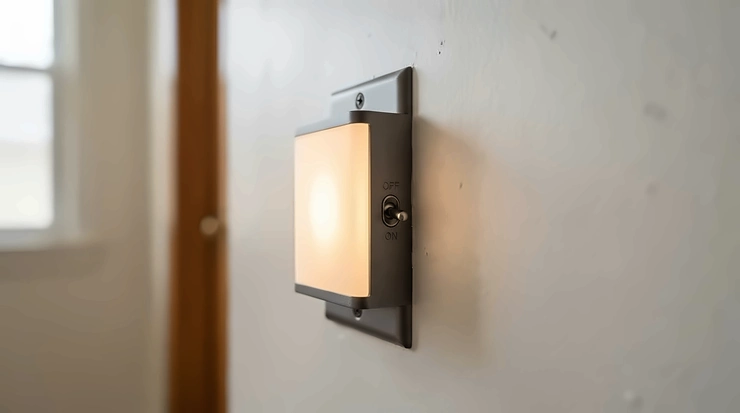
A bathroom night light with motion sensor is a low-output lamp that switches on automatically when a built-in sensor, usually passive infrared (PIR), detects movement nearby, then turns itself off after a short delay. It gives just enough glow to find the loo without the glare of the main light.
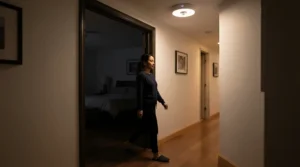
That matters more than it sounds. The 3 a.m. loo trip is a short, ordinary and slightly treacherous journey. Your eyes haven’t adjusted, the floor is cold, and the main light hits like a camera flash. NHS falls-prevention guidance lists adequate night-time lighting as a basic safeguard. The same document quotes roughly 280,000 UK A&E attendances after falls every year.
This guide shortlists seven real products: several plug-in bathroom night light models, a rechargeable motion night light and a clip-on toilet-bowl light. It’s built on published specifications, retailer listings and aggregated review themes. It is not hands-on testing, so treat it as a research-led shortlist. Check each listing for the UK-plug version and the current price.
Along the way we’ll look at PIR sensor range, why a warm amber glow suits sleepy eyes, and how to make night-time toilet trips safer.
Quick Comparison: Bathroom Night Light with Motion Sensor Picks at a Glance
| Product | Power type | Light character | Best For |
|---|---|---|---|
| AUVON Plug-in LED Backlit Night Light | Plug-in | 2200K warm white (amber variant also listed), diffuse backlight | Landing-to-loo paths, light sleepers |
| AUVON Rotatable Plug-in Night Light | Plug-in | 2700K soft warm white, upper or lower glow | Awkward hallways needing aimable light |
| LOHAS-LED Motion Sensor Night Light | Plug-in | 3000K soft white, 30/60 lm steps | Tight budgets, multi-room coverage |
| Integral LED Motion Sensor Night Light | Plug-in (UK plug) | Cool white | Utility lighting where brightness beats mood |
| Lyridz Up-and-Down Glowing Night Light | Plug-in | Warm white, up-and-down glow | Slower walkers who need a longer timer |
| Varta Motion Sensor Slim Light Rechargeable | USB-C rechargeable | Warm white, 80 lm | Rented homes, socket-free spots |
| Ailun Toilet Night Light | Battery (3×AAA) | Multi-colour, bowl glow | Targeted bowl lighting |
Looking at the table, the AUVON Plug-in LED Backlit Night Light is the closest match for a bedroom-to-bathroom route, because its listed 2200K variant sits nearest to amber. The Varta Motion Sensor Slim Light Rechargeable is the practical answer where no socket exists. The Ailun Toilet Night Light is more of a supporting act than a primary light.
💬 Just one click — help others make better buying decisions too!😊
Top 7 Bathroom Night Light with Motion Sensor Picks: Expert Analysis
1. AUVON Plug-in LED Backlit Night Light — softest glow for sleepy eyes
The backlit design is the headline. Sixteen LEDs bounce light off the wall instead of firing straight at your retinas, which is a real mercy when you’re half asleep. The dimming range of 1-50 lm lets you turn it down to a whisper. The PIR sensor is listed at 3-5 m across 120°, enough to catch you leaving the bedroom before you reach the corridor. The dusk-to-dawn sensor keeps it quiet in daylight, and the V-0 fire-resistant casing is a sensible extra for something that lives in a socket. AUVON lists warm white at 2200K plus amber and cool white versions, so choose the colour variant deliberately.
Based on the spec sheet, a four-pack suits a whole route: bedroom door, landing, hallway and stairs. UK bathrooms rarely have a usable socket (more in the safety section), so this will usually sit just outside the bathroom door.
Review roundups consistently praise the glare-free light and the flexible dimming. A recurring note is that detection works best from sockets at roughly waist height. I couldn’t verify a large UK-specific review pool for each colour variant.
Pros:
- ✅ Diffuse backlight avoids direct glare
- ✅ Wide 1-50 lm dimming range
- ✅ Warm 2200K and amber options listed
Cons:
- ❌ Needs a socket, so it sits outside most UK bathrooms
- ❌ Detection depends on socket height
Indicative range: roughly £18-£28 for a four-pack (check current price). Verdict: excellent value if you need several lights.
2. AUVON Rotatable Plug-in Night Light — choose which surface glows
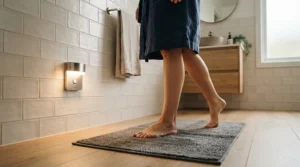
The twist here is two selectable light-emitting surfaces, upper or lower. It pairs a Fresnel-lens motion sensor with a dusk-to-dawn sensor, and UK deal listings show it sold as a two-pack in a 2700K soft warm white.
In practice, a Fresnel lens splits the sensor’s view into zones, so a warm body crossing them triggers the light. The rotatable body lets you angle that view across a doorway instead of down an empty wall. The lower surface throws light toward the floor, where the trip hazards are. The upper surface gives a gentler ambient wash. 2700K is warm white rather than true amber, but it sits at the cosy end of mainstream night lights.
This is the pick for a landing or hallway where a fixed sensor angle keeps missing you. It also suits anyone who wants a plug-in bathroom night light just outside the door without lighting the whole corridor.
I couldn’t verify a meaningful pool of independent reviews for this newer model, so treat the recommendation as spec-led.
Pros:
- ✅ Rotatable body aims the sensor where you walk
- ✅ Upper or lower glow suits different spaces
- ✅ Warm 2700K colour temperature
Cons:
- ❌ Warm white, not true amber
- ❌ Limited independent review data
Indicative range: mid-teens for two, as seen on UK deal pages (check current price). Verdict: good value for tricky spots.
3. LOHAS-LED Motion Sensor Night Light — cheapest way to cover every doorway
This is the budget workhorse. Listings show two brightness steps (30 and 60 lm), 3000K soft white, a tiny 0.6 W draw and a 3-5 m, 120° sensing field. One UK seller’s listing for the model mentions 230 V and CE/UKCA labelling, but confirm that on your exact listing.
At 0.6 W, the running cost is negligible. Thirty lumens is plenty for a corridor, while sixty is better kept for stairs. 3000K is warmer than daylight but cooler than amber, so keep it away from a bedroom door if a light sleeper shares the room.
For the money, it’s a sensible way to put a bathroom night light with motion sensor logic on the landing, hall and stairs without spending much.
Aggregated review themes are consistent. A frequent complaint is that the light switches off after about a minute, which some people find too short. Another is that the sensor can be over-eager near beds or busy doorways.
Pros:
- ✅ Very low running cost
- ✅ Two simple brightness levels
- ✅ Wide 120° detection field
Cons:
- ❌ Short auto-off for slower walkers
- ❌ Can trigger too easily near beds
Indicative range: roughly £8-£15 for a twin pack (check current price). Verdict: the best budget starting point.
4. Integral LED Motion Sensor Night Light (ILNLMS-CL-UK) — no-fuss UK-plug utility light
This one is purpose-built for UK sockets. The listing says it switches on within 3 m and off after 30 seconds without movement, in cool white.
Thirty seconds is a short leash. It works in a landing where you’re always moving, but it may clock off while you stand at the sink. Cool white is bright and clear, which suits tasks, but it’s the wrong colour if you want a warm amber glow for sleepy eyes. That puts it in the utility category rather than the mood category.
I’d put it where clarity matters more than ambience. Think a cupboard-under-the-stairs route, a utility room, or a garage-adjacent corridor. For a bedroom-adjacent landing, one of the warmer picks above is kinder.
I couldn’t find enough verifiable customer reviews for this exact model, so there’s no sentiment summary I can honestly offer.
Pros:
- ✅ UK plug, so no adaptor fuss
- ✅ Clear 3 m detection claim
- ✅ Bright, functional output
Cons:
- ❌ Cool white can feel harsh at night
- ❌ Only a 30-second hold time
Price: check current price, as I couldn’t verify a reliable range. Verdict: sensible for utility spaces, not bedrooms.
5. Lyridz Up-and-Down Glowing Night Light — selectable auto-off and two-way glow
The listing title promises an up-and-down glow, a dimmable warm white output and automatic switch-off of 60 or 120 seconds.
The two-way glow means you get a soft wash on the wall plus a pool on the floor, which helps you spot a stray slipper. The 120-second option is the real selling point. A longer hold time suits people who move more slowly or need a moment in the bathroom doorway before the light drops out.
Reading the specification, it’s a good fit for older relatives’ landings or a hallway where lingering is common. Bear in mind that PIR sensors react to movement, so someone sitting very still may still find the light dimming.
I couldn’t verify a large pool of independent UK reviews, so the sentiment here is simply unconfirmed.
Pros:
- ✅ Selectable 60 or 120 second auto-off
- ✅ Warm white, dimmable output
- ✅ Two-way glow covers wall and floor
Cons:
- ❌ Single-pack listing costs more per light
- ❌ Limited verified UK review data
Price: check current price. Verdict: worth paying a little extra for the longer timer.
6. Varta Motion Sensor Slim Light Rechargeable — go-anywhere USB-C convenience
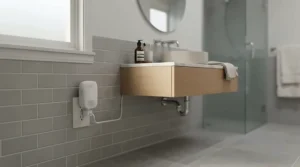
This is the rechargeable motion night light in the lineup. Retailer specs list USB-C charging, a warm white LED, a 3 m, 120° PIR sensor, a 20-second auto shut-off, 80 lm output and a listed runtime of 3.5 hours. It mounts with magnet or adhesive tape. The listing I found was from a European retailer, so check UK availability before you commit.
The runtime figure needs reading carefully. If it means total lit time, 3.5 hours equals roughly 630 twenty-second activations. At eight triggers a night, that’s about 80 nights per charge. This is my arithmetic from the listing, not a manufacturer claim. At 80 lm it is also brighter than some plug-ins on their low setting, so mount it low and aim it away from your eyes.
Because UK bathrooms seldom offer a convenient socket, a rechargeable motion night light solves the placement problem neatly. Stick it beside the vanity or low on the wall, then forget it until the charge runs down.
I couldn’t verify enough reviews to summarise sentiment.
Pros:
- ✅ No socket needed, so it can go inside the bathroom
- ✅ Warm white LED, USB-C charging
- ✅ Magnet or adhesive mounting
Cons:
- ❌ Needs periodic recharging
- ❌ 80 lm can feel bright at close range
Price: check current price. Verdict: the best answer for socket-free spots.
7. Ailun Toilet Night Light — lights the bowl itself
This clip-on light does one job: it illuminates the toilet bowl instead of flooding the room. Listings describe motion plus ambient-light sensing, eight colour modes and three AAA batteries (not included).
The ambient sensor keeps it from firing in daylight, and the bowl-level glow means you see what you need without waking the household. If you buy one, pick the warmest single colour your model offers and avoid the blue and white cycle modes. Cycling colours are a gimmick at 3 a.m.
Treat it as a supporting act. It’s a helpful companion for night-time toilet trips alongside a proper path light, not a replacement for one.
Category roundups flag battery dependence as the main drawback. One guide suggests AAA cells may last three to six months. Another notes that the LED can dim after extended use. I couldn’t verify an Ailun-specific UK review pool.
Pros:
- ✅ Targets the bowl without lighting the room
- ✅ Motion and ambient-light sensing
- ✅ Clips on, so no wiring needed
Cons:
- ❌ Needs AAA batteries (not included)
- ❌ Colour modes are mostly novelty
Price: check current price. Verdict: an inexpensive extra, not a core light.
Side-by-Side Specs and Value
| Product | Detection | Auto-off | Indicative price | Best For |
|---|---|---|---|---|
| AUVON Plug-in LED Backlit Night Light | 3-5 m, 120° | Check listing | £18-£28 range (4-pack) | Whole-route coverage |
| AUVON Rotatable Plug-in Night Light | Fresnel-lens PIR | Check listing | Mid-teens (2-pack) | Awkward angles |
| LOHAS-LED Motion Sensor Night Light | 3-5 m, 120° | About 60 s reported | £8-£15 range (2-pack) | Budget buyers |
| Integral LED Motion Sensor Night Light | 3 m | 30 s | Check current price | Utility spaces |
| Lyridz Up-and-Down Glowing Night Light | Check listing | 60 s or 120 s | Check current price | Slower walkers |
| Varta Motion Sensor Slim Light Rechargeable | 3 m, 120° | 20 s | Check current price | Socket-free spots |
| Ailun Toilet Night Light | Motion plus ambient light | Check listing | Check current price | Bowl lighting |
The numbers show a clear trade-off. The LOHAS-LED Motion Sensor Night Light wins on cost per light, while the Lyridz Up-and-Down Glowing Night Light wins on hold time. Anyone prioritising placement freedom should accept the recharging chore that comes with the Varta Motion Sensor Slim Light Rechargeable.
How to Choose a Bathroom Night Light with Motion Sensor
- Decide where it will live. Most UK bathrooms have no general-purpose socket, so choose between a landing-mounted plug-in or a rechargeable unit.
- Pick the colour temperature. Aim for 2200K-3000K if you want a warm amber glow. Cooler whites are brighter but less sleep-friendly.
- Check lumens. Between 10 and 50 lm is plenty at night. Dimmable models let you tune it down.
- Read the PIR sensor range. A 3 m range suits a landing. A 3-5 m range suits longer hallways.
- Match the auto-off timer to your pace. 20-30 seconds suits brisk walkers. 60-120 seconds suits slower movers.
- Confirm the UK plug and voltage. Look for 230 V and UKCA or CE marking.
- Count your lights. A four-pack usually covers a full bedroom-to-bathroom route.
PIR Sensor Range: What the Numbers Actually Mean
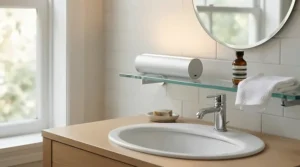
Any PIR night light works by watching for changes in infrared heat across a lens divided into zones. A warm body crossing those zones triggers the light. That’s why listings quote both a distance and an angle, such as 3-5 m across 120°.
In practice, a few things shape real-world performance:
- Direction of travel. PIR sensors typically respond more readily to movement across their zones than directly toward the lens. Angle the light so you cross its field.
- Mounting height. Review roundups suggest roughly waist height works best. A socket near the floor or high on the wall changes the detection pattern.
- Heat sources. Radiators and heated towel rails can create heat changes that confuse PIR sensors, so keep lights away from them.
- Hold time. A 20-second timer feels twitchy. A 120-second timer feels patient.
Note that PIR sensor range numbers are measured under ideal conditions. In a narrow UK hallway, 3 m is generally ample. Treat longer claims as headroom, not a promise.
Why a Warm Amber Glow Suits 3 a.m. Eyes
Colour matters at night. Harvard Health explains that blue wavelengths are the most disruptive after dark. In one Harvard experiment, blue light suppressed melatonin for about twice as long as green light of comparable brightness. The same article suggests dim red light for night lights, because it’s less likely to shift your body clock. It also notes that even fairly dim light can affect melatonin.
A warm amber glow sits between red and warm white. In Kelvin terms, 2200K reads as deep amber, 2700K as cosy warm white, 3000K as soft white, and anything above 4000K as neutral to cool.
Mapped to our picks:
- AUVON Plug-in LED Backlit Night Light offers the amber end (2200K listed).
- AUVON Rotatable Plug-in Night Light sits at 2700K.
- LOHAS-LED Motion Sensor Night Light runs at 3000K.
- Integral LED Motion Sensor Night Light is cool white, so it’s the least sleep-friendly choice.
Brightness matters as much as colour. A 2200K light at full whack is still a lot of light, so dim it. This is general lighting guidance, not medical advice.
Night-Time Toilet Trips: Lighting the Path, Not Just the Room
Night-time toilet trips are the main reason most of us buy these lights. A study of an automated guiding light for older people notes that roughly 60% of older people visit the toilet at least twice a night. It found promising results for nightly fear of falling and sleep quality. The authors add that the effect on actual fall rates needs further evaluation, so it’s encouraging evidence rather than proof.
The practical lesson is to light the whole route. Think of it as four stepping stones: the bedside, the bedroom door, the landing or hallway, and the bathroom threshold. A light at each point means your eyes never face a sudden jump in brightness.
For the final stretch, combine a path light with a smaller bowl-level light such as the Ailun Toilet Night Light, or a Varta Motion Sensor Slim Light Rechargeable mounted low inside. The NHS-trust leaflet quoted earlier also recommends keeping the path to the toilet clear of cables and clutter. The best light in the world won’t help if you trip on the laundry basket.
Plug-in Bathroom Night Light vs Rechargeable Motion Night Light
| Option | Power | Running cost | Placement freedom | Best For |
|---|---|---|---|---|
| Plug-in (AUVON Plug-in LED Backlit Night Light, LOHAS-LED Motion Sensor Night Light) | Mains | Pennies per year | Limited by sockets | Landings, hallways |
| Rechargeable (Varta Motion Sensor Slim Light Rechargeable) | USB-C battery | Negligible, but you recharge | Anywhere | Bathrooms, wardrobes, rentals |
| Clip-on bowl light (Ailun Toilet Night Light) | 3×AAA | Battery cost | On the toilet only | Targeted bowl lighting |
| Leaving the hall light on | Mains | Higher | Fixed | Households that dislike gadgets |
A plug-in bathroom night light is set and forget. At 0.6 W, a LOHAS-LED Motion Sensor Night Light running on a full dusk-to-dawn schedule would use about 2.6 kWh a year. That’s under a pound even at 30p per kWh, and far less in motion-only use.
A rechargeable motion night light trades that hassle-free power for placement freedom. You can put it inside the bathroom, but you must remember to recharge it.
The sensible compromise for most homes is both. Use plug-ins along the landing and a rechargeable unit where no socket exists.
Setup Guide: Getting the Best from Your Bathroom Night Light with Motion Sensor
Step 1: Choose the socket. Pick one outside the bathroom with a view of the doorway. Waist height is the sweet spot.
Step 2: Set brightness before you sleep. Start on the lowest setting. Walk the route in the dark and raise it only if you can’t see the floor.
Step 3: Pick AUTO mode. Dusk-to-dawn “ON” modes keep the light running all night. AUTO means it only lights when you move.
Step 4: Test the angle. Walk across the sensor’s view, not straight at it. Rotate or reposition until it triggers reliably.
Step 5: Give it a monthly dust. Switch off at the socket and wipe the lens with a dry cloth. A dusty lens reduces sensitivity.
For rechargeables: top up on a set day, such as the first Sunday of the month, and keep a spare cable handy.
Common mistakes in the first 30 days: mounting too high, leaving brightness on maximum, and facing the sensor into a corner.
Problem and Solution Guide for Common Night Light Headaches
Problem: it triggers every time a partner turns over. Move it away from the bed and angle it toward the doorway instead. Lower the brightness.
Problem: it switches off while you’re still in the bathroom. PIR needs movement, so choose a longer timer such as the 120-second option on the Lyridz Up-and-Down Glowing Night Light. Alternatively, add a bowl-level light that stays on a little longer.
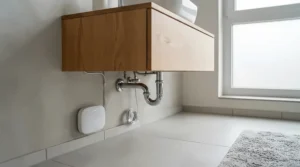
Problem: there’s no socket in the bathroom. That’s the norm in UK homes. Use a landing plug-in or a Varta Motion Sensor Slim Light Rechargeable.
Problem: the sensor misses you. Check the height, then rotate the unit. The AUVON Rotatable Plug-in Night Light is designed for exactly this.
Problem: the light feels too harsh. Drop the lumens, or choose a warmer variant such as the AUVON Plug-in LED Backlit Night Light in its 2200K version.
Real-World Scenarios: Which Light for Which Household?
Family home with a toddler. Four-bedroom house, nightly use, budget under about £25. A four-pack of the AUVON Plug-in LED Backlit Night Light covers the nursery door, landing, stairs and hall. Keep the bathroom itself dark and let the glow spill in.
Retired couple with a bungalow. One bedroom, one en-suite, frequent night-time toilet trips. Two LOHAS-LED Motion Sensor Night Light units cover the bedroom exit and hall for a modest outlay. Add a Lyridz Up-and-Down Glowing Night Light with the longer timer by the bathroom door. This is advice grounded in the spec comparison, not medical guidance.
Renter in a small flat. Few spare sockets, adhesive-only mounting, nightly use. A Varta Motion Sensor Slim Light Rechargeable stuck low beside the vanity needs no wiring and leaves no marks. Pair it with an Ailun Toilet Night Light if you want bowl-level light.
Safety and Regulations: What UK Bathrooms Allow
UK bathrooms are split into safety zones based on distance from the bath or shower. According to NICEIC’s technical director, quoted by Livingetc, most bathrooms are too small to allow conventional sockets, so you rarely see them. Shaver sockets are permitted but only suit a handful of appliances.
Guides to BS 7671 commonly cite a minimum of 3 metres horizontally from the boundary of Zone 1 for ordinary sockets. If in doubt, ask a qualified electrician.
What this means for you:
- Plug the light in outside the bathroom and let it shine through the doorway.
- Don’t use a shaver socket for a night light unless the manufacturer says it’s suitable.
- Keep plug-ins away from splashes. One AUVON listing states the light isn’t water resistant.
- Buy UK versions. Look for 230 V and UKCA or CE marking. US listings run at 120 V and aren’t suitable.
Inside the bathroom, a battery or rechargeable unit mounted away from direct splashes is the safer route.
Common Mistakes When Buying a Bathroom Night Light with Motion Sensor
Buying the wrong voltage. Many online listings are US-market 120 V models. Always choose the UK-plug 230 V version.
Ignoring colour temperature. A cool white light at 3 a.m. is a rude awakening. Prefer 2200K-3000K.
Buying one light only. A single light leaves dark gaps. A route of three or four small lights beats one bright one.
Mounting at the wrong height. Floor-level sockets and shoulder-height ones both change how the sensor sees you.
Skipping the timer check. A 20-second hold is fine for brisk walkers but frustrating for anyone who moves slowly.
Expecting one product to do everything. The Ailun Toilet Night Light lights the bowl, not the corridor. Combine different types for full coverage.

FAQ: Bathroom Night Light with Motion Sensor
❓ How long does a motion sensor night light stay on?
❓ Can I use a plug-in bathroom night light inside a UK bathroom?
❓ Do motion sensor night lights work with the bathroom door closed?
❓ Is a warm amber glow really better than white for night lighting?
❓ How many night lights do I need between bedroom and bathroom?
Conclusion: Light the Way, Then Switch Off
A good bathroom night light with motion sensor does one quiet job: it removes the stumble, the glare and the fumbling from your night-time toilet trips. The research here points to a simple formula. Use warm, dimmable light, mount it where the sensor can see you cross its field, and light the whole route rather than one spot.
If you want the softest glow, start with the AUVON Plug-in LED Backlit Night Light. For the lowest outlay, the LOHAS-LED Motion Sensor Night Light is hard to beat. If you need a slower timer, look at the Lyridz Up-and-Down Glowing Night Light. Where there’s no socket, the Varta Motion Sensor Slim Light Rechargeable is the practical fix, and the Ailun Toilet Night Light is an inexpensive extra for the bowl itself.
Check the UK plug, check the colour temperature and check the current price before you buy.
Recommended for You
- Bathroom Shaver Light With Socket: 7 Safe, Smart UK Picks (2026)
- Bathroom Spotlights Vs Downlights: 7 Best Picks For UK Homes (2026)
- Bathroom Ceiling Lights For Small Bathrooms: 7 Best Picks (2026)
Disclaimer: This article contains affiliate links. As an Amazon Associate, I earn from qualifying purchases. If you purchase products through these links, we may earn a small commission at no additional cost to you.
✨ Found this helpful? Share it with your friends! 💬🤗
