

In This Article
Your hallway is the most-walked, least-loved room in the house. Nobody lingers there. You pass through with shopping bags, a sleepy toddler or a damp spaniel, and you want light now, at the right brightness, without patting the wall like a burglar. That’s why smart hallway lights Alexa compatible setups are such a good starting point for home automation. The job is small, the payoff is daily, and any problem shows up straight away.

This guide covers seven real products that suit UK hallways, landings and stairwells. A quick honesty note: I haven’t handled any of them myself, so there are no invented “when I tested this…” stories here. What you get is analysis built on manufacturer specs and genuine published review themes, with a clear steer on who each product suits.
We’ll look at Alexa compatible smart bulbs, a couple of Wi-Fi hallway ceiling light options, motion sensors, and the hubs that tie them together. We’ll also untangle Zigbee vs Wi-Fi and the Matter standard, because that choice decides how smoothly everything behaves a year from now. As Tom’s Guide explains in its Thread versus Wi-Fi breakdown, Matter lets Wi-Fi and Thread devices share one routine under one app. Prices are ranges checked at the time of research, so always check the current price before buying.
Quick Comparison: Smart Hallway Lights Alexa Compatible at a Glance
| Product | Type | Connection | Price range | Best For |
|---|---|---|---|---|
| Govee Smart Ceiling Light H80A4 | Ceiling fitting | Wi-Fi, Bluetooth, Matter | £60–£100 | Colour-flexible landing or hallway upgrade |
| WiZ SuperSlim | Ceiling fitting | Wi-Fi | £30–£65 | Low ceilings, tunable white, no hub |
| Tapo L530E | Smart bulb | Wi-Fi (2.4GHz) | Under £15 | Budget Alexa compatible smart bulbs |
| Philips Hue Motion Sensor | Motion sensor | Zigbee | £35–£50 | Hands-free triggers in Hue homes |
| Aqara Motion and Light Sensor P2 | Motion and light sensor | Matter over Thread | £25–£40 | Matter-first households |
| Philips Hue Bridge Pro | Hub | Zigbee, Matter bridge | £70–£80 | Expandable Zigbee backbone |
| Amazon Echo Show 8 (4th gen) | Alexa hub and display | Zigbee, Thread border router, Matter | £150–£190 | Central Alexa control |
The Tapo L530E wins on cost, while the Govee Smart Ceiling Light H80A4 and WiZ SuperSlim are the no-hub ways to replace a whole fitting. The Philips Hue Motion Sensor and Philips Hue Bridge Pro pairing is the most polished hands-free route, if you’ll pay for it. The Aqara Motion and Light Sensor P2 needs a Thread border router, which the Amazon Echo Show 8 (4th gen) provides. In short, no-hub simplicity is cheaper today, and hub-based mesh costs more but copes better as you add devices.
💬 Just one click — help others make better buying decisions too!😊
Top 7 Smart Hallway Lights Alexa Compatible: Expert Analysis
Seven picks follow, spread across budget, mid-range and premium.
1. Govee Smart Ceiling Light H80A4 — colour-tunable fitting that skips the hub
The big win is simplicity. This is a Wi-Fi and Bluetooth ceiling fitting that works with Alexa, Google Assistant and Matter, with no bridge in sight.
The H80A4 is a slim 300 x 300 mm square weighing about 1 kg, so it suits narrow hallways and landings without dominating the ceiling. Its multi-ring LEDs create a soft edge-glow that flatters a hallway at night and is irrelevant at 7am. Matter support also gives you some insurance if Govee’s app ever changes direction.
Based on the spec sheet, I’d ignore the party colours and treat it as a tunable hallway light: crisp white for the morning rush, amber after 10pm. It needs a proper ceiling baseplate and mains wiring, so call an electrician if you’re unsure.
T3’s review of Govee’s ceiling light range rates it as good value and describes adding it to Alexa through the Govee Home skill as quick. A separate write-up of Govee’s larger RGBIC model flags a sometimes sluggish app and 2.4GHz-only Wi-Fi.
Pros:
- ✅ Alexa, Google Assistant and Matter support
- ✅ Slim 300 mm footprint suits tight hallways
- ✅ Schedules and scenes built in
Cons:
- ❌ App reported as slow in some reviews
- ❌ 2.4GHz Wi-Fi only, no 5GHz
Expect the £60–£100 range depending on version. It’s good value if you want a one-box hallway upgrade.

2. WiZ SuperSlim — extra-flat tunable white with no hub
Its standout trait is its height. The SuperSlim sits very low, which helps in the low-ceilinged hallways common in flats and converted houses.
It connects over Wi-Fi with no bridge or gateway, and retailer listings explicitly place it in hallway and stairs settings. The larger variants offer tunable white from 2,700K to 6,500K. That means warm light for the evening and cooler light for the morning dash, a range that matters far more in a hallway than 16 million colours. WiZ also sells a wall switch accessory and a remote.
My analytical take is that the wall switch accessory is the real hallway feature. In a household where everyone flicks the switch out of habit, a wireless switch stops the fitting losing power and dropping off Alexa. WiZ lists Alexa among its supported assistants, but confirm it on the listing for your variant.
I couldn’t verify a deep pool of UK owner reviews for this model, so treat it as a spec-led pick rather than a crowd-proven one.
Pros:
- ✅ No hub or gateway needed
- ✅ Tunable white range suits all-day hallway use
- ✅ Pairs with WiZ wall switch or remote
Cons:
- ❌ Owner-review evidence harder to verify
- ❌ Wi-Fi only, so no mesh resilience
Expect roughly the £30–£65 range depending on size and retailer. It’s strong value for a no-fuss fitting.
3. Tapo L530E — the cheapest way into Alexa compatible smart bulbs
It’s a hub-free Wi-Fi bulb that costs less than a sandwich-and-coffee lunch.
The L530E is an 800-lumen bulb drawing about 8.7W, with 2,500K–6,500K tunable white and 16 million colours. Eight hundred lumens is the old 60W benchmark, which is plenty for a typical hallway. Check your fitting first, though: the L530E is E27 screw, while the Tapo L530B covers B22 bayonet, which many UK homes use.
For a hallway, I’d buy a multipack, set a warm white and ignore the colours. It runs on 2.4GHz Wi-Fi, so each bulb is another router client. That’s fine for two or three, but it adds up in a bigger smart home.
The model scores around 4.4 out of 5 on Argos from 67 reviews at the time of research. Owners praise the simple setup and absence of a bridge. Some report occasional connectivity hiccups and, rarely, bulbs switching themselves on. One reviewer describes an Alexa routine that lights the hallway for ten minutes when a camera senses movement.
Pros:
- ✅ No hub, quick Alexa and Google Home setup
- ✅ Dimmable with warm-to-cool whites
- ✅ Very low cost per bulb
Cons:
- ❌ Every bulb adds to Wi-Fi traffic
- ❌ Occasional dropout reports from owners
Expect under £15 per bulb, often less in multipacks. It’s superb value for a first attempt.
4. Philips Hue Motion Sensor — the most mature hands-free trigger
It’s the hallway trigger that most Hue owners reach for first.
This Zigbee sensor needs a Hue Bridge and covers roughly 100° with a range of about 7 m, enough for a long hallway. A 2x AAA battery is rated for around two years, and it also measures daylight and temperature. The daylight reading is the clever bit, because it stops your hallway glowing at midday.
Through the bridge, Hue lights respond directly to the sensor rather than via the cloud. One review found response slightly quicker when the sensor controls Hue lights directly. My suggestion is to let Hue handle motion locally and let Alexa handle voice commands and schedules.
SlashGear scored it 7/10, praising easy setup, flexible scenes and long battery life. Its criticisms were the Hue-only ecosystem and occasional brief lag. One comparison site lists about 4.7 from roughly 1,000 ratings, though it notes the app can feel finicky.
Pros:
- ✅ Built-in daylight sensing
- ✅ Around two years on two AAA batteries
- ✅ Fast, bridge-local response
Cons:
- ❌ Requires a Hue Bridge to work
- ❌ Premium price versus generic sensors
I’d expect roughly the £35–£50 range, but check the current price. It’s good value if you’re already in the Hue ecosystem.
5. Aqara Motion and Light Sensor P2 — Matter over Thread, no Aqara hub
This is the Matter-first sensor. It pairs straight with any Matter controller that has a Thread border router.
It offers a 7 m range, about 170° horizontal coverage, and two CR2450 cells rated for up to two years. That wide angle suits hallway junctions where doors open from several directions. One catch for Alexa users: Matter Alpha’s listing notes that Alexa doesn’t support the light sensor reading. So lux-based automations need another platform, though motion triggers work.
If you already own a border router, such as the Amazon Echo Show 8 (4th gen), this is a tidy, low-cost sensor. Without one, you’d need to buy one first.
Reviews are split. One aggregator shows a 3.6 average from about 652 ratings, praising near-instant detection but flagging inconsistent Thread reliability. It also says the default one-minute timeout is locked unless you use Aqara’s own system. UK site Mighty Gadget, by contrast, rates it 95% and calls it the best Matter-over-Thread motion and light sensor it has seen.
Pros:
- ✅ Near-instant motion detection
- ✅ Works with any Matter controller
- ✅ Long coin-cell battery life
Cons:
- ❌ Thread reliability reports vary widely
- ❌ Alexa can’t use the light sensor
I’d expect the £25–£40 range; check the current price. It’s good value, provided your Thread mesh is healthy.
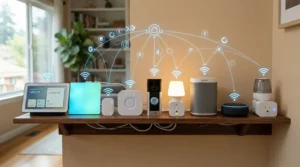
6. Philips Hue Bridge Pro — a Zigbee backbone with a Matter bridge
It’s the premium route: a faster brain for a Hue system that you expect to grow.
The Bridge Pro swaps the older 600 MHz processor for a 1.7 GHz quad-core chip and adds a Zigbee Trust Centre for security. It also acts as a Matter gateway, exposing Hue’s Zigbee lights to Apple Home, Google Home and Home Assistant. For Alexa households, the practical gain is a Zigbee mesh that keeps hallway traffic off your Wi-Fi.
Honestly, that’s overkill for three hallway bulbs. It pays off if you plan to spread across the house. Hue’s standard bridge costs less and is a sensible alternative.
Mighty Gadget’s reviewer, who bought the unit with his own money, called it a fantastic and long-overdue upgrade. CoolCuration scored it 4/5 and described the faults as minor quibbles.
Pros:
- ✅ Quad-core chip for snappier large setups
- ✅ More native-feeling Matter integration
- ✅ Zigbee mesh keeps load off Wi-Fi
Cons:
- ❌ Noticeably pricier than the standard bridge
- ❌ Only worthwhile inside the Hue ecosystem
I’d expect the £70–£80 range. It’s good value only if you’ll build a bigger Hue system.
7. Amazon Echo Show 8 (4th gen) — Alexa’s control centre
This is the Alexa device that also acts as a hub. It carries Zigbee, Matter and Thread border router capability in one box.
Expert Reviews noted that it also supports Wi-Fi 6E and Bluetooth, and that it plays an active part in connecting your smart home devices. In practice, one unit lets Zigbee bulbs, Matter-over-Thread sensors and Wi-Fi lights join the same routines. Its Expert Reviews verdict calls it better than before but much the same, with surprisingly robust sound.
You don’t need a screen just for hallway lighting. Reporting from Matter Smarthome says that all new 2026 Echo models, including the latest Echo Dot, include a Thread border router. If hub capability is all you want, a cheaper Echo may do the job.
Pros:
- ✅ Zigbee, Thread border router and Matter in one
- ✅ Surprisingly robust sound for its size
- ✅ Alexa+-ready hardware
Cons:
- ❌ Pricey if you only need a hub
- ❌ Reviewers see it as a modest upgrade
I’d expect the £150–£190 range; check the current price. It’s good value when it replaces a separate hub and a speaker.
Setting Up Smart Hallway Lighting Routines in the Alexa App
Smart hallway lighting routines are where the gadgets start to feel useful. Here’s a sensible order of attack.
- Add the lights. Govee fittings go in through the Govee Home skill, as T3’s reviewer did. Tapo links through its account, Hue through the bridge, and Matter devices by scanning their code.
- Name things properly. “Hallway Light” beats “Light 3”. Put everything in a “Hallway” group so voice commands stay short.
- Build three routines. Evening: at sunset, warm white at 60%. Goodnight: say “Alexa, goodnight” and the hallway drops to about 10%. Morning: a gentle ramp to 70% on weekdays.
- Add motion. With a sensor, trigger the routine when motion is detected, brighter by day and a dim amber path at night. Most triggers let you restrict the time window, so check the options.
- Keep it healthy. Update firmware, replace sensor batteries about every two years, and make sure the 2.4GHz band reaches the hallway.
The classic first-month mistake is leaving the wall switch off, which cuts power and kills every voice control routine you’ve built. Tape the switch on, or fit a wireless one.

Problem → Solution: Fixing the Five Classic Hallway Lighting Annoyances
1. The wall switch keeps killing the bulb. A smart bulb with no power can’t hear Alexa. Leave the switch on, use the WiZ wall switch accessory with a WiZ SuperSlim, or fit a smart switch with detached relay mode, as makers such as Sonoff recommend.
2. Night-time glare. A hallway at 3am shouldn’t feel like an operating theatre. Dim to 10–20% warm white. The Tapo L530E dims down to 1%.
3. Motion lag. A sensor that fires after you’ve walked past is useless. Sensors on a local mesh, like the Philips Hue Motion Sensor through its bridge, tend to react faster than devices that depend on router and cloud round trips.
4. Wi-Fi dropouts. Check the signal in the hallway, keep bulbs on 2.4GHz, and consider moving up to a Zigbee mesh or Thread if the problem persists. One review notes that dozens of Wi-Fi bulbs can overwhelm older routers.
5. False triggers from pets. Mount the sensor higher, angle it away from the pet’s route, and shorten the timeout. Whether you can adjust that depends on the platform. The Aqara Motion and Light Sensor P2, for instance, is reported to have a locked default timeout.
Real-World Scenarios: Which Setup Suits Your Hallway?
The renter in a one-bed flat (budget under £40). Fit two Tapo L530E bulbs, use your existing Echo, and build a sunset and goodnight routine. There’s no drilling, and the bulbs come with you when you move.
The family in a three-bed semi (narrow hallway, stairs, kids up at night). Motion reliability matters most here. A Philips Hue Motion Sensor, a Philips Hue Bridge Pro and Hue bulbs give a dim amber path at night and full brightness by day. Control comes via an Amazon Echo Show 8 (4th gen) in the kitchen. Budget perhaps £250 or more, depending on bulb count.
The new-build, tech-keen owner. A Matter-first setup suits you: an Aqara Motion and Light Sensor P2 on a Thread mesh, a Govee Smart Ceiling Light H80A4 on the landing, and an Amazon Echo Show 8 (4th gen) as border router. Budget around £150–£250. Test the Thread mesh before you commit.
What Are Smart Hallway Lights Alexa Compatible?
Smart hallway lights Alexa compatible are connected bulbs, ceiling fittings or sensor-driven lighting that you can control by voice through an Amazon Echo device or the Alexa app. They support schedules, dimming and routines, and some react to motion, so your hallway lights itself as you walk through.
There are three flavours. Bulbs, like the Tapo L530E, drop into an existing fitting. Fittings, like the Govee Smart Ceiling Light H80A4 and WiZ SuperSlim, replace the whole ceiling light. Sensors and hubs, like the Philips Hue Motion Sensor and Philips Hue Bridge Pro, add the automation. One distinction matters: “Works with Alexa” means voice control through Amazon’s platform, while “Matter” means the device can join several platforms at once. Many products offer both, but check the box.
How to Choose Smart Hallway Lights Alexa Compatible: 6 Steps
- Check your fitting. Is it E27 screw, B22 bayonet, GU10 spotlight or a hardwired ceiling light? This narrows the field instantly.
- Pick a connection type. Wi-Fi is hub-free and cheap; Zigbee and Thread need a hub or border router but scale better.
- Decide between bulbs and fittings. Bulbs are portable; fittings are neater and fixed.
- Plan for the wall switch. If people will keep flicking it, budget for a wireless switch or smart switch.
- Add motion if you want hands-free lighting. Choose a sensor that matches your hub, so a Hue sensor suits Hue and the Aqara Motion and Light Sensor P2 suits a Thread mesh.
- Check security and support. Look for UKCA or CE marking and a stated security policy. Tapo, for instance, publishes PSTI compliance statements for its bulbs.
The most common regret is buying bulbs first and choosing a protocol later. Reverse that order.
Zigbee vs Wi-Fi: Which Is Better for a Hallway?
The Zigbee vs Wi-Fi debate boils down to convenience now versus calm later. Wi-Fi devices plug straight into your router, with no extra box. Zigbee devices form their own low-power mesh and need a hub or Zigbee-capable Echo. Tom’s Guide’s comparison of Wi-Fi bulbs with Hue bulbs on a bridge found the bridge setup’s commands were speedier.
| Factor | Wi-Fi | Zigbee | Matter over Thread |
|---|---|---|---|
| Hub needed | No, router only | Yes, bridge or Zigbee Echo | Thread border router |
| Router load | Each device is a client | Minimal | Minimal |
| Response | Fine, can lag when busy | Typically snappier on a bridge | Fast, mesh self-heals |
| Cost to start | Lowest | Higher | Medium |
| Best For | Tapo L530E, WiZ SuperSlim, Govee Smart Ceiling Light H80A4 | Philips Hue Motion Sensor with Philips Hue Bridge Pro | Aqara Motion and Light Sensor P2 |
For one or two hallway lights, Wi-Fi is the pragmatic choice, with the Tapo L530E the cheapest way in. Once you add sensors and other rooms, the Zigbee route with a Philips Hue Bridge Pro pays back in responsiveness. Thread suits those who want a Matter-first future and already own a border router such as the Amazon Echo Show 8 (4th gen).
The Matter Standard: What It Changes for Alexa Users
The Matter standard is a shared language, not a radio. It runs over Wi-Fi, Ethernet or Thread, which is why a Wi-Fi bulb and a Thread sensor can sit in the same routine. Thread devices need a border router, and Alexa users often have one already, since Echo hubs like the Amazon Echo Show 8 (4th gen) include it.
Matter also helps existing gear. A Hue bridge exposes its Zigbee lights as Matter devices, so a Philips Hue Bridge Pro can share them with other platforms without re-pairing each bulb. In practice, that means fewer apps and less lock-in.
The caveat is uneven support. Matter doesn’t always expose every feature, as the Aqara Motion and Light Sensor P2 shows: Alexa can’t use its light sensor. So check the feature list for the exact function you need, not just the Matter logo.
Alexa Compatible Smart Bulbs vs Smart Ceiling Fittings
Alexa compatible smart bulbs are cheap, portable and fit almost any lamp holder. A Tapo L530E costs under £15, takes seconds to install and travels with you when you move. The trade-off is the wall switch problem and the look: your existing shade stays.
Fittings, such as the Govee Smart Ceiling Light H80A4 or WiZ SuperSlim, are neater and built as a unit. They cost more up front and need proper installation, often by an electrician. But they also remove the “which bulb type?” question for good.
If you rent, choose bulbs. If you own and the hallway fitting is tired, a fitting makes sense. And if you want colour-tunable ambience from a single flush light, the Govee Smart Ceiling Light H80A4 is the more fun of the two. For quiet, practical tunable white, the WiZ SuperSlim is hard to fault.
Wi-Fi Hallway Ceiling Light: What to Check Before You Fit One
A Wi-Fi hallway ceiling light is only as good as the signal reaching it. Start with the router: if it lives in the living room, test the hallway signal with your phone before you drill anything. Many models, including Govee’s, are 2.4GHz only, so make sure that band is available.
Next, check the physical fit. The T3 reviewer’s Govee needed a baseplate drilled into the ceiling, so know what’s above it. Measure the clearance too: a slim fitting like the WiZ SuperSlim is helpful where headroom is tight. Wiring is the line not to cross yourself. If you’re not confident with mains work, hire a qualified electrician, as retailers advise for some models.
Finally, think about brightness. Hallways don’t need a showroom’s worth of lumens, but landings with stairs benefit from even, glare-free light. Look for UKCA or CE marking and a stated security policy before you buy.
Voice Control Routines: What to Say and What to Automate
Voice control routines shine when your hands are full. Try “Alexa, hallway lights to 20 per cent” when carrying a sleeping child, or “Alexa, goodnight” to dim everything downstairs in one go. These short phrases work because you’ve grouped and named your lights properly.
Automate the predictable, though, and keep voice for the unpredictable. Sunset-on and bedtime-dim should happen on their own. Motion should do the rest. Voice is the override.
One practical point: Alexa has to hear you. If your Echo lives in the kitchen, a hallway whisper at midnight won’t carry. Consider placing a device nearer the hallway. If it’s an Amazon Echo Show 8 (4th gen), it doubles as your hub, saving a separate purchase.
Long-Term Cost & Maintenance: Is Smart Worth the Money?
Running costs are tiny. An 8.7W bulb like the Tapo L530E used for three hours a day draws roughly 9.5 kWh a year. At a typical unit rate in the mid-20s of pence per kWh (check your tariff), that’s a couple of pounds. Smart devices also draw a small standby power, so check manufacturer specs.
The real cost is the starter kit:
| Kit | What’s in it | Rough cost | Best For |
|---|---|---|---|
| Budget | Two Tapo L530E bulbs, existing Echo | Under £30 | Renters |
| Mid | Govee Smart Ceiling Light H80A4 | £60–£100 | One-box hallway upgrade |
| Premium | Philips Hue Bridge Pro, Philips Hue Motion Sensor, Hue bulbs, Amazon Echo Show 8 (4th gen) | £250+ | Growing Hue homes |
The budget kit wins on cost-per-use for a single hallway. The premium kit only makes sense if you’ll keep adding rooms. Maintenance is light: sensor batteries every couple of years, firmware updates, and the occasional router reboot.
Safety, Security and UK Regulations for Smart Hallway Lighting
Since 29 April 2024, UK law has required manufacturers of consumer connectable products to meet minimum security requirements, as set out in the government’s consumer connectable product security regime. The rules cover things like banning default passwords on devices. That’s reassuring, but it doesn’t replace good habits: set a strong Wi-Fi password, keep firmware updated and buy from recognised brands.
On the electrical side, hardwired fittings are a job for a qualified electrician if you’re in any doubt. Look for UKCA or CE marking on the product.
One more point. Your hallway is your night-time escape route, so keep a fallback: a working conventional switch or a torch by the stairs. If your Wi-Fi drops, you shouldn’t be fumbling in the dark.

FAQ
❓ Do smart hallway lights Alexa compatible models always need a hub?
❓ Can I use Alexa compatible smart bulbs with an ordinary wall switch?
❓ Will a Wi-Fi hallway ceiling light still work if the internet drops?
❓ Is Zigbee vs Wi-Fi worth the hub cost for one hallway?
❓ Do Matter standard sensors need a Thread border router?
Conclusion: Choosing Your Smart Hallway Lights Alexa Compatible Setup
The best smart hallway lights Alexa compatible with your home depend less on brand than on how you live. Renters and first-timers should start with the Tapo L530E. Owners wanting a one-box upgrade should look at the Govee Smart Ceiling Light H80A4 or the WiZ SuperSlim. Families who want reliable hands-free lighting will like the Philips Hue Motion Sensor and Philips Hue Bridge Pro, while Matter-first households can pair the Aqara Motion and Light Sensor P2 with an Amazon Echo Show 8 (4th gen).
Remember the three habits that matter most: choose your protocol before your bulbs, sort out the wall switch, and build a few good smart hallway lighting routines rather than a dozen fiddly ones. Do that, and your hallway stops being the room you rush through and becomes the one that quietly looks after you.
✨ Ready to light up your hallway the smart way?
🔍 Click any highlighted product name above to check current pricing and availability. Your future self, carrying the shopping in the dark, will thank you! 💡
Recommended for You
- Plug-In Night Lights For Hallway: 7 Best Picks For UK Homes (2026)
- Hallway Pendant Lights For High Ceilings: 7 Stunning Picks (2026)
- Staircase Wall Lights: 7 Best Picks For Safer UK Stairs (2026)
Disclaimer: This article contains affiliate links. As an Amazon Associate, I earn from qualifying purchases. If you purchase products through these links, we may earn a small commission at no additional cost to you.
✨ Found this helpful? Share it with your friends! 💬🤗
