
In This Article
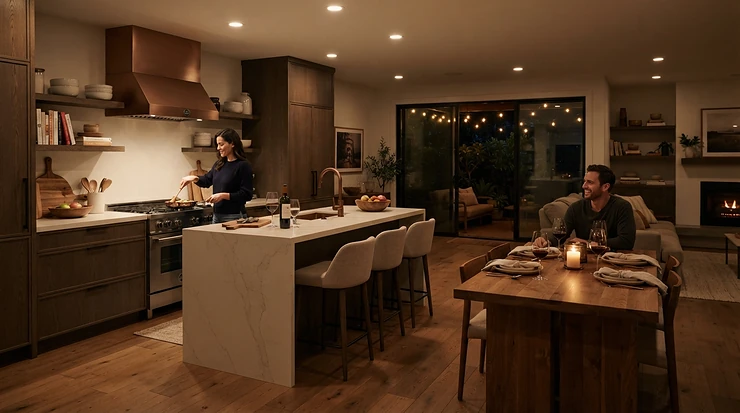
Stand under a bare 100W incandescent bulb in an old kitchen and you’ll notice something: half the room glows, the other half sulks in shadow, and your electricity meter spins like a fruit machine. Swap that single bulb for a scattering of LED downlights kitchen owners actually rave about, and the whole room changes character — worktops go from murky to museum-bright, shadows disappear from under wall cabinets, and your energy bill quietly shrinks in the background. This is not a subtle upgrade. It’s the difference between squinting at a chopping board and actually seeing what you’re chopping.
Kitchen lighting has quietly become one of the most researched home-improvement topics in the UK, and for good reason — it’s cheap to get wrong and expensive to fix twice. So what exactly is a kitchen LED downlight? In short, it’s a mains-powered, energy-efficient light fitting recessed (or occasionally surface-mounted) into a kitchen ceiling, typically using a GU10 socket, that replaces old halogen spotlights with far lower running costs and a longer lifespan.
Below, we’ve dug through real specifications, aggregated review sentiment, and current UK stock listings to compare seven genuinely available options — from £3 bulb swaps to smart, app-controlled spotlights. Every product mention here is written in plain English, focused on how it performs in an actual kitchen rather than on marketing copy.
Quick Comparison Table
| Product | Type | IP Rating | Best For |
|---|---|---|---|
| UKEW Brushed Chrome 5-Pack | GU10 fitting + bulbs | IP20 | Budget full-kitchen refit |
| Integral LED Evofire | Fire-rated GU10 fitting | IP65 | Homes needing fire compliance |
| MiniSun Antique Brass 4-Pack | GU10 fitting + bulbs | Fire rated | Traditional/warm-toned kitchens |
| Aurora AU-MPRO1A/30 | Dimmable fire-rated fitting | IP65 | Mood lighting + task lighting combined |
| JCC V50 | Integrated LED downlight | IP65 | Long-term, low-maintenance install |
| Philips Hue White Ambiance GU10 | Smart GU10 bulb | IP20 | App/voice-controlled smart kitchens |
| Philips CorePro GU10 | Standalone LED bulb | IP20 | Upgrading existing GU10 fittings |
Looking at this spread, there’s a clear pattern: the cheaper options ask you to buy the fitting and the bulb as one bundle, while the pricier picks either build in fire protection, smart control, or both. If your kitchen ceiling is a standard plasterboard void with no insulation directly above it, an IP20 fitting like the UKEW Brushed Chrome 5-Pack is perfectly legal and considerably cheaper. If there’s loft insulation, timber joists, or a room above with different fire-compartment requirements, a fire-rated fitting such as the Integral LED Evofire stops being optional. We’ll unpack exactly when each rating actually matters further down.
💬 Found a table like this useful? A quick share helps other home cooks make sense of GU10 fittings too!
Top 7 LED Downlights for the Kitchen: Expert Analysis
1. UKEW Brushed Chrome 5-Pack — cheapest full-kitchen recessed spotlight bundle
If you’ve never bought recessed downlights kitchen fittings before, this is the pack most people land on first, and there’s a reason it keeps reappearing in searches. It bundles five brushed chrome GU10 housings with a twist-lock bulb mechanism, meaning you drop the bulb in and give it a quarter-turn rather than fiddling with springs. Each fitting takes GU10 bulbs rated up to 50W equivalent, runs on standard 240V mains, and carries an IP20 rating — fine for dry ceiling zones, not for anywhere steam condenses directly onto the fitting.
What most buyers overlook about a pack like this is that IP20 doesn’t mean “unsuitable for kitchens” — it means unsuitable for bathroom zones 1 and 2, which is a different thing entirely. A standard kitchen ceiling, away from hob steam plumes and sink splashback, sits comfortably within IP20’s remit. Reviewers consistently report that the twist-lock housing is noticeably quicker to fit than older spring-clip designs, particularly when working solo up a ladder. A recurring theme in aggregated feedback is that the brushed chrome finish shows fingerprints during installation but wipes clean easily afterward.
Pros:
- ✅ Genuinely fast twist-lock installation, no springs to fight
- ✅ Five fittings covers a small-to-medium kitchen in one box
- ✅ Brushed chrome finish suits most contemporary kitchen schemes
Cons:
- ❌ IP20 rating limits use directly above hobs or sinks
- ❌ Bulbs included are basic-spec, not dimmable out of the box
Typically found in the under-£30 range for the full five-pack. For the price, it’s hard to argue with as an entry point — just budget separately if you want dimmable bulbs later.
2. Integral LED Evofire — best fire-rated downlight fitting for compliance
This is the fitting to reach for the moment your kitchen ceiling has anything above it that matters — a bedroom, loft insulation, or a shared floor in a flat. The Evofire uses what Integral calls a “canless” design: rather than housing the GU10 bulb inside a metal can that traps heat, the open steel frame lets air circulate, and independent measurements suggest bulbs run around 10°C cooler than in traditional can-style fire-rated downlights. Based on the spec comparison with sealed-can competitors, that lower operating temperature is the single biggest factor in why GU10 bulbs fail early — heat, not age, kills LED drivers.
It’s IP65 rated, has a 70mm cutout, and ships with a push-fit loop-in-loop-out terminal block, which matters more than it sounds: it means an electrician (or a competent DIYer under Part P rules) doesn’t need to strip and twist wires into a screw terminal, cutting install time noticeably. The 1mm bezel is genuinely thin compared with bulkier IP65 downlights, sitting almost flush to the ceiling. What the spec sheet won’t tell you, but trade reviewers note, is that the insulation guard supplied allows loft insulation to be laid directly over the top without smothering the fitting — a detail that trips up a lot of DIY installs.
Pros:
- ✅ Fire-rated and IP65, suitable for compliance-sensitive ceilings
- ✅ Push-fit terminal block speeds up wiring considerably
- ✅ Insulation guard included, safe under loft insulation
Cons:
- ❌ Sold per-fitting, so a full kitchen adds up faster than bundle packs
- ❌ Bulb sold separately in most listings
Individual units tend to sit in the £30-£45 range for a pack of four to six with GU10 lamps included, or lower per-unit if bought as fittings only. Given the fire-safety requirement it satisfies, this is genuinely one you don’t want to cheap out on if your ceiling build-up calls for it.
3. MiniSun Antique Brass 4-Pack — best for warm, traditional kitchen finishes
Not every kitchen wants the cold, clinical look of chrome. The MiniSun pack targets exactly that gap: four fire-rated GU10 downlights finished in antique brass, supplied complete with 5W GU10 bulbs in 3000K warm white. The 3000K colour temperature is worth dwelling on — it mimics halogen’s cosy glow rather than the bluer 4000K-6000K “cool white” many budget kitchen downlights default to, which is why period kitchens, farmhouse styles, and anywhere with wooden cabinetry tend to look noticeably better under it.
Here’s what most buying guides skip over: warm white and antique brass together create a visual consistency problem if the rest of your kitchen hardware is brushed steel or matte black — mixing finishes across a small ceiling reads as inconsistent rather than eclectic. Reviewers who’ve fitted these alongside existing brass door handles and taps report the coordinated look is the actual selling point, more than the light output itself. Aggregated feedback also flags that antique brass, being a coated finish rather than solid brass, can show wear at the twist-lock edge after a few years of bulb changes — a cosmetic issue, not a functional one.
Pros:
- ✅ Cohesive antique brass finish for traditional kitchen schemes
- ✅ Fire-rated construction included as standard
- ✅ Warm 3000K bulbs supplied, no separate bulb purchase needed
Cons:
- ❌ Coated finish can show light wear around the twist-lock over time
- ❌ Only four fittings per pack, may need two packs for larger kitchens
Sits in the low-to-mid price bracket, generally under £30 for the pack of four — good value if the finish matches your existing kitchen hardware.
4. Aurora AU-MPRO1A/30 — best dimmable fire-rated downlight for mood plus task lighting
The Aurora AU-MPRO1A/30 is a 6W, 220-240V, IP65 fire-rated downlight with 3000K warm white output and, critically, genuine dimming compatibility — a feature that separates it from most budget fixed-output fittings. In a kitchen, dimmability isn’t a luxury extra; it’s the difference between blasting full brightness while you’re chopping vegetables at 7am and dialling it back to something liveable when you’re eating dinner at the same table an hour later.
Reviewers consistently note that Aurora’s build quality feels a step up from unbranded alternatives at a similar price, with a more solid bezel and less flex when pressed. What the spec sheet doesn’t spell out clearly is that dimming performance depends heavily on pairing it with a genuinely LED-compatible dimmer switch — a leading-edge dimmer designed for old halogen circuits will cause flickering or a limited dimming range regardless of how good the downlight itself is. This is the single most common complaint in aggregated feedback around dimmable GU10 fittings generally, not unique to Aurora, and it’s worth flagging clearly here rather than letting buyers discover it the expensive way.
Pros:
- ✅ Fire-rated IP65 build suitable for most kitchen ceiling types
- ✅ Genuine dimming support for mood-to-task flexibility
- ✅ Solid, reassuring build quality compared with unbranded rivals
Cons:
- ❌ Requires an LED-compatible dimmer switch to perform properly
- ❌ Priced per unit, so a full run of six-plus adds up
Individually these run in the £15-£20 range, meaning a six-light kitchen sits somewhere around £90-£120 once you include a compatible dimmer switch.
5. JCC V50 — best integrated LED downlight for long-term, low-maintenance kitchens
The V50 takes a different approach entirely: rather than a GU10 socket you replace bulbs in, the LED engine is built into the fitting itself, with the whole downlight replaced (rarely) rather than the bulb (never). Trade sources describe it as one of the most respected integrated downlights on the UK market, delivering around 600-650 lumens with a proper wiring connector rather than a bare terminal block, plus a physical colour-temperature switch letting you choose between warm and cool white after installation rather than committing at the point of purchase.
Here’s the honest trade-off worth weighing: an integrated fitting like the V50 is more expensive upfront than a GU10 housing plus a cheap bulb, but you’re not budgeting for bulb replacements every few years, and there’s no risk of buying the wrong bulb wattage or beam angle down the line. Based on the spec comparison with GU10 alternatives, the V50 delivers a genuinely brighter, more even output than most 5-6W GU10 bulbs at a comparable wattage, largely because the LED chip and optics are engineered as one unit rather than a generic bulb dropped into a generic housing. What most buyers overlook is that once fitted, you lose the flexibility to simply swap in a different bulb brand or colour temperature later — you’re committed to the fitting’s built-in switch options.
Pros:
- ✅ No future bulb-buying decisions or compatibility guesswork
- ✅ On-site colour temperature switch, warm or cool white
- ✅ Even, higher-quality light output than typical GU10 bulbs
Cons:
- ❌ Higher upfront cost per fitting than GU10 alternatives
- ❌ No bulb-level flexibility once colour temperature is set at install
Expect to pay in the £18-£25 range per fitting, putting a six-light kitchen in the £110-£150 range — a genuine investment, but one with a lower total cost of ownership over a decade.
6. Philips Hue White Ambiance GU10 — best smart spotlight for app-controlled kitchens
If your kitchen is the room where you’re most likely to shout “lights on” at a smart speaker while your hands are covered in flour, this is the pick that actually answers that use case. The Hue White Ambiance GU10 bulb screws (or rather, twists) into any existing GU10 fitting and connects via the Philips Hue ecosystem, letting you shift colour temperature anywhere from a warm 2200K glow to a crisp 6500K daylight tone, schedule lighting changes, and dim smoothly without needing a compatible physical dimmer switch at all.
What most spec sheets won’t tell you plainly is that full functionality — scheduling, voice control depth, and away-from-home access — typically requires the separate Hue Bridge hub, not just the bulbs on their own, though Bluetooth-only control from your phone works for basic on/off/dim/colour changes within range. Reviewers consistently flag the app’s kitchen “scenes” (bright white for cooking, warmer tones for evening meals) as the actual daily-use benefit, more than the headline colour-changing capability, which in a kitchen setting is rarely used for anything beyond warm-to-cool shifts.
Pros:
- ✅ Full colour-temperature range from warm evening to bright daylight
- ✅ App and voice control, no physical dimmer switch required
- ✅ Smooth, flicker-free dimming across the whole brightness range
Cons:
- ❌ Full feature set needs the separate Hue Bridge, sold apart
- ❌ Meaningfully pricier than any non-smart GU10 bulb on this list
Individual bulbs typically sit in the mid-£40s to £50s range, with multi-bulb starter packs generally landing higher — check current pricing, as Philips periodically bundles the Bridge into starter kits at a lower effective per-bulb cost.
7. Philips CorePro GU10 — best simple bulb upgrade for existing downlight fittings
Not everyone needs new fittings at all. If your kitchen already has GU10 recessed spotlight housings and the only problem is that the bulbs inside are old halogens burning through electricity, the CorePro range is the straightforward fix. It’s a dimmable, 6W GU10 LED (50W halogen equivalent) with a 35-degree flood beam, 3000K warm white output, and a CRI of around 90 — meaning colours under it look close to how they’d appear in natural daylight, which matters more in a kitchen than almost any other room, given how often you’re judging whether food is properly cooked or a stain has actually lifted.
Philips rates these for a working life of roughly 25,000 hours, translating to over two decades of typical evening use, and the company states energy use around 80% lower than the halogen bulbs they replace. What the marketing doesn’t dwell on, but is worth stating honestly, is that a CRI of 90 is good but not the very top tier (some specialist bulbs reach 95+) — for everyday kitchen use it’s more than sufficient, and the price difference to chase marginal CRI gains rarely justifies itself for most households.
Pros:
- ✅ Drop-in replacement for existing GU10 fittings, no rewiring
- ✅ High CRI (~90) gives accurate, natural-looking colour rendering
- ✅ Roughly 80% lower running cost than equivalent halogen bulbs
Cons:
- ❌ Requires an LED-compatible dimmer if used on a dimmed circuit
- ❌ Not fire-rated or IP-rated itself; relies on the fitting’s rating
A three-pack generally falls in the £10-£18 range — arguably the single best value entry on this list if your fittings are already in place and working.
Practical Usage Guide: Installing and Maintaining Kitchen Downlights
Getting recessed downlights kitchen-ready is less about brute-force DIY and more about sequencing. Start by confirming what’s above your ceiling — loft space, insulation, or a room overhead — because that single fact determines whether you need fire-rated fittings under Approved Document P or can use standard IP20 housings. Kitchens and bathrooms are treated as notifiable “special locations” under UK Building Regulations, so any new circuit work should go through a Part P-registered electrician or be certified afterward — this isn’t optional paperwork, it’s what protects you if you ever sell the house.
Once fittings are confirmed and any wiring is signed off, spacing is the next thing people get wrong in their first attempt: a common mistake is spacing GU10 downlights too far apart, leaving dark patches between pools of light, or too close, creating an over-lit, slightly clinical look. As a rough starting point, divide your ceiling height by two to get an approximate spacing distance in metres, then adjust inward over worktops and the hob where task lighting matters most. For maintenance, the main job is periodic dusting of the bezel (grease and dust dull light output over time far more than people expect) and checking twist-lock bulbs haven’t loosened slightly from vibration, which is a surprisingly common cause of intermittent flickering that gets mistaken for a faulty bulb.
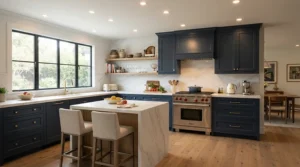
Real-World Scenarios: Which Kitchen Downlight Actually Suits You?
The renter refreshing a dated kitchen. If you’re in a rented flat and can’t cut new holes in a ceiling, don’t rule out downlights entirely — a surface-mounted kitchen ceiling flush light fitting using GU10 bulbs (rather than a fully recessed cutout) achieves a similar clean, spotlight-style look without altering the structure, and can usually go back to landlord-standard fittings on moveout. Pair it with the Philips CorePro GU10 bulbs for an easy, reversible upgrade.
The family doing a full kitchen extension. With a new ceiling going in anyway, this is exactly when fire-rated integrated options like the JCC V50 earn their higher price — no future bulb-buying decisions, consistent light output across a large open-plan space, and one less thing to think about for a decade.
The budget-conscious first-time buyer. Starting from scratch with an older kitchen and a tight budget, the UKEW Brushed Chrome 5-Pack or MiniSun Antique Brass 4-Pack get a full, evenly lit kitchen ceiling sorted for under £60 total, with room to upgrade to dimmable or smart bulbs later without touching the fittings again.
How to Choose LED Downlights for Your Kitchen
- Check what’s above your ceiling first. Insulation, a room overhead, or exposed joists all point toward fire-rated, IP65 fittings rather than basic IP20 housings.
- Decide between GU10 and integrated. GU10 lets you swap bulbs later; integrated units like the JCC V50 trade that flexibility for lower long-term maintenance.
- Pick a colour temperature deliberately. 3000K warm white suits traditional kitchens and evening use; 4000K cool white suits modern, task-focused spaces.
- Factor in dimmability early. Retrofitting a dimmer switch later means checking LED compatibility twice — decide upfront if you want this feature.
- Count your fittings before comparing prices. A cheap per-unit price on a fitting you need twelve of can cost more overall than a pricier bundle pack.
- Consider smart control only if you’ll actually use it. The Philips Hue White Ambiance GU10 is genuinely excellent, but it’s wasted spend if you’d never open the app.
- Confirm Part P compliance for new circuits. Any new kitchen lighting circuit should be signed off by a registered electrician under UK building regulations.
GU10 Downlights vs Integrated LED Downlights
This is the decision most kitchen lighting buyers get stuck on, and it’s worth a proper written comparison rather than a table alone. GU10 downlights — like the UKEW, Integral LED Evofire, MiniSun, and Aurora fittings covered above — separate the housing from the bulb, meaning replacement is a five-second twist-and-swap job and you can experiment with warm, cool, dimmable, or smart bulbs in the same housing over the years. The trade-off is a very slightly bulkier fitting and a socket connection that, over a decade of bulb changes, can loosen if handled roughly.
Integrated downlights, exemplified here by the JCC V50, fuse the LED chip directly to the fitting. This generally means a shallower profile (useful in ceilings with limited void depth), no risk of buying an incompatible bulb, and often a longer manufacturer warranty on the light output itself. The cost is genuine: when an integrated unit eventually fails — usually the driver, not the LED chip itself, after well beyond a decade of typical use — you’re replacing the whole fitting, not a £5 bulb. For a kitchen you’re renovating once and expect to live with for 10+ years, integrated units like the V50 often work out more convenient. For a kitchen where you want ongoing flexibility to change bulb types, brightness, or add smart bulbs down the line, GU10 remains the more adaptable choice.
LED Downlights vs Traditional Halogen Downlights
| Factor | LED Downlight | Halogen Downlight |
|---|---|---|
| Typical wattage for equivalent brightness | 5-7W | 35-50W |
| Typical lifespan | ~25,000-50,000 hours | ~2,000-3,000 hours |
| Heat output | Low | High |
| UK availability (new stock) | Standard | Banned from import/sale since 2021 |
| Best For | Everyday kitchen use, long-term savings | Not recommended — legacy stock only |
The gap here isn’t subtle. According to guidance from the Energy Saving Trust, lighting accounts for roughly 11% of the average UK household’s electricity use, and swapping halogen for LED in a kitchen full of downlights is one of the highest-impact single changes you can make to that figure. It’s also worth noting plainly: the import and sale of new halogen bulbs was banned across the UK from September 2021, so any halogen GU10 you’re still running is running on old stock nearing the end of its practical life regardless of how well it’s holding up. Replacing a bank of six 50W halogens with 6W LED equivalents like the Philips CorePro GU10 cuts that specific circuit’s running cost by roughly 88%, before even factoring in the far longer replacement interval.
Common Mistakes When Buying Kitchen Downlights
Buying purely on lumens without checking beam angle is the most frequent misstep — a bulb rated at 600 lumens with a narrow 25-degree beam creates a tight, intense pool of light, while the same lumen output at 60 degrees spreads far more softly, and mixing the two across one ceiling creates uneven, patchy lighting. Ignoring IP and fire ratings until after purchase is the second: it’s far cheaper to check your ceiling build-up before ordering than to return non-compliant fittings after an electrician flags them. A third common error is buying dimmable bulbs for a non-dimmable circuit (or vice versa) — dimmable LEDs generally work fine on standard switches, but non-dimmable LEDs on a dimmer circuit can flicker, buzz, or fail early. Finally, many buyers underestimate quantity needed, ordering exactly enough fittings for the ceiling area without accounting for extra density over worktops and the hob, then discovering shadows exactly where task lighting matters most.
Kitchen Downlights for Different Kitchen Types and Households
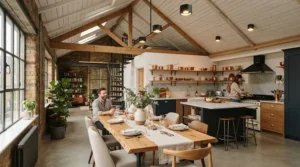
A galley kitchen in a period terrace typically benefits from warm 3000K downlights spaced tightly along the worktop run, since narrow rooms amplify shadow and a cooler tone can feel clinical against original features. A large open-plan kitchen-diner, by contrast, often works better with a mix — cooler, brighter light directly over the cooking zone from something like the JCC V50, and warmer, dimmable light over the dining table using an Aurora AU-MPRO1A/30 or Hue smart bulb, letting one room serve two very different moods across a single evening. Households with older residents or anyone with reduced vision generally benefit from higher lumen output and cooler colour temperatures overall, since contrast and brightness both decline with age-related vision changes — a factor worth flagging honestly rather than glossing over, since kitchen safety (avoiding cuts, misreading hob dials) genuinely depends on adequate lighting.
Long-Term Cost & Maintenance: The Real Cost of Ownership
| Fitting Type | Approx. Upfront Cost (6 lights) | Bulb Replacement Cost Over 10 Years |
|---|---|---|
| Budget GU10 (UKEW) | Under £40 | £15-£30 (occasional bulb swaps) |
| Fire-rated GU10 (Integral Evofire) | £60-£90 | £15-£30 |
| Integrated (JCC V50) | £110-£150 | £0 (fitting replaced only if it fails) |
| Smart GU10 (Hue White Ambiance) | £250-£350+ | £0-£20 |
Looking at the table above, the cheapest upfront option isn’t automatically the cheapest over a decade — the UKEW pack wins on day one, but an occasional bulb failure and the appeal of upgrading to dimmable or smart bulbs later can close that gap over time. The JCC V50, despite the highest initial outlay among non-smart options, has effectively zero ongoing bulb cost since there’s no bulb to replace. For anyone budgeting a full kitchen refit, factoring in a 10-year horizon rather than just the purchase price changes which option actually represents the better value.
Safety, Fire Ratings & Building Regulations Guide
UK Building Regulations Approved Document P governs electrical safety in dwellings, and kitchens are specifically flagged as a “special location” where new circuit work generally needs to be carried out, or subsequently certified, by a registered competent person. This matters practically: if you extend an existing lighting circuit to add downlights, that work may be notifiable to Building Control unless done by a certified electrician under a registered competent-person scheme. Separately from electrical certification, fire rating relates to the ceiling itself — if there’s a habitable room, loft space, or fire compartment boundary above your kitchen ceiling, cutting standard IP20 downlight holes into it can compromise fire resistance, which is precisely the gap fire-rated fittings like the Integral LED Evofire and Aurora AU-MPRO1A/30 are designed to close. If in doubt, a competent electrician can assess your specific ceiling build-up in minutes — it’s a small cost against the risk of getting it wrong.
FAQ
❓ How many LED downlights do I need for a kitchen?
❓ What colour temperature is best for kitchen downlights?
❓ Do kitchen downlights need to be fire rated?
❓ Can I fit GU10 downlights myself?
❓ Are smart GU10 bulbs worth it for a kitchen?
Conclusion
Getting LED downlights kitchen-ready isn’t really about chasing the single “best” bulb — it’s about matching the fitting to your ceiling, your kitchen’s actual layout, and how long you plan to live with the decision. Budget-conscious buyers do perfectly well with the UKEW Brushed Chrome 5-Pack or MiniSun Antique Brass 4-Pack, both of which cover a full kitchen ceiling for under £60. Anyone with insulation or a room above their kitchen should treat fire-rated options like the Integral LED Evofire and Aurora AU-MPRO1A/30 as non-negotiable rather than optional extras. Households planning a decade-long renovation gain real long-term value from the JCC V50‘s integrated, maintenance-free design, while anyone drawn to app control and mood lighting will get genuine daily use out of the Philips Hue White Ambiance GU10. And if your existing fittings are fine and it’s purely a bulb problem, the Philips CorePro GU10 remains the simplest, cheapest fix on this entire list.
Whichever route you take, checking current prices and availability before buying is essential, since retail pricing shifts constantly. Take the ceiling check seriously, get any new circuit work properly certified, and the rest — brightness, warmth, style — genuinely comes down to personal taste.
✨ Don’t Miss These Exclusive Deals!
🔍 Take your kitchen lighting to the next level with these carefully selected downlights. Click on any highlighted item to check current pricing and availability. A well-lit kitchen makes every meal easier to cook, and every evening in it a little more pleasant!
Recommended for You
- Motion Sensor Under Cabinet Light: 7 Best UK Picks (2026)
- Rechargeable Under Cabinet Light: 7 Best UK Picks (2026)
- Under Cabinet Lights Kitchen: 7 Brilliant UK Picks (2026)
Disclaimer: This article contains affiliate links. As an Amazon Associate, I earn from qualifying purchases. If you purchase products through these links, we may earn a small commission at no additional cost to you.
✨ Found this helpful? Share it with your friends! 💬🤗
