
In This Article
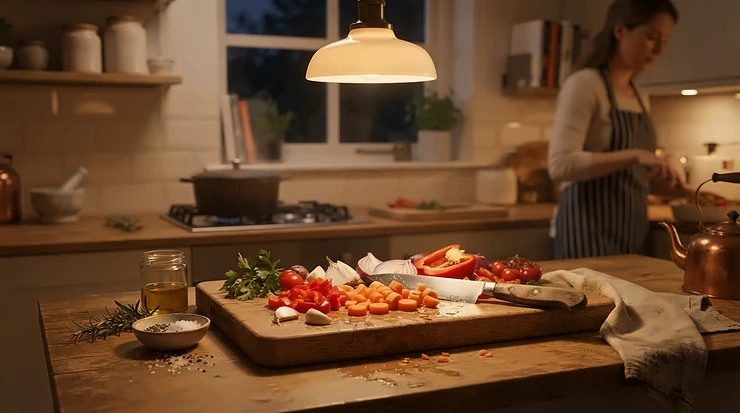
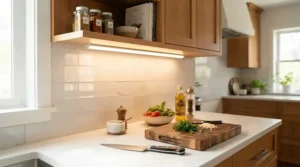
Chop an onion under a top-mounted kitchen pendant and you’ll spend half your time squinting into your own shadow. That’s the maddening little secret nobody tells you when you’re planning a kitchen: your main ceiling light is working against you the second you step up to the counter. The fix is unglamorous but transformative, and it’s exactly what this guide is about — under cabinet lights kitchen setups that throw light down onto the worktop instead of down onto the top of your head.
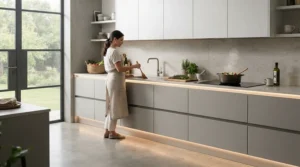
What is under cabinet lighting? It’s a category of slim LED fixtures — strips, bars, or pucks — mounted to the underside of wall cabinets to illuminate the worktop directly below, eliminating shadows cast by overhead lighting during food prep. Some run on rechargeable batteries with motion sensors, others plug into the mains, and a few hardwire into a dedicated circuit for a fully built-in look.
We’ve spent time digging through real specs, genuine review patterns, and current listings on amazon.co.uk to pull together seven models that actually earn a place on your worktop — not just the ones with the shiniest product photos. Whether you’re after LED under cabinet lighting that’s dimmable enough for evening cooking, under counter kitchen lights you can fit without an electrician, or a straightforward under cabinet light bar for a rental kitchen, there’s something here for you. We’ll also dig into beneath cupboard light options for renters, worktop task lighting for serious cooks, and where a kitchen counter task light genuinely earns its keep versus where it’s overkill.
Quick Comparison Table
| Product | Power Type | Best For | Price Range |
|---|---|---|---|
| EZVALO 10-Inch Rechargeable Under Cabinet Light | USB-C rechargeable, motion sensor | Renters, no wiring | under £30 |
| Gritin 10.2-Inch Rechargeable Under Cabinet Light | USB-C rechargeable, motion sensor | Colour-temperature flexibility | under £35 |
| MCGOR 10-Inch Under Cabinet Lighting (2-Pack) | USB-C rechargeable, motion sensor | Budget multi-zone kitchens | under £30 |
| Aglaia LED Under Cupboard Light Kit | Mains-plug, hardwireable | Permanent worktop task lighting | £20-£30 range |
| Barrina T5 LED Under-Cabinet Light Bar | Mains-plug, linkable, hardwireable | Long runs, utility-style brightness | £30-£45 range |
| Philips Hue White & Colour Lightstrip Plus | Mains, smart/app-controlled | Smart-home kitchens | mid-£70s to £90s range |
| STAR-SPANGLED Stick-On Puck Lights (3-Pack) | Battery-powered | Spot lighting, awkward corners | under £20 |
Looking at the spread above, the split really comes down to how permanent you want the install to be. The three rechargeable bars at the top are the “unbox and stick it up” options — ideal if you rent or just don’t fancy an electrician visit. The Aglaia and Barrina units sit in the middle: mains-powered for constant brightness without battery top-ups, at the cost of needing a nearby socket or a bit of cable-hiding know-how. The Philips Hue strip is the outlier — you’re paying for smart-home integration and colour-changing ambience, not just task lighting, so weigh that against whether you actually want your worktop light controlled by an app. STAR-SPANGLED pucks are the cheapest way to plug a gap, but don’t expect them to light an entire run of cabinets evenly.
💬 Found a combination that works for your kitchen? A quick share helps other readers find the right pick too!
Top 7 Under Cabinet Lights Kitchen: Expert Analysis
1. EZVALO 10-Inch Rechargeable Under Cabinet Light — best all-rounder for renters
The standout here is simple: no wiring, no drilling into cabinet bases, no landlord conversation required. The EZVALO unit runs on a 2,400mAh rechargeable battery via USB-C, and the standard 10-inch bar is roughly the length of a single wall cabinet, which makes positioning straightforward without you needing to calculate overlap zones.
On the spec sheet, it offers three colour temperatures and a motion sensor with adjustable sensitivity. In practice, that motion sensor is the feature that actually changes your evening routine — walk up to the counter at 11pm for a glass of water and the light comes on automatically rather than you fumbling for a switch in the dark, which matters more than it sounds like it should. The 2,400mAh battery claim translates to several days of typical motion-triggered use before a recharge, though continuous use (leaving it manually switched on rather than motion-activated) will drain it considerably faster — worth knowing before you assume “rechargeable” means “install and forget.”
Based on the spec comparison with rival battery units, this model’s main advantage over cheaper alternatives is the combination of dimming and adjustable colour temperature in one unit, rather than forcing a choice between the two. Reviewers consistently report strong initial brightness and straightforward magnetic mounting, though as with most rechargeable battery lights in this category, a recurring theme in aggregated feedback is that the motion sensor can occasionally be a touch oversensitive near open windows or vents, triggering on airflow rather than movement — an easy fix via the sensitivity dial, but worth knowing before you assume it’s faulty out of the box.
This is the pick for a first-time renter, a student kitchen, or anyone who wants brighter worktops this weekend rather than after booking an electrician.
Pros:
- ✅ No wiring or drilling — genuinely renter-friendly
- ✅ Motion sensor removes the need for manual switching
- ✅ Three colour temperatures cover most kitchen moods
Cons:
- ❌ Battery drains faster in continuous (non-motion) mode
- ❌ Motion sensitivity may need manual adjustment near vents
Prices for the EZVALO sit comfortably under £30 for a pack, and at that range it’s hard to argue with the value — check current pricing on the listing, as multi-packs often work out cheaper per unit than singles.

2. Gritin 10.2-Inch Rechargeable Under Cabinet Light — best for colour-temperature flexibility
What stands out on the Gritin is the sheer number of lighting combinations on offer: three colour temperatures crossed with five brightness levels gives you fifteen practical settings, which is genuinely more granular than most rechargeable competitors bother with.
That depth of adjustment matters more than it might first appear. A stark 6500K daylight setting is brilliant for spotting whether that chicken is properly cooked through, but it’s a fairly harsh, clinical light to have on in the evening if your kitchen opens into a living space — switching to a warmer 3000K setting for after-dinner tidying avoids that “operating theatre” feel that cheaper single-temperature units create. The unit again uses USB-C rechargeable batteries, magnetic strip mounting, and includes a built-in motion sensor.
Aggregated review sentiment on comparable Gritin lighting products tends to flag genuinely bright output for the size of the unit and praises the tactile brightness controls over touch-sensitive alternatives that can be fiddly with wet or greasy hands mid-cooking — a small but real detail for anyone prepping food. On the downside, a common complaint in user reviews of magnetic-mount rechargeable lights generally is that the mounting strips can lose adhesive grip over time in humid kitchen environments, particularly near a hob or kettle, so it’s worth periodically checking the strips rather than assuming a one-time install is permanent.
Pros:
- ✅ Fifteen brightness/colour-temperature combinations
- ✅ Physical buttons work fine with wet or greasy hands
- ✅ Magnetic mount makes repositioning simple
Cons:
- ❌ Adhesive mounting strips may loosen in humid spots
- ❌ Fifteen settings can feel fiddly for those who want simplicity
At a price typically under £35 for a two-pack, the Gritin justifies its slightly higher cost than basic single-temperature rivals through the flexibility alone — worth the extra few pounds if mood matters as much as visibility to you.
3. MCGOR 10-Inch Under Cabinet Lighting (2-Pack) — best for multi-zone budget kitchens
The MCGOR two-pack’s standout feature is coverage-per-pound: two full bars for a price that often undercuts even single premium units, which makes it the obvious choice if you’ve got a longer run of cabinets — say, over both the hob and the sink prep zone — and don’t want to compromise on covering both.
Specs-wise, it’s broadly in line with the rest of this rechargeable category: five dimming levels, motion sensor, magnetic strip mounting, USB-C charging. What sets it apart in practice is less about any single headline spec and more about the fact that buying two identical units from one box guarantees colour-matching between zones — mixing and matching different brands across a kitchen run can result in visibly different white tones side by side, something that’s easy to overlook until it’s staring back at you every evening.
Based on the spec comparison, this is squarely a budget play rather than a premium one, and the honest analytical take is that buyers should treat it as such: it won’t have the refinement of pricier competitors, but for someone lighting two zones on a tight budget, two matched units beat one nicer one with a dark patch at the other end of the counter. Reviewers of similarly specified MCGOR lighting products tend to report solid value for the price point, with the main recurring caveat in aggregated feedback being that battery life estimates on the packaging assume relatively light motion-triggered use and can disappoint if you’re leaving the lights on continuously through a long cooking session.
Pros:
- ✅ Two matched units for consistent colour across zones
- ✅ Strong coverage-per-pound versus single-unit competitors
- ✅ Same five-level dimming as pricier rivals
Cons:
- ❌ Continuous use drains battery faster than motion mode
- ❌ Build quality feels basic compared with premium picks
Typically found under £30 for the pair, the MCGOR set is one of the strongest value propositions in this entire round-up if your priority is covering more worktop rather than chasing extra features.
4. Aglaia LED Under Cupboard Light Kit — best for permanent, wire-free brightness
The Aglaia kit’s standout advantage is that it sidesteps the battery-versus-hardwiring dilemma entirely: it plugs into a standard socket via a low-voltage adapter, which means constant, consistent brightness with none of the recharging admin of the battery-powered options above, but also none of the commitment (or Part P considerations) of a fully hardwired circuit.
The kit typically bundles three light bars totalling several hundred lumens, a touch dimmer, and connector cables so you can link the bars in sequence from a single plug. What that means in practice is that one plug socket, positioned anywhere convenient along your worktop run, can feed lighting across an entire bank of cabinets — genuinely useful in older UK kitchens where sockets are sparse and awkwardly placed. The dimmer control sits on the cable itself rather than the fitting, so you can mount it somewhere reachable rather than fumbling behind the units.
What most buyers overlook about this style of kit is that “plug-in” doesn’t mean “temporary” — many people run these permanently for years, tucking the cable neatly along the cabinet’s underside with the included clips, and it’s a genuinely tidy long-term solution for anyone not ready to commit to hardwiring. Aggregated reviews of comparable plug-in cabinet light kits commonly note that the trailing cable is the main aesthetic compromise versus a fully hardwired install, and that the touch dimmer occasionally needs a firmer press than expected to register.
Pros:
- ✅ Constant mains brightness with zero battery maintenance
- ✅ Multiple bars linkable from a single plug socket
- ✅ Tidy cable-clip system for a near-hardwired look
Cons:
- ❌ Visible cable unless carefully routed and clipped
- ❌ Touch dimmer can be less responsive than a physical switch
Sitting in the £20-£30 range for a full kit, the Aglaia offers a genuinely strong middle ground between disposable battery units and a full electrician-installed system.
5. Barrina T5 LED Under-Cabinet Light Bar — best for long runs and utility-grade brightness
The Barrina bar’s calling card is raw output paired with linkability: each 2ft bar puts out over 1,000 lumens, and up to twelve can be daisy-chained together using snap connectors, which makes it less a “kitchen accessory” and more an actual lighting system — one that happens to work brilliantly under cabinets.
Because the Barrina was originally designed as a T5 fluorescent tube replacement for garages and workbenches, its build leans utilitarian rather than decorative: a straightforward aluminium-and-diffuser bar with an on/off switch on the cord, sold in multi-packs with connector cords for linking runs end to end. For a kitchen, that translates into genuinely even, shadow-free brightness across a long run of cabinets — something the shorter 10-inch battery units in this list can’t match without stacking three or four of them.
Here’s what the spec sheet won’t tell you, but reviewers note: because these are hardwireable (with cut ends included in the box for a permanent connection), some buyers use them as a genuine semi-permanent installation rather than a plug-in convenience item, feeding them from a single switched fused spur behind the end cabinet. That’s a step up in commitment from anything else on this list, and it’s worth it only if you’re confident tidying the wiring yourself or willing to bring in an electrician for the final connection — worktop task lighting doesn’t get much more serious than this. Aggregated review sentiment across Barrina’s shop-light range consistently highlights genuinely bright, even output and easy end-to-end linking, with the recurring criticism being that the plain white housing and exposed diffuser look more “workshop” than “showroom” if left fully visible rather than tucked under the cabinet lip.
Pros:
- ✅ Over 1,000 lumens per bar — brightest option here
- ✅ Daisy-chains up to twelve bars for long runs
- ✅ Hardwireable for a genuinely permanent install
Cons:
- ❌ Utilitarian looks if not fully hidden behind the cabinet lip
- ❌ Hardwiring the final connection may need an electrician
At roughly £30-£45 depending on pack size, the Barrina delivers commercial-grade brightness at a price that undercuts most “designer” kitchen lighting brands by a wide margin.

6. Philips Hue White & Colour Lightstrip Plus — best for smart-home kitchens
The Philips Hue strip’s standout feature isn’t brightness at all — it’s control. Sixteen million colours, full app scheduling, and voice control through Alexa, Google Assistant, or Apple HomeKit turn your worktop lighting into part of a wider smart-home routine rather than a fixed fitting you flick on and off.
Specs matter differently here than with the task-lighting options above: the strip outputs around 1,600 lumens across its full length in white mode and is fully cuttable and extendable, letting you contour it around corner units or extend it down a full run of cabinets with additional segments sold separately. What that means in practice is a kitchen where you can set a bright, cool white for meal prep at 6pm and have it automatically dim to a warm amber for evening use — genuinely useful if your kitchen doubles as a dining or living space, less useful if you just want reliable task light and nothing else.
Reviewers consistently note that the Hue ecosystem’s real strength is in the app’s scene presets and automation options, and a common thread in aggregated feedback is that first-time buyers often underestimate that a Hue Bridge is required to unlock the full automation suite — Bluetooth-only control works for basic on/off and dimming within range, but scheduling, voice routines, and away-from-home control all need the Bridge, sold separately. Based on the spec comparison with the purely functional lights above, the honest take is that you’re paying a genuine premium for ecosystem integration rather than for extra lumens per pound.
Pros:
- ✅ Full colour and scene control via app or voice
- ✅ Cuttable and extendable to fit awkward layouts
- ✅ Integrates with existing Alexa, Google, or HomeKit setups
Cons:
- ❌ Full automation needs a separately sold Hue Bridge
- ❌ Considerably pricier per metre than task-only alternatives
Expect a price in the mid-£70s to £90s range depending on whether a Bridge is bundled — a genuine investment, and one that only makes sense if you’re already bought into (or planning to build) a wider smart-home setup.
7. STAR-SPANGLED Stick-On Puck Lights (3-Pack) — best for quick spot fixes
The standout with the STAR-SPANGLED pucks is sheer simplicity: no cables, no batteries beyond three easily replaceable AAAs per unit, and a tap-touch on/off that a child could operate — this is about as close to “instant light” as under cabinet lighting gets.
Each puck is a compact, round fixture roughly 7cm across, delivering a soft pool of light directly beneath it rather than an even bar of illumination along a whole cabinet run. That’s the key distinction from every other product on this list: pucks are spot lighting, not linear task lighting, and interpreting that spec correctly matters for setting expectations — three pucks spaced under one cabinet will leave visible dark patches between them, which is fine for a corner reading nook or a pantry shelf but genuinely frustrating if your goal is shadow-free chopping across a full worktop.
Based on that honest analysis, this product earns its place here specifically for the gaps other lights leave: the awkward end of a run too short for a full bar, a single dark corner cupboard, or a genuinely temporary fix in a kitchen you’re about to renovate anyway. Aggregated reviewer sentiment tends to praise the strong adhesive pads and surprisingly warm, even light quality for the price, while a recurring criticism is that AAA batteries in continuous or frequently-used pucks need replacing every few weeks — an ongoing cost that battery-rechargeable bars avoid entirely.
Pros:
- ✅ Genuinely instant install — stick and go
- ✅ Ideal for corners and short gaps other lights miss
- ✅ Simple tap control needs no manual or app
Cons:
- ❌ Spot coverage leaves dark patches between pucks
- ❌ Ongoing AAA battery replacement cost
At under £20 for a three-pack, the STAR-SPANGLED pucks are best value as a supplement to one of the bar-style lights above rather than as your kitchen’s sole lighting solution.
How to Choose Under Cabinet Lights for Your Kitchen
- Decide on power source first. Rechargeable battery units like the EZVALO or Gritin need zero installation skill, mains-plug kits like the Aglaia need a nearby socket, and hardwired options like the Barrina need either DIY wiring confidence or an electrician. This single decision filters out most of the field immediately.
- Measure your cabinet runs before buying. A 10-inch bar under a 60cm cabinet leaves gaps at both ends; know your actual lengths so you’re not stacking cheap units to compensate.
- Pick colour temperature for the job, not the aesthetic. Neutral-to-cool white (4000K-5000K) is genuinely better for spotting whether food is properly cooked, while warm white (2700K-3000K) suits open-plan kitchens doubling as living space in the evening.
- Check for dimming, not just brightness. A light that’s brilliant at full power but has no dim setting will feel harsh for late-night snack runs — worktop task lighting should flex with the time of day.
- Factor in maintenance realistically. Rechargeable batteries need topping up every few days with regular use; mains-plug and hardwired units simply run, but commit you to a cable or a wiring job.
- Match brightness to what you actually cook. A student kitchen reheating ready meals doesn’t need the same lumen output as someone regularly prepping fresh ingredients under close inspection.
- Consider the smart-home question honestly. The Philips Hue strip is genuinely excellent if you’re building an ecosystem, but paying that premium purely for on/off task lighting is money better spent elsewhere.
Common Mistakes When Buying Under Cabinet Lighting
The single biggest mistake is buying by product photo brightness rather than actual lumen output — glossy listing images are lit for the camera, not for your kitchen, so always check the stated lumens rather than trusting how bright a photo looks. A second common error is ignoring colour temperature consistency: buying different brands for different zones of the same kitchen often results in visibly mismatched white tones side by side, which is far more noticeable in person than it sounds on paper.
Underestimating cable routing is another frequent regret, particularly with mains-plug kits like the Aglaia — buyers picture a seamless glow and are then surprised by a visible cable trailing to the nearest socket unless they plan the route in advance. Finally, plenty of people buy battery-powered units expecting hardwired reliability, then find themselves frustrated by unexpected recharging at the worst possible moment — usually mid-recipe on a Sunday roast.
Real-World Scenario: Which Light Suits Your Kitchen?
If you’re a tenant in a rented flat with a strict no-drilling clause, the rechargeable EZVALO or MCGOR units are your realistic ceiling — magnetic mounting means nothing goes into the cabinet itself, and you take the lights with you when you move. Budget around an evening for install and you’re set.
If you’re a keen home cook who preps fresh ingredients most nights and has noticed yourself squinting at the chopping board, the Barrina bar or the Aglaia kit make far more sense than a battery solution — you want reliable, unwavering brightness every single time you’re at the counter, not a “60% charge remaining” warning halfway through dicing an onion.
If you’re renovating a kitchen from scratch and already run Alexa routines or smart bulbs elsewhere in the house, the Philips Hue strip genuinely earns its premium — it slots into scenes and schedules you’ve already built, rather than sitting as an isolated fixture nobody remembers to switch off.
Long-Term Cost & Maintenance
Battery-powered units like the EZVALO, Gritin, and MCGOR carry no ongoing electricity cost beyond the negligible price of USB charging, but they do carry a hidden long-term cost in battery degradation — rechargeable lithium cells typically lose meaningful capacity after a few hundred charge cycles, meaning a unit bought today may need replacing (not just recharging) in two to three years of regular use. The STAR-SPANGLED pucks trade that for a small but recurring AAA battery cost that adds up faster with frequent use.
Mains-powered options like the Aglaia and Barrina cost more to buy upfront relative to their basic battery-powered counterparts but carry essentially no consumable cost afterwards — LEDs in this category are typically rated for tens of thousands of hours, meaning realistic decade-plus lifespans under normal domestic use. The Philips Hue strip sits at the top of upfront cost but, like the other mains options, has no ongoing consumable expense beyond the trivial electricity draw of LED lighting itself — the entry expense is the Bridge and app ecosystem, not the running cost.
Practical Usage Guide: Getting the Most From Your New Lights
Getting the placement right matters more than the product you choose. Mount bar-style lights toward the front edge of the cabinet base rather than tucked at the back — a common first-time mistake — since front placement throws light down onto the counter’s working surface rather than against the wall behind your ingredients. For rechargeable units, get into the habit of a Sunday-evening top-up rather than waiting for a low-battery warning mid-week; treating it like watering a houseplant avoids the frustration of a dead light during a busy cook.
If you’re linking multiple bars — as with the Barrina or Aglaia kits — test the full run before committing to final adhesive placement, since connector cables have fixed lengths and repositioning after sticking down is messier than getting it right first time. For anyone going the hardwired route, the single most common first-30-days mistake is skipping a proper isolation switch, leaving the only way to kill power at the consumer unit itself — a switched fused spur behind an end panel solves this for a few pounds and saves considerable hassle later. Finally, wipe down the underside of any fitting near the hob every few weeks; grease and condensation build-up here is more common than people expect and can dull output over time.
✨ Don’t Miss These Exclusive Deals!
🔍 Take your kitchen lighting to the next level with these carefully selected products. Click on any highlighted item to check current pricing and availability. These tools will help you create a genuinely brighter, more usable worktop your whole family will appreciate!
Under Cabinet Lighting vs Ceiling-Only Kitchen Lighting
A single kitchen with only ceiling lighting relies on ambient illumination bouncing around a room to light the worktop indirectly, which is precisely why shadow-casting becomes such a persistent problem — you, the cook, are standing directly between the light source and the surface you’re working on. Under cabinet lighting solves this by moving the light source directly above the task itself, at a distance of maybe 30-40cm rather than 2 metres, which is why even a modest 400-lumen bar can outperform a much brighter ceiling fixture for close-up food prep tasks like reading a recipe card, checking meat doneness, or spotting a stray bit of eggshell.
The trade-off is coverage versus precision: ceiling lighting fills an entire room evenly but poorly for close tasks, while under cabinet lighting is brilliant for the counter but does nothing for the rest of the kitchen. The honest answer, backed by lighting industry guidance on colour temperature and task-appropriate illumination, is that the two aren’t really competing categories at all — a well-lit kitchen layers both, using ceiling or pendant lighting for general ambience and under cabinet lighting specifically to eliminate the shadow zone where most actual food preparation happens.
Safety, Wiring & Regulations Guide
For the battery-powered and plug-in units covered in this guide — the EZVALO, Gritin, MCGOR, Aglaia, and STAR-SPANGLED — there’s no notifiable electrical work involved at all; you’re simply using an existing socket or a battery, and no permission or certification is required. The moment you consider a fully hardwired option like connecting the Barrina bar directly into a dedicated circuit rather than via a plug, UK building regulations become relevant.
Under the current guidance, most straightforward kitchen electrical work — including adding a light fitting to an existing circuit — is not classed as notifiable to a local authority in England, following the 2013 changes that specifically removed most kitchen work from the notifiable list. However, any work involving a brand-new circuit or a consumer unit replacement remains notifiable regardless of room, so if your hardwiring plan requires a new circuit rather than tapping into an existing one, you’ll need to follow the process outlined in the official Approved Document P guidance on electrical safety in dwellings. If in doubt, a qualified electrician can confirm in minutes whether your specific job is notifiable — it’s a cheap call to make before, not after, any drilling starts.
It’s also worth checking that any hardwired or mains-plug product you buy carries a valid UKCA or CE mark, confirming it meets UK electrical safety regulations; you can read the government’s own explanation of what that marking means and why it matters via the official guidance on using the UKCA marking.
Features That Actually Matter (And Those That Don’t)
Genuinely worth prioritising: dimming range, colour temperature options, and — for battery units — a motion sensor with adjustable sensitivity. These three features directly change how usable the light is day to day, and skimping on them is the most common source of buyer’s remorse in this category.
Less important than the marketing suggests: maximum lumen count in isolation, RGB colour-changing modes for a task light, and remote controls for simple on/off units. A worktop rarely needs disco-level brightness or a rainbow of colours to chop vegetables safely, and a remote control for a light you’ll switch on standing right next to it is solving a problem that doesn’t really exist. Reviewers consistently note that the features they actually use daily are dimming and colour temperature, while flashier extras like multicolour modes get used once during setup and then largely ignored.
Problem → Solution Guide
Problem: Dark patches between separate light units. Overlap coverage slightly when positioning multiple bars, and favour a single longer linkable system like the Barrina over several short disconnected units for continuous runs.
Problem: Motion sensor triggers randomly. Adjust the sensitivity dial down, and reposition the unit away from direct airflow from extractor fans, open windows, or air vents, which can falsely trigger passive infrared sensors.
Problem: Light looks too harsh or clinical in the evening. Switch to a warmer colour-temperature setting if your unit offers one, or pair a cooler task light with a warmer secondary source for evening ambience.
Problem: Battery-powered unit dies mid-week. Set a recurring reminder to top up charge on a fixed day, and consider switching to motion-sensor mode rather than manual “always on” to extend runtime significantly.
Problem: Visible trailing cable spoils the look. Use the cable clips included with kits like the Aglaia, routing the cord along the cabinet’s rear edge and down a chair leg or cabinet side rather than across open wall space.
Under Cabinet Lighting for Small Kitchens & Galley Layouts
Compact and galley kitchens benefit disproportionately from under cabinet lighting precisely because they tend to have fewer windows and more shadow-casting wall units close to the worktop. In a narrow galley layout, a single overhead light often has to serve both sides of the room, meaning one counter inevitably sits in partial shadow at any given moment — under cabinet lighting solves this per-side rather than relying on one central source to do an impossible job evenly.
For small kitchens specifically, the shorter rechargeable bars — the EZVALO, Gritin, and MCGOR — tend to be the more practical fit, since a compact kitchen typically has shorter cabinet runs that don’t need the extended linkability of something like the Barrina. The STAR-SPANGLED pucks are also worth a second look here for tight corner units common in galley layouts, where a full bar simply won’t fit but a single puck slots in neatly.
Frequently Asked Questions
❓ Do under cabinet lights use a lot of electricity?
❓ Can I install under cabinet lighting myself?
❓ What colour temperature is best for kitchen worktop lighting?
❓ How many lumens do I need for under cabinet kitchen lighting?
❓ Is rechargeable or hardwired under cabinet lighting better?
Conclusion
The right under cabinet lights kitchen setup genuinely changes how your worktop feels to use every single day, and as this round-up shows, there’s no single correct answer — only the right answer for your specific kitchen, tenancy situation, and cooking habits. Renters and quick fixes point firmly toward the rechargeable trio of EZVALO, Gritin, and MCGOR; anyone after permanent, wire-free brightness should look hard at the Aglaia; serious home cooks with longer runs to cover get the most from the Barrina; smart-home households will get genuine daily value from the Philips Hue strip; and the STAR-SPANGLED pucks earn their keep quietly filling in the gaps everything else leaves behind.
Whichever direction you go, the underlying principle stays the same: light the task, not just the room. A £20 puck light aimed correctly at your chopping board will beat an expensive ceiling fitting that leaves you working in your own shadow every time. Take the fifteen minutes to measure your cabinet runs, decide honestly on power source, and pick based on how you actually cook rather than which product photo looks the most impressive.
Recommended for You
- Fairy Lights With Remote: 7 Best Picks for UK Homes (2026)
- Curtain Fairy Lights Bedroom: 7 Dreamy UK Picks (2026)
- Fairy Lights for Bedroom: 7 Best Picks for a Cosy Glow (2026)
Disclaimer: This article contains affiliate links. As an Amazon Associate, I earn from qualifying purchases. If you purchase products through these links, we may earn a small commission at no additional cost to you.
✨ Found this helpful? Share it with your friends! 💬🤗
