
In This Article
There’s a particular kind of magic that happens the moment you plug in a string of fairy lights and your bedroom stops looking like a place you merely sleep in and starts looking like somewhere you actually want to be. Overhead bulbs are practical, sure, but they’re about as romantic as a dentist’s waiting room. fairy lights for bedroom searches spike every autumn for exactly this reason: people want a softer, warmer glow that doesn’t require rewiring a single plug socket or calling an electrician.
This guide cuts through the identical-looking listings clogging up Amazon and gets into what actually separates a decent set of fairy lights bedroom shoppers will love from one gathering dust in a drawer after a fortnight. We’ve dug into real specifications, aggregated genuine customer-review sentiment, and honest side-by-side analysis across budget, mid-range and premium options — including copper-wire strings, USB-powered sets, curtain lights and app-controlled smart lighting.
What is fairy lights for bedroom? In practical terms, it’s any low-voltage LED string — typically warm white, battery, USB or mains-powered — draped, pinned or hung around a bedroom to add ambient, decorative light rather than functional overhead illumination. Below, we’ll compare seven genuinely good options, explain what the specs mean in the real world, and help you land on the right one for your space, your budget and your sleep habits.
Quick Comparison Table
| Product | Power | Length / LEDs | Best For |
|---|---|---|---|
| Twinkly Strings | Mains (app-controlled) | 20m / 250 LED | Tech lovers wanting colour-changing scenes |
| Philips Hue Festavia | Mains (Hue ecosystem) | 20m / 250 LED | Existing Hue households |
| Govee USB Fairy Lights | USB + remote | 20m / 200 LED | Best all-round value |
| Brightown Curtain Lights | USB + remote | 3m x 3m / 300 LED | Statement wall or headboard backdrop |
| Minetom Copper Wire Lights | USB + remote | 10m / 100 LED | Shaping around mirrors, frames, shelves |
| Shatchi Battery Fairy Lights | Battery | 10m / 100 LED | No sockets nearby, renters, students |
| JXLEDAYY Curtain Lights | USB + remote | 2m x 2m / 200 LED | Budget window or wall backdrop |
Looking across the table, the split really comes down to how much control you want versus how much you want to spend. The Twinkly Strings and Philips Hue Festavia sit at the premium end because you’re paying for smartphone-level control over colour and pattern, not just brighter LEDs. Meanwhile Shatchi Battery Fairy Lights solves a problem none of the smart options can: a bedroom with no plug socket within reach of the headboard.
💬 Just one click — help others make better buying decisions too!😊
Top 7 Fairy Lights for Bedroom: Expert Analysis
1. Twinkly Strings — best for colour-changing smart scenes
The Twinkly Strings is the fairy light equivalent of upgrading from a basic phone to a smartphone — suddenly every bulb is individually addressable rather than just on or off. That’s the standout feature worth expanding on: each of the 250 LEDs along the 20-metre run can be controlled independently through the Twinkly app, which uses your phone’s camera to map exactly where every bulb sits once you’ve hung the string.
In practice, that mapping means you can draw effects, gradients and animations that follow the actual shape of your string rather than a generic pre-set pattern. The IP44 rating covers light indoor moisture but this is really designed as an indoor-first product for bedrooms, playrooms and window displays, and the 16-million-colour palette means warm white is just one setting among hundreds rather than the only option.
Based on the spec comparison with rivals in this list, the Twinkly Strings is squarely for people who want to fiddle — to build a slow sunset-to-midnight gradient before bed, or sync colours to music for a party mood. If you just want a switch-on-and-forget warm glow, this is arguably more product than you need.
Reviewers consistently report that the LED-mapping setup is genuinely fun the first time and takes only a few minutes, though a handful mention that the companion app has occasionally needed a firmware update before new features work correctly. Aggregated sentiment on app-controlled smart lighting from independent German test lab Computer Bild similarly notes strong smart-home integration but flags that effects can feel busier and less atmospheric than simpler warm-white sets — worth bearing in mind if calm, cosy light is your main goal rather than a light show.
Pros:
- ✅ Individually addressable LEDs for genuinely custom patterns
- ✅ Camera-based mapping makes setup easier than expected
- ✅ Works with Alexa, Google Assistant and Apple HomeKit
Cons:
- ❌ Overkill if you only want a steady warm-white glow
- ❌ IP44 rating limits it to indoor or sheltered use only
Prices for the 20m/250 LED set typically sit in the £90-£120 range depending on colour finish (black or green wire) — check current price, as Twinkly frequently runs seasonal promotions. For the features on offer, it represents solid value if you’ll genuinely use the app-based customisation rather than leaving it on one static setting.
2. Philips Hue Festavia — best for existing Hue smart-home owners
If your bedroom already has Hue bulbs dimming obediently on command, the Philips Hue Festavia slots into that ecosystem instead of adding a second, unrelated app to your phone. The standout feature here is that seamless integration — 250 mini smart LEDs across a 20-metre cord that behave exactly like the rest of your Hue lighting.
The spec sheet lists a colour temperature range stretching from around 2500K (candle-warm) through to cooler daylight tones, with roughly 800-1,000 lumens of total output and dimming down to a genuine bedtime glow rather than an all-or-nothing switch. What most buyers overlook about this model is that, without the optional Hue Bridge, you lose access to routines, voice-assistant scheduling and the ability to sync the string with your TV or music — Bluetooth alone gets you basic on/off and colour control from your phone within range.
This is a strong pick for anyone who wants their bedroom lights, ceiling fixtures and fairy lights to fade in and out together on one automated evening routine. On paper this means less manual fiddling long-term, even if the upfront cost is the steepest of the seven products here.
Aggregated review sentiment collected from tech outlets is broadly positive on build quality and app polish, with reviewers regularly praising how well it integrates with an existing Hue setup and how customisable the twinkle and candle effects feel. The most common complaint in user feedback concerns the power supply unit — several owners note it’s bulkier than expected and can crowd out neighbouring plug sockets, so plan your socket layout before buying.
Pros:
- ✅ True Hue ecosystem integration with existing bulbs and routines
- ✅ Genuine warm-to-cool dimming range, not just on/off
- ✅ Long-term durability rated for repeated seasonal use
Cons:
- ❌ Full functionality needs the separate Hue Bridge
- ❌ Bulky power supply can block adjacent sockets
Expect to pay in the £150-£200 range for the 250 LED, 20-metre version, making it the most expensive product on this list — check current price before buying, particularly around sales periods when Hue products are regularly discounted. Value here hinges entirely on whether you already own Hue kit; buying the Bridge from scratch just for fairy lights is a harder sell.
3. Govee USB Fairy Lights — best all-round value
The Govee USB Fairy Lights earns its spot as the value pick because it delivers remote-controlled, multi-mode lighting without the smart-home price tag. The standout feature is flexibility of power source: plug the UL-certified adapter into the wall, or run the same string straight off a USB port, power bank or laptop.
At roughly 20 metres with 200 warm-white LEDs, this is a genuinely long run for a bedroom — enough to frame a full headboard wall with LED to spare for a mirror or shelf. The included remote offers 8 lighting modes, 5 brightness levels and 4 timer settings, which in real-world terms means you can set it to run for six hours and auto-switch off, so it’s not still glowing at 3am eating into your sleep.
Here’s what to weigh: this isn’t an individually-addressable smart string like the Twinkly, so you won’t get gradient effects or app control, but for a bedroom where you mainly want “on, warm, dimmed a bit” this is arguably more useful day-to-day than either premium option. Reviewers consistently note the remote’s range is generous enough to use from bed, and that the copper wire stays genuinely cool to the touch even after hours of use.
A common complaint in user reviews is that the connector between the power adapter and the LED string is a proprietary shape, so losing or damaging it means replacing the whole set rather than picking up a generic USB cable. Worth keeping the original packaging just in case.
Pros:
- ✅ Dual power options — mains adapter or any USB port
- ✅ Long 20m run covers a full bedroom wall
- ✅ Built-in timer prevents lights running all night unattended
Cons:
- ❌ Proprietary connector isn’t a standard replaceable USB cable
- ❌ No app or smart-home control, remote only
Typical Amazon UK pricing sits around £15-£25 for the 20m set, often with lightning deals bringing it toward the lower end — check current price and product page for the latest offer. For the spec sheet on offer, this is comfortably the strongest pound-for-pound pick on this list.
4. Brightown Curtain Lights — best for a headboard or wall backdrop
Where the previous three products are strings you drape, the Brightown Curtain Lights is a different shape of product entirely — a 3m x 3m grid of hanging LED drops designed to be pinned flat against a wall or window like a sparkling backdrop. The standout feature is that grid format: 300 LEDs arranged in vertical drops rather than a single continuous line.
Key spec context: with roughly 8 lighting modes and a USB-plus-adapter power option, the curtain format means coverage is measured in square metres rather than running length, which matters if you’re trying to cover a specific headboard wall rather than wrap a mirror frame. Based on the spec comparison with simple string lights, curtain-format lighting delivers far more visual density per wall than a single string ever could, at the cost of being harder to reposition once installed.
Who should care about this one: anyone treating their headboard wall as a design feature rather than an afterthought, particularly in rented rooms where a full LED strip or wallpaper isn’t an option. Reviewers consistently praise how much bigger and more “finished” a plain wall looks once the curtain is hung, with several noting it photographs particularly well for video calls and social content — a genuine consideration if your bedroom doubles as a home-office backdrop.
The most common complaint in aggregated feedback is around the hanging hooks supplied in the box, which several users describe as flimsy compared with the light string itself, leading buyers to source their own adhesive hooks or a curtain rod instead.
Pros:
- ✅ Dense grid coverage transforms a plain wall fast
- ✅ 8 lighting modes for texture beyond simple on/off
- ✅ Doubles well as a video-call or content backdrop
Cons:
- ❌ Supplied hooks are the weakest part of the kit
- ❌ Harder to reposition than a simple string once hung
Price typically ranges from £18-£28 depending on size variant — check current price, as multi-packs occasionally bring a small saving over buying two singles. Given how much visual impact a curtain format delivers versus its cost, this is strong value for anyone prioritising one statement wall over subtle ambient glow.
5. Minetom Copper Wire Fairy Lights — best for shaping around objects
The Minetom Copper Wire Fairy Lights trades the rigid plastic-coated wire of most string lights for genuinely bendable copper, and that’s the standout feature worth understanding before anything else. Copper wire holds a shape once bent, meaning you can coil it around a mirror frame, weave it through a headboard’s slats, or spiral it inside a glass vase without it springing back straight.
The 10-metre run carries 100 warm-white LEDs controlled via a small USB-powered remote offering roughly 8-11 lighting modes and basic timer functions, with an IP44 rating that covers light indoor humidity, such as a bathroom-adjacent bedroom, without being a genuine outdoor product. What most buyers overlook about copper-wire lights specifically is that the wire itself is far thinner and more delicate-looking than a standard fairy light cable, which is precisely why it photographs so well threaded through dried flowers, fairy jars or a canopy frame, but also why it needs gentler handling than a plug-and-forget string.
This is the pick for anyone doing a specific decorative project rather than simply lighting a wall — think curated shelf styling, a photo-wall accent, or wrapping a bed canopy frame. Aggregated reviewer sentiment describes the wire as impressively durable given how thin it looks, with several long-term owners reporting the LEDs still running strong after a year or more of regular evening use, though a recurring theme in feedback is that the remote’s infrared sensor needs a fairly direct line of sight to work reliably.
Pros:
- ✅ Genuinely bendable copper wire holds custom shapes
- ✅ Compact remote with brightness and timer control
- ✅ Stays cool to the touch for safe close-up styling
Cons:
- ❌ Thin wire needs gentler handling than standard strings
- ❌ Remote requires a fairly direct line of sight to work
Expect to pay around £9-£15 for the 10m/100 LED set, making it one of the more affordable USB-powered options here — check current price for the latest listing. Given the styling flexibility on offer, this represents excellent value for anyone building a specific decorative feature rather than general room lighting.

6. Shatchi Battery Fairy Lights — best for no nearby sockets
Every product above this one needs either a mains socket or a USB port within cable-reach, which is precisely the gap the Shatchi Battery Fairy Lights fills. The standout feature is total independence from any power outlet: three AA batteries sit in a small clip-on case, and the whole 10-metre, 100-LED copper-wire string runs from that alone.
Here’s what the spec sheet means in practice: no cable trailing across the floor to a socket, no adapter box to hide, and genuine portability if you want to move the lights from a headboard one week to a dressing-table mirror the next. The IP44 rating on the wire itself (though not the battery case) means it can handle light condensation, but Reviewers consistently note the trade-off is battery life — expect somewhere in the region of days rather than weeks of continuous evening use before batteries need replacing, depending on brightness setting.
This is the pick for renters who can’t run cables through a landlord’s walls, students in halls with awkward socket placement, or anyone who simply wants to reposition their lighting on a whim without hunting for the nearest plug. Based on the spec comparison with USB alternatives, you’re trading long-term running cost and convenience for upfront flexibility and zero-cable installation.
A common theme in aggregated feedback is that buyers who switch to rechargeable AA batteries report noticeably better value over time than sticking with single-use alkalines, given how often a battery-powered set gets used nightly in a bedroom setting.
Pros:
- ✅ Zero cables or sockets required anywhere in the room
- ✅ Fully portable — move it between rooms in seconds
- ✅ Flexible copper wire shapes around frames and furniture
Cons:
- ❌ Battery life is measured in days of nightly use, not weeks
- ❌ No remote or app control on the base model
Pricing for a 10m/100 LED battery set generally falls in the £8-£14 range on Amazon UK — check current price, and factor in the ongoing cost of batteries (or a rechargeable pack) when weighing this against a USB alternative. As a genuinely no-installation option, it earns its place even if running costs creep up over time.
7. JXLEDAYY Curtain Lights — best budget curtain backdrop
Rounding out the list is the JXLEDAYY Curtain Lights, a 2m x 2m LED curtain that delivers much of the visual impact of the pricier Brightown Curtain Lights at a noticeably lower entry price. The standout feature is the eight-function remote bundled as standard, covering combination, wave, chase, slow-decay and steady modes across the full grid.
Spec-wise, the 200 LEDs across a 2×2 metre grid make this a better fit for a window, a smaller headboard wall, or a doorway than the larger 3×3 metre Brightown option — the smaller footprint means less overall light density but also an easier, less fiddly install for a first-time buyer. The IP44 rating and USB-plus-adapter power setup mirror most of the mid-range products on this list, and the four-brightness-level dimmer means it can genuinely run as ambient bedtime light rather than a full-brightness display piece.
Who should care: first-time fairy-light buyers testing whether curtain-style lighting suits their room before committing to a larger, pricier grid, or anyone decorating a smaller window rather than a full wall. Reviewers consistently mention that the multicoloured and warm-white variants both look noticeably better in person than in listing photos, with the main gripe being that — like most budget curtain lights — the connecting wires between drops are visible up close rather than fully hidden.
Pros:
- ✅ Lower price point than most curtain-format alternatives
- ✅ Eight remote-controlled modes including a dimmer function
- ✅ Compact 2x2m size suits windows and smaller walls
Cons:
- ❌ Connecting wires are visible on close inspection
- ❌ Smaller grid means less overall light density than 3x3m sets
Typical pricing sits around £15-£20 — check current price, as this model has appeared in short-term lightning deals bringing it closer to £13. For a first curtain-light purchase, it’s a sensible lower-commitment way to try the format before upgrading.
What Is the Best Way to Use Fairy Lights for Bedroom?
The best way to use fairy lights for bedroom decor is as supplementary, not primary, lighting: pair a warm-white string (2700-3000K) with dimming or a timer, position it along a headboard, mirror frame or wall rather than the ceiling, and keep brightness low enough to read a book comfortably without flooding the whole room. Used this way, fairy lights add atmosphere without fighting your main light fixture or disrupting your ability to wind down before sleep.
Practical Usage Guide: Setup, Positioning and Maintenance
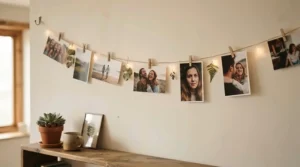
Getting fairy lights bedroom decor right on the first attempt saves a lot of re-hanging later. Start by measuring your intended run before buying — a common first-time mistake is under-ordering length and ending up with a string that stops halfway across a headboard. Command-style adhesive hooks (rated for the weight of a light LED string, not picture frames) are generally kinder to rented walls than nails or staples, and spacing hooks every 15-20cm keeps the string sitting neatly rather than sagging.
For maintenance, the biggest optimisation trick most listings won’t tell you is to loop excess cable neatly behind furniture rather than cutting it — most fairy lights aren’t designed to be shortened, and doing so can void the warranty or, worse, expose wiring. In the first 30 days, the most common mistake is running lights on full brightness every night; most remotes include a lower setting specifically because manufacturers expect bedroom use, so experiment with dimming early rather than living with lights that are too bright for winding down.
If you’re using a USB-powered set plugged into a power bank rather than the wall, check the power bank’s output rating matches what the light string needs — under-powered banks can cause flickering that’s easily mistaken for a faulty product. For copper-wire strings like the Minetom Copper Wire Fairy Lights, reshape the wire gently by hand rather than yanking it into position, since repeated sharp bends in the same spot are the most common cause of an early LED dying.
Real-World Scenarios: Which Fairy Lights Suit Your Bedroom
The renter in a shared house, working with a tight budget and a landlord who won’t allow drilled fixtures, is generally best served by the Shatchi Battery Fairy Lights or the budget JXLEDAYY Curtain Lights — both install with adhesive hooks only, need no permanent wiring, and can be taken down entirely on moving day without a trace.
The student in halls, juggling a single available socket shared with a laptop charger and desk lamp, benefits most from a USB-powered option like the Govee USB Fairy Lights or Minetom Copper Wire Fairy Lights, since either can run off a power bank or laptop USB port on nights when the wall socket is already full.
The smart-home enthusiast who already has Hue bulbs dimming on a schedule, or who enjoys tweaking lighting scenes for fun, gets genuine extra value from the Philips Hue Festavia or Twinkly Strings — the cost premium buys routine automation and colour customisation that a basic remote-controlled string simply can’t match.
Problem → Solution: Common Bedroom Lighting Frustrations
Fairy lights sometimes cause new frustrations rather than solving old ones, so here’s honest troubleshooting rather than marketing gloss.
Problem: the lights are too bright to sleep with on. Solution: look for a model with at least 4-5 brightness levels via remote (both the Govee USB Fairy Lights and JXLEDAYY Curtain Lights offer this), and pair with a built-in timer so they switch off automatically rather than relying on you remembering.
Problem: the string doesn’t reach where you want it. Solution: measure the wall or headboard first, and note that curtain-format lights like the Brightown Curtain Lights are sold by area rather than length, so a 3x3m grid won’t necessarily suit a narrower wall — check the dimensions, not just the LED count.
Problem: cables look messy trailing to the socket. Solution: route cable along a skirting board with clear cable clips, or switch to a battery-powered set like the Shatchi Battery Fairy Lights if the socket position simply can’t be disguised.
Problem: warm white looks more yellow than expected. Solution: check the listed colour temperature before buying — anything above roughly 3000K will read cooler and whiter, while 2700K and below leans distinctly amber; several products in this list, including the Philips Hue Festavia, let you adjust this after purchase.
Problem: lights stopped working after a few months. Solution: check the connector and adapter first, since a failed power supply is far more common than a failed LED string, and keep original packaging so proprietary connectors (an issue noted with the Govee USB Fairy Lights) can be identified for replacement parts.
How to Choose Fairy Lights for Bedroom
- Decide on power source first. Battery suits sockets that are out of reach; USB suits rooms already busy with chargers; mains-plug suits a dedicated, permanent installation.
- Pick warm white over cool white for sleep spaces. Anything from 2200K to 2700K reads as genuinely cosy rather than clinical.
- Measure before you buy. Curtain formats are sold by area, strings by length — don’t assume LED count alone tells you coverage.
- Check for dimming and timer functions. A remote with brightness control and an auto-off timer does more for actual sleep quality than any smart-app gimmick.
- Consider your wall type. Rented walls favour adhesive hooks and lighter copper-wire strings; permanent homes can support heavier curtain-format installs.
- Weigh smart-home value honestly. App control and colour-changing scenes (Twinkly, Hue) are genuinely useful only if you’ll actually use them regularly — otherwise a simple remote-controlled string does the same core job for a fraction of the price.
- Factor in IP rating for your specific spot. IP44 covers light indoor humidity but isn’t outdoor-rated; check this if your bedroom includes an en-suite or a draughty window ledge.
Warm White Fairy Lights Indoor: Why Colour Temperature Matters
Not all “warm white” listings mean the same thing, and this is the single most misunderstood spec on the entire category. warm white fairy lights indoor products typically sit somewhere between 2200K (candlelight-amber) and 3000K (a gentle, still-warm white), and the difference between the two ends of that range is genuinely visible once the lights are on.
Here’s what most buyers overlook: a listing photographed under studio lighting can make a 3000K string look identical to a 2400K one online, so if colour temperature isn’t stated in the listing at all, treat that as a mild red flag rather than assuming it defaults to the cosiest option. Products like the Minetom Copper Wire Fairy Lights and Shatchi Battery Fairy Lights both sit toward the amber end, which suits a relaxed, sleep-focused bedroom far better than a crisper daylight tone would.
If you want flexibility rather than committing to one fixed tone, the Philips Hue Festavia is the only product on this list that genuinely spans the full range from warm to cool on demand, letting you shift from a cosy evening glow to a brighter, whiter tone for tasks like getting dressed — though you’re paying a real premium for that flexibility.
USB Fairy Lights Bedroom: Power Source Comparison
| Power Type | Setup Effort | Running Cost | Best Fit |
|---|---|---|---|
| Battery | Lowest — no cables at all | Ongoing battery cost | No nearby socket, renters |
| USB | Low — any USB port or power bank | Negligible (shared with device) | Shared sockets, students, desks |
| Mains plug | Moderate — needs free wall socket | Low, fixed | Permanent installs, longer runs |
USB fairy lights bedroom setups genuinely earn their popularity because most bedrooms already have a laptop charger, phone charger or power bank nearby — plugging a light string into the same USB hub avoids hunting for a spare wall socket entirely. Looking at the comparison above, battery power wins on flexibility but loses on ongoing cost, while USB sits in a genuinely useful middle ground for anyone who already keeps a power bank or hub within reach of the bed.
✨ Don’t Miss These Exclusive Deals!
🔍 Take your bedroom lighting to the next level with these carefully selected picks. Click on any highlighted item to check current pricing and availability. These lights will help you build the cosy glow your bedroom’s been missing!

String Lights Bedroom Décor: Styling Ideas by Room Type
string lights bedroom décor works differently depending on the room’s shape and existing furniture, and treating every bedroom the same is a common styling misstep. In a small box room, a single string along the headboard wall (like the Govee USB Fairy Lights) does more visual work than trying to cover every surface, since over-decorating a small space with light tends to make it feel busier rather than cosier.
In a larger room with a feature wall already established, curtain-format lighting such as the Brightown Curtain Lights or JXLEDAYY Curtain Lights creates genuine visual density that a thin string simply can’t replicate — think of it as the difference between a single line of fairy lights and an entire glowing wall panel. For shelving, plant corners or a dressing table, copper-wire strings like the Minetom Copper Wire Fairy Lights thread naturally around objects rather than needing to be pinned in a straight line.
A clever styling trick worth borrowing from interior stylists: layer fairy lights with existing textures — behind a canopy, inside a glass vase, or woven through hanging plants — rather than treating them as a standalone feature. It’s the difference between a room that looks “finished” and one that simply has fairy lights added to it as an afterthought.
Twinkle Lights Bedroom: Static Glow vs Dynamic Sparkle
There’s a meaningful difference between twinkle lights bedroom shoppers picture and a plain steady-on string, and it comes down to whether individual bulbs flicker or pulse rather than staying constant. Genuine twinkle effects — where a handful of LEDs randomly dim and brighten while the rest stay steady — create movement without the busyness of a full colour-change pattern, and both the Twinkly Strings and several of the remote-controlled sets in this list include a dedicated twinkle mode among their preset functions.
The spec sheet won’t tell you this, but user reports suggest twinkle effects work best at lower brightness settings — cranked to maximum, the flickering can read as distracting rather than atmospheric, especially in the last half hour before sleep. If dynamic sparkle is genuinely the look you’re after, prioritise a product with a dedicated twinkle preset (rather than assuming any multi-mode remote includes one) and test it at a dim setting before committing to it as your nightly default.
Soft Bedroom Lighting and Better Sleep
soft bedroom lighting isn’t just an aesthetic preference — there’s a genuine physiological reason dim, warm light suits a bedroom better than bright, cool light does. According to NHS sleep hygiene guidance, keeping the bedroom environment calm and appropriately dark supports better sleep onset, and too much light exposure in the evening can make it harder to feel sleepy in the first place.
What this means practically for fairy lights: they work best as a low, warm accent used for the hour or so before sleep, then switched off or dimmed to their lowest setting once you’re actually trying to nod off, rather than left blazing at full brightness all night. Products with a genuine timer function — the Govee USB Fairy Lights and JXLEDAYY Curtain Lights among them — solve this automatically, switching off after a set number of hours so you’re not relying on remembering to do it yourself, or getting up in the dark to find a remote.
Reviewers across several of the products in this guide specifically mention using fairy lights as a wind-down ritual — dimming them low while reading before eventually turning off the main overhead light entirely — which lines up neatly with general sleep-hygiene advice about lowering light levels gradually rather than switching from bright to pitch dark in one step.
Common Mistakes When Buying Fairy Lights for Bedroom
The most frequent mistake is buying on LED count alone without checking length or coverage area — a 200 LED curtain light covers a completely different amount of wall than a 200 LED string, because density per metre varies hugely between formats. A close second is ignoring colour temperature entirely and being surprised when a “white” set arrives looking distinctly blue rather than the cosy warm tone pictured in lifestyle photos.
Buyers also regularly underestimate how much a proprietary connector matters — as flagged with the Govee USB Fairy Lights — until the original adapter is lost or damaged and a full replacement becomes the only option rather than a cheap universal cable. Finally, skipping the brightness and timer specs is a mistake that only becomes obvious weeks in, once it’s clear the lights are either too bright to sleep near or require manually switching off every single night.
Safety, Regulations and Compliance Guide
Fairy lights sold in the UK for domestic use fall under the Electrical Equipment (Safety) Regulations, and electrical products placed on the market in Great Britain must meet specific safety and labelling requirements before they can legally be sold — worth knowing if you’re ever buying from an unfamiliar third-party seller rather than a recognised brand.
Beyond the legal baseline, sensible household precautions matter more day-to-day than most buyers realise. UK electricity distributors regularly remind households to avoid overloading sockets and to switch decorative lights off before going to bed or leaving the house, advice that applies just as much to a bedroom fairy-light string left on year-round as it does to seasonal Christmas displays. In practice, that means checking cables for fraying before each use, never covering a plugged-in adapter with fabric or bedding, and treating a timer function as a genuine safety feature rather than just a convenience.
For anyone with children or pets sharing the bedroom, an IP44 rating and low-voltage LED design (rather than older mains-voltage filament bulbs) significantly reduces both shock and burn risk, since LED bulbs stay cool to the touch even after hours of continuous use — a meaningful upgrade over the incandescent fairy lights of a decade ago.
Long-Term Cost and Maintenance
Long-term running costs differ more than most buyers expect. Battery-powered sets like the Shatchi Battery Fairy Lights carry the highest ongoing cost if you’re buying single-use alkalines regularly, though switching to a rechargeable AA pack largely closes that gap over a year of nightly use. USB and mains-powered LED strings, by contrast, draw very little power — typically single-digit watts across an entire run — so the electricity cost of running fairy lights nightly is genuinely negligible compared with a traditional bedside lamp.
Total cost of ownership also depends on durability: copper-wire strings need slightly gentler handling than moulded plastic strings, so factor in the realistic lifespan of a product you’ll be repositioning often versus one that’s hung once and left alone. When a set eventually does fail, fairy lights and Christmas lights count as small electrical items under WEEE regulations and shouldn’t go in general household waste — most local recycling centres, and some kerbside collections, will take them separately for proper processing.

FAQ
❓ Can you leave fairy lights on all night in a bedroom?
❓ What is the best colour for bedroom fairy lights?
❓ Do USB fairy lights need a plug socket?
❓ How long do fairy lights typically last?
❓ Are curtain lights better than string lights for a bedroom?
Conclusion
Choosing the right fairy lights for bedroom decor really comes down to three honest questions: how much control do you actually want, how permanent is the installation, and how close is your nearest power source? The Twinkly Strings and Philips Hue Festavia reward anyone who’ll genuinely use app-based scenes and smart-home routines, while the Govee USB Fairy Lights remains the strongest all-round value pick for a bedroom that just needs a warm, dimmable glow without the smart-home price tag.
For a specific styling project — a mirror frame, a shelf, a canopy — the flexible copper wire on the Minetom Copper Wire Fairy Lights does something none of the straight strings can, and the Shatchi Battery Fairy Lights remains the only genuinely cable-free option for renters and awkward socket layouts. Meanwhile the Brightown Curtain Lights and JXLEDAYY Curtain Lights solve a completely different problem — a plain wall that needs real visual density rather than a single accent line.
Whichever you land on, keep colour temperature, dimming and a sensible timer at the top of your checklist; they matter more to how a bedroom actually feels at 11pm than any headline LED count ever will.
✨ Ready to transform your bedroom’s evening glow? Browse the picks above and pick the one that fits your space! 💡🛏️
Recommended for You
- Night Light With Timer for Kids: 7 Best Picks for 2026 (Tried ; Tested)
- Unicorn Night Light: 7 Best Picks for Kids in 2026
- Star Projector Night Light: 7 Best Picks for Kids in 2026
Disclaimer: This article contains affiliate links. As an Amazon Associate, I earn from qualifying purchases. If you purchase products through these links, we may earn a small commission at no additional cost to you.
✨ Found this helpful? Share it with your friends! 💬🤗
