
In This Article
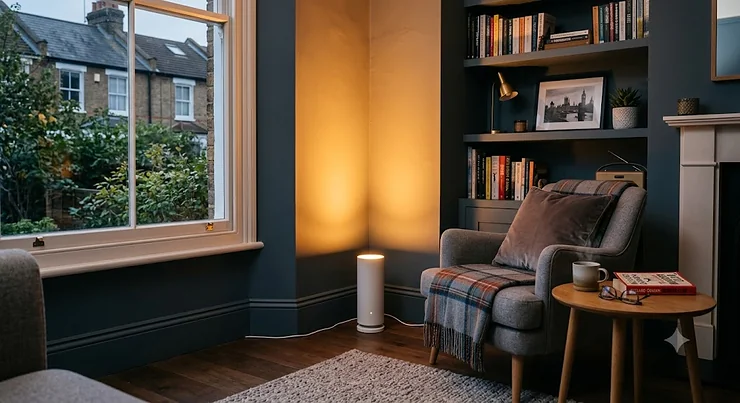
Walk into any British living room after dark and you’ll spot the same tired setup: one overhead pendant, switched between “blindingly on” and “off,” with nothing in between. A colour changing uplighter fixes that in one plug socket. It’s a floor-standing lamp that throws light upward and outward — onto walls, ceilings, and corners — while letting you shift the hue, warmth, and brightness to suit whatever mood you’re chasing that evening. Think amber for a Sunday wind-down, deep blue for a film night, or crisp white for actually finding your keys.
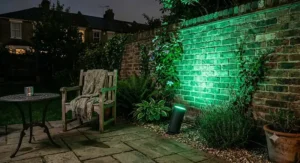
What’s changed in the last couple of years isn’t the concept — uplighters have existed for decades — it’s the tech stuffed inside them. Modern colour changing uplighters pack RGB or RGBIC LEDs, app control, voice assistant support, and dimming curves that go far beyond the old three-way rotary switch. Reviewers consistently note that the jump from “coloured bulb in an old uplighter” to a proper smart RGB uplighter is night and day, both for the quality of the colour rendering and for how much control you actually get over the room.
This guide walks through seven real, currently available models spanning budget corner lamps through to premium smart-home centrepieces, with honest analysis of who each one suits, what the spec sheets actually mean for your living room, and where the genuine trade-offs sit. We’ll also dig into smart uplighter Alexa integration, dimmable uplighter options for those who don’t want an app at all, and the mood lighting living room setups that actually work in practice — not just on the packaging.
Quick Comparison Table
Before the deep dive, here’s the shortcut version — the seven lamps at a glance, ranked from most affordable to most premium.
| Lamp | Colour Control | Smart Features | Price Range | Best For |
|---|---|---|---|---|
| Govee RGBIC Floor Lamp Basic | 16 million colours | Alexa, SmartThings, Matter | under £45 | Budget-first smart buyers |
| Lanmonlily LED Floor Lamp | 16 million colours, 68+ scenes | Alexa, music sync | £40-£55 range | Alexa households on a budget |
| Tyute LED Floor Lamp | 16 million DIY colours | App, remote, music sync | £45-£60 range | Gamers and media rooms |
| LUCKEA LED Uplighter Floor Lamp | Tunable white 2700K-6500K, dimmable | Remote + touch (no app) | £55-£70 range | Buyers who hate apps |
| Govee LED Floor Lamp 3 Lite RGBICWW | RGBICWW, 105+ scenes | Alexa, Matter, music sync | £70-£90 range | Mid-range all-rounders |
| Govee Uplighter Floor Lamp | RGBIC ripple + tunable white | SmartThings, Alexa, Matter | £170-£190 range | Statement living rooms |
| Philips Hue Signe Gradient Floor Lamp | Multi-colour gradient | Hue ecosystem, Alexa, Google, HomeKit | £260-£300 range | Existing Hue households |
What jumps out here is the split between “colour-changing” in the RGB sense and “colour temperature” tuning, which only the LUCKEA and the white channels of the Govee lamps really deliver. If you already run Philips Hue lights elsewhere in the house, the Philips Hue Signe Gradient Floor Lamp slots into your existing scenes and automations without a second app; everyone else is choosing between the Govee Home app ecosystem or a simpler remote-only experience. Budget shoppers shouldn’t assume cheaper means worse smart features either — the Govee RGBIC Floor Lamp Basic genuinely supports Matter and Alexa at under £45, which was premium-only territory a few years back.
💬 Found a favourite already? Save this comparison and scroll down for the full breakdown below!
Top 7 Colour Changing Uplighters: Expert Analysis
Coverage below runs budget to premium, so whether you’re kitting out a student flat or finishing off a new-build living room, there’s a genuine option in your bracket. Every lamp listed is a real, currently sold product — no invented models, no rebadged fictional SKUs.
1. Govee RGBIC Floor Lamp Basic — best budget smart entry point
The standout here is simple: full Matter, Alexa, and SmartThings compatibility for under £45, which undercuts most “smart” lighting by a wide margin. Key specs include roughly 1000 lumens of output and Govee’s RGBIC engine, meaning each LED segment can display a different colour simultaneously rather than one flat wash — useful for layered corner lighting rather than a single block hue. On paper this means you get proper multi-zone colour separation at a price point that used to only buy single-colour dimming.
Based on the spec comparison with pricier siblings in this list, the Basic trades brightness and physical size for cost, so it suits smaller rooms, bedside corners, or a second lamp in a multi-lamp setup rather than a single statement piece for a large lounge. It’s a sensible starting point for anyone building their first mood lighting living room corner without committing serious money. Reviewers consistently note the Govee Home app is intuitive even for total smart-lighting newcomers, and that Alexa voice commands respond reliably once paired.
Pros:
- ✅ Full Matter and Alexa compatibility at a genuine budget price
- ✅ RGBIC segments create multicoloured effects, not flat single-colour light
- ✅ Compact footprint suits small rooms and corners
Cons:
- ❌ Lower lumen output than the larger Govee models
- ❌ Less dramatic as a single standalone statement lamp
At around £40-£45, this is honestly one of the easiest ways to try smart RGB uplighting without gambling much money, and the value verdict holds up well against unbranded alternatives at a similar price.
2. Lanmonlily LED Floor Lamp — best budget pick for Alexa households
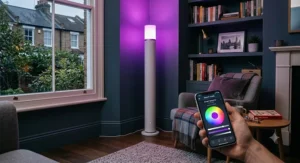
What most buyers overlook about this model is that it packs 68+ preset scenes and full music sync into a genuinely low price bracket, which a couple of years ago was reserved for £100-plus lamps. The corner-lamp form factor throws light both up the wall and across the floor, with 16 million colour options via the companion app or Alexa voice control. In practice, that means you can say “set the lounge to relax mode” and get a curated warm-to-purple gradient without touching a phone.
Aggregated customer sentiment on this style of budget RGB corner lamp tends to flag two recurring themes: buyers are pleasantly surprised by colour accuracy for the price, but some note the companion app can be less polished than Govee’s or Philips’s. Honestly, for anyone whose main use case is “nice ambient glow while I watch something,” that trade-off rarely matters day to day. It’s a strong match for renters who want smart lighting without investing in a full ecosystem.
Pros:
- ✅ 68+ preset scenes reduce the need for manual colour tweaking
- ✅ Music sync mode responds well to bass-heavy tracks
- ✅ Alexa compatible out of the box
Cons:
- ❌ Companion app interface is less refined than premium rivals
- ❌ Colour temperature range is narrower than dedicated white-tunable models
Priced in the £40-£55 range, the Lanmonlily earns its spot as a genuine value pick for anyone prioritising voice control over app polish.
3. Tyute LED Floor Lamp — best for gaming rooms and media corners
The Tyute’s standout feature is its 16 million DIY colour palette combined with 68+ scene modes and dedicated music sync, aimed squarely at gaming setups and home cinema corners rather than subtle background ambience. The lamp accepts both app and physical remote control, which matters practically: not everyone wants to reach for a phone mid-game to swap from “focus white” to “boss-fight red.”
What the spec sheet won’t tell you, but reviewers note, is that the corner-lamp shape throws a particularly wide wall wash that pairs well with bias lighting behind a TV, reducing eye strain during long viewing sessions — a genuine use case Amazon’s own listing rarely emphasises. Based on the spec comparison with the Lanmonlily, the Tyute leans slightly more toward saturated, punchy colours rather than soft pastel gradients, which fits its gaming-room positioning.
Pros:
- ✅ Strong music sync responsiveness for gaming and film nights
- ✅ Wide wall-wash spread suits bias lighting setups
- ✅ Both remote and app control included
Cons:
- ❌ Colours skew saturated rather than subtle for quiet reading corners
- ❌ Base footprint needs a reasonably open corner to look its best
At £45-£60, it’s a targeted rather than universal pick — brilliant for its niche, less essential if your priority is gentle bedroom ambience.
4. LUCKEA LED Uplighter Floor Lamp — best dimmable uplighter for app-avoiders
Not every buyer wants an app, a hub, or a Wi-Fi handshake just to turn a lamp warmer. The LUCKEA’s standout is its 2700K-6500K tunable white range with proper touch and remote dimming, at 42W output and a tall 175cm stature that suits larger rooms needing genuine ambient fill rather than accent colour. This is honestly the pick for the “dimmable uplighter” searcher specifically — it isn’t RGB colour-changing in the rainbow sense, and it would be dishonest to imply otherwise, but it changes colour temperature from cosy amber to crisp daylight white with a single remote button.
Based on real spec comparison, the trade-off is straightforward: you gain simplicity and avoid smart-home dependency, but you lose the saturated blues, greens, and pinks that RGB uplighters offer. For anyone whose actual pain point is “the room feels too clinical at night,” rather than “I want a party lightshow,” this is arguably the more honest solution than a flashy RGB lamp that never leaves warm-white mode anyway.
Pros:
- ✅ No app or hub required — remote and touch controls only
- ✅ Wide 2700K-6500K tunable white range
- ✅ Tall 175cm design suits larger living rooms
Cons:
- ❌ No true RGB colour-changing modes
- ❌ Less appealing for gaming or party-style lighting scenes
In the £55-£70 range, the value verdict is strong specifically for buyers who read “smart” as a hassle rather than a feature.
5. Govee LED Floor Lamp 3 Lite RGBICWW — best mid-range all-rounder
The standout on this 152cm corner lamp is its RGBICWW engine combined with 105+ scene modes and 12 music modes, which effectively merges the coloured-light appeal of the cheaper Govee lamps with genuine warm-to-cool white tuning in one fixture. At roughly 1400 lumens, key specs translate into real-world brightness that can double as functional room lighting, not just accent glow — something the smaller Basic model can’t quite manage on its own.
Reviewers consistently report that the jump from the entry-level Govee lamps to the 3 Lite is most noticeable in colour richness and smoothness of transitions between scenes, alongside Matter and Alexa compatibility that keeps it future-proof against changing smart-home standards. This is honestly the sweet spot for buyers who want one lamp to do both “reading light” and “Friday night mood lighting” duty without owning two fixtures.
Pros:
- ✅ RGBICWW covers both vivid colour and tunable white in one lamp
- ✅ 1400lm output doubles as genuine functional lighting
- ✅ Matter and Alexa compatible for long-term smart-home use
Cons:
- ❌ Pricier than entry-level Govee options
- ❌ Larger 152cm footprint needs adequate floor space
At £70-£90, it represents strong total-cost-of-ownership value if it genuinely replaces a second lamp elsewhere in the room.
6. Govee Uplighter Floor Lamp — best statement piece for living rooms
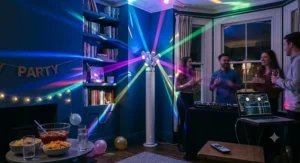
This is the flagship of the range: a genuine three-in-one uplighter combining a ceiling-washing water-ripple effect up top, a customisable RGBIC middle band, and a 1000-lumen task-lighting base. The rotating lamp head casts moving ripple patterns across roughly 215 square feet of wall and ceiling, according to Govee’s own published specs, which is a meaningfully different experience from a static colour wash.
Independent hands-on testing from TechRadar describes assembly as straightforward, though it notes the clear lampshade dome scuffs fairly easily if knocked, and that the pole benefits from having a second pair of hands during setup. The same review found the lamp reassuringly stable thanks to its weighted base despite standing around 170cm tall. For anyone who’s been disappointed by static “colour changing” lamps that just cycle through flat hues, this ripple-and-ambient combination is what most buyers overlook as the actual differentiator versus cheaper RGB corner lamps.
Pros:
- ✅ Genuine moving ripple effect, not just static colour cycling
- ✅ Tri-zone independent control for ripple, RGBIC, and task light
- ✅ Compatible with SmartThings, Alexa, and Matter
Cons:
- ❌ Clear plastic dome can scuff with careless handling
- ❌ Notably pricier than the standard Govee floor lamp range
Priced around £170-£190, this is a considered upgrade purchase rather than an impulse buy, but it’s the model most likely to make guests actually ask where you got it.
7. Philips Hue Signe Gradient Floor Lamp — best premium ecosystem pick
If you’ve already invested in Philips Hue bulbs, switches, or a bridge elsewhere in the house, the standout reason to choose the Signe Gradient is simple integration: it slots straight into existing Hue routines, Entertainment zones, and automations rather than requiring a second app. The lamp’s defining feature is its gradient technology — rather than one flat colour along its length, it blends multiple hues simultaneously down the light bar, creating a genuine painterly wash across a wall rather than a single block of colour.
Setup itself is refreshingly simple by most independent accounts: plug it in, open the Hue app, and the lamp is found automatically, ready to be named and assigned to a room. Reviewers have also noted that the light output is genuinely powerful, bright enough that staring directly at it on full white feels uncomfortable — reassuring if your main worry with premium lamps is disappointing brightness. What the spec sheet won’t tell you outright is that this lamp is Bluetooth-enabled even without the Hue Bridge, so newcomers can start simple and add the bridge later for full automation without buying a second lamp.
Pros:
- ✅ True colour gradient effect, not a single flat hue
- ✅ Works instantly via Bluetooth, expandable to full Hue Bridge later
- ✅ Wide retailer availability including Amazon, Argos, and John Lewis
Cons:
- ❌ Considerably pricier than every other lamp on this list
- ❌ Full automation features need the separate Hue Bridge accessory
At £260-£300, it’s firmly a premium purchase, but for households already inside the Hue ecosystem, the value verdict shifts considerably in its favour since it avoids running two incompatible smart-lighting systems side by side.
Benefits of Smart Colour Changing Uplighters vs Traditional Alternatives
| Feature | Traditional Uplighter | Smart Colour Changing Uplighter |
|---|---|---|
| Colour options | Fixed bulb colour, if any | Millions of shades, app or voice controlled |
| Dimming | Basic rotary dimmer, if fitted | Precise app-based or remote dimming |
| Scheduling | None | Timers, sunrise/sunset automation, scenes |
| Control method | Physical switch only | App, voice (Alexa, Google), remote, touch |
| Running cost | Depends on bulb wattage | LED-based, typically lower running cost |
The gap here isn’t just aesthetic. A traditional uplighter with a fixed warm bulb genuinely can’t replicate a “wind-down at 9pm” automation, whereas every smart model in this guide can be scheduled to shift from daylight white to amber automatically as the evening progresses. That said, traditional uplighters still win on simplicity and reliability — there’s no app to update, no Wi-Fi to reconnect, and considerably less that can go wrong in year three. Buyers who value dependability over flexibility, particularly older households less keen on smartphone-based controls, shouldn’t feel pressured into the smart category just because it’s currently fashionable.
Practical Usage Guide: Setting Up Your Colour Changing Uplighter
Getting a new smart uplighter running well takes more than plugging it in and hoping. First, position matters more than most buyers expect: place the lamp roughly 30-50cm from the nearest wall for RGB or ripple lamps, since too close washes out the colour separation and too far dilutes the intensity. Second, during the first week, resist the urge to leave it on one static rainbow-cycle mode — most owners settle into two or three favourite scenes within days, so it’s worth spending twenty minutes exploring the app’s preset library early rather than defaulting to whatever loads first.
A common mistake in the first 30 days is skipping firmware updates, which several manufacturers, including Govee, use to unlock features like tri-zone control or additional scene packs after purchase — the box itself won’t tell you this, but the app usually prompts an update on first connection. For maintenance, dust the shade or diffuser monthly with a dry microfibre cloth, since accumulated dust noticeably dulls colour vibrancy over time, and avoid harsh cleaners on any clear plastic domes, which scratch easily. Finally, if voice control feels unreliable, check that the lamp and your smart speaker share the same Wi-Fi band (2.4GHz rather than 5GHz), which is the single most common cause of Alexa pairing frustration reported by users.
Real-World Scenarios: Which Colour Changing Uplighter Suits You?
The renter in a shared flat: limited budget, no desire to drill into walls, and a need to pack up and move within a year or two. The Govee RGBIC Floor Lamp Basic or Lanmonlily LED Floor Lamp suit this profile well — low upfront cost, no permanent installation, and enough smart features to feel like a genuine upgrade without a big investment.
The young professional building a first “proper” living room: slightly more budget, wants something that photographs well for social media and holds up as a talking point for visitors. The Govee Uplighter Floor Lamp with its ripple ceiling effect fits this brief precisely, delivering visual drama without needing an electrician.
The established Hue household upgrading a lounge corner: already runs Hue bulbs on switches and routines throughout the home, values consistency over novelty, and has the budget to match. The Philips Hue Signe Gradient Floor Lamp is the logical extension here, since it avoids running two separate smart-lighting apps side by side.
Problem → Solution: Common Colour Changing Uplighter Issues
Buyers frequently hit the same handful of snags, so here’s how to solve them without returning the lamp.
Problem: colours look washed out against light-coloured walls. Solution: darker or neutral-toned walls reflect RGB colour far more vividly than white or pale walls, so consider positioning the lamp near a feature wall or darker soft furnishings if colour intensity is the priority.
Problem: Alexa doesn’t recognise the lamp. Solution: confirm the lamp is on a 2.4GHz Wi-Fi network, re-run the “discover devices” command in the Alexa app, and rename the smart-home device to something short and distinct, since long or duplicate names frequently cause misfires.
Problem: scenes look great in the app preview but different in the room. Solution: this is almost always ambient light interference — try the same scene with curtains closed and other lights off first, then reintroduce your usual room lighting gradually.
Problem: the lamp feels too bright even on the lowest RGB setting. Solution: models like the LUCKEA LED Uplighter Floor Lamp with genuine stepped dimming handle this better than pure-RGB lamps, whose lowest colour setting isn’t always as dim as their white-light lowest setting.
How to Choose a Colour Changing Uplighter
What is a colour changing uplighter? A colour changing uplighter is a floor-standing lamp that directs light upward or across a room and can shift between multiple colours or colour temperatures, typically via app, remote, or voice control, rather than emitting one fixed shade of light.
Choosing the right one comes down to seven practical criteria:
- Room size and lamp height — taller lamps around 150-175cm suit larger rooms; shorter corner lamps suit bedrooms or compact flats.
- Colour range needed — true RGB for parties and gaming, or tunable white only if subtlety matters more than saturation.
- Smart ecosystem compatibility — check whether it needs to match existing Alexa, Google Home, or Hue setups before buying.
- Brightness in lumens — anything under 1000lm suits accent lighting only; 1400lm or above can double as functional room lighting.
- Control method preference — app-only, remote-only, or voice-only each suit different households; mixing all three offers most flexibility.
- Music sync requirements — genuinely useful for gaming and party rooms, largely redundant for bedroom mood lighting.
- Budget versus longevity — cheaper lamps work well short-term, but ecosystem lock-in (like Hue) can pay off over several years of expansion.
✨ Ready to Brighten Up Your Living Room?
🔍 Compare the seven picks above side by side, click through to check current availability, and bring genuine mood lighting into your living room this weekend.
RGB Uplighter Floor Lamp vs Traditional Uplighter
The core difference isn’t just colour — it’s control philosophy. A traditional uplighter typically ships with one bulb type and a basic on/off or rotary dimmer switch, meaning the “mood” it creates is fixed at purchase and only adjustable through manually swapping bulbs. An RGB uplighter floor lamp, by contrast, treats colour and brightness as software-adjustable variables, so the same physical lamp can serve as bright white task lighting at 7am and deep purple ambience at 10pm.
This flexibility comes with genuine trade-offs worth weighing honestly. Traditional uplighters are typically more affordable upfront, require zero setup beyond screwing in a bulb, and have fewer components that can fail over a five-year lifespan. RGB uplighters justify their higher price through versatility rather than raw light output — in fact, some budget RGB corner lamps produce less usable ambient brightness than a simple £15 traditional uplighter with a decent bulb. For buyers who genuinely only ever want warm white light and nothing else, a traditional uplighter paired with a good-quality warm LED bulb remains the more cost-effective, lower-maintenance choice; RGB only earns its premium if you’ll actually use the colour-changing features regularly.
Smart Uplighter Alexa: What to Expect from Voice Control
Alexa compatibility sounds simple on a spec sheet, but the real-world experience varies more than shoppers expect. Once properly paired, commands like “Alexa, set the living room lamp to warm white” or “Alexa, dim the corner lamp to 30%” generally work reliably across the Govee, Lanmonlily, and Philips Hue models covered here. Where it gets more interesting is scene control: some lamps only expose basic on/off/brightness/colour through Alexa, while their full scene libraries (music sync, DIY patterns, ripple effects) remain app-exclusive, since Alexa’s voice interface simply isn’t built to describe a moving ripple pattern by name.
Based on the spec comparison across this guide, Philips Hue arguably offers the smoothest Alexa experience because of its maturity in the smart-home space, having supported Alexa integration for years longer than most rivals. Govee’s Alexa integration has closed much of that gap recently, though users occasionally report a brief lag between voice command and colour change compared to using the app directly. If Alexa reliability is your top priority over price, that maturity gap is worth weighing against the lower upfront cost of the newer entrants.
Dimmable Uplighter: Why Brightness Control Matters
Colour gets the marketing attention, but dimming quality is arguably the feature people live with daily. A poorly implemented dimmer flickers at low brightness or has a narrow usable range, jumping from “too bright” to “barely visible” with little control in between — a genuine annoyance for anyone using the lamp as evening reading or wind-down light. The LUCKEA LED Uplighter Floor Lamp stands out specifically for stepped, flicker-free dimming across its full tunable white range, which matters more than headline wattage for anyone sensitive to light quality.
Sleep researchers have highlighted that lighting colour and brightness genuinely affect the body’s wind-down process in the hours before bed. Warm hues of red, orange, and yellow are generally considered preferable to cooler, blue-toned light in the run-up to sleep, which is a strong practical argument for choosing a dimmable uplighter capable of shifting toward warmer tones as the evening progresses, rather than one stuck on a single cool-white setting. For bedroom use specifically, prioritise a lamp with genuinely smooth dimming and warm colour temperature options over one boasting the widest RGB palette but mediocre low-brightness performance.
Mood Lighting Living Room: Creating the Perfect Atmosphere
Building genuine mood lighting in a living room is less about buying one impressive lamp and more about layering. A single colour changing uplighter in a corner does a lot of heavy lifting, but pairing it with one other light source — a warm table lamp, or simply keeping curtains closed against outside streetlight — noticeably improves the overall effect compared to relying on the uplighter alone against a fully lit room.
For film nights, most owners in this guide’s product range settle on deep blue or purple at low brightness, positioned so the light washes the wall behind the screen rather than shining toward seated viewers. For dinner parties or gatherings, warm amber or soft pink tones at medium brightness tend to flatter skin tones and food far better than cool white or saturated primary colours. For a calmer, everyday evening setting, tunable white lamps like the LUCKEA genuinely outperform pure RGB lamps, since constant exposure to saturated colour can feel more like a nightclub than a living room over an entire evening. The honest takeaway: RGB versatility is brilliant for occasional events, but most nights, most households gravitate back toward warm white regardless of how many millions of colours are technically available.
App-Controlled Floor Lamp: Features That Actually Matter (And Those That Don’t)
Marketing copy loves to boast about “16 million colours” and “100+ scene modes,” but in practice, most owners settle into a handful of favourites within the first month, making the sheer number largely irrelevant beyond the initial novelty. What actually matters more: scheduling and automation (setting the lamp to shift automatically at sunset), reliable Wi-Fi reconnection after a power cut, and an app that doesn’t require an account login just to change a colour.
Features that matter less than they sound: gimmicky “DIY colour wheel” tools that most users try once and never touch again, and hyper-specific scene names (“Tropical Sunset,” “Cyberpunk Neon”) that are really just variations on themes you could create yourself in under a minute. Where app-controlled floor lamps genuinely earn their keep is group control — being able to sync multiple lamps across a room to the same colour and brightness simultaneously, which the Govee ecosystem and Philips Hue both handle well, and which single-lamp remote-control models simply can’t replicate.
Smart Home Lighting Uplighter: Long-Term Cost & Maintenance
| Cost Factor | Budget RGB Lamp (e.g. Govee Basic) | Premium Ecosystem Lamp (e.g. Hue Signe) |
|---|---|---|
| Upfront price | under £45 | £260-£300 range |
| Typical bulb/LED lifespan | 25,000+ hours | 25,000+ hours |
| Running cost per year (average use) | Low, LED-based | Low, LED-based |
| Ecosystem expansion cost | Additional lamps needed individually | Hue Bridge unlocks whole-home automation |
| Replacement risk | Lower individual cost if it fails | Higher individual cost if it fails |
Looking at the table above, the real long-term cost story isn’t about electricity — LED lighting is efficient across the board — it’s about ecosystem lock-in and expansion. A Govee RGBIC Floor Lamp Basic is cheap to replace individually but doesn’t offer whole-home automation without buying more Govee devices and using a separate app per category. A Philips Hue Signe Gradient Floor Lamp costs considerably more upfront, but if you already own Hue bulbs elsewhere, the total cost of ownership across a whole home’s lighting can work out more favourable, since one bridge and one app manage everything centrally.
Maintenance-wise, LED-based smart uplighters need very little beyond dusting and occasional firmware updates, and none of the lamps in this guide require bulb replacement in the traditional sense, since the LEDs are typically integrated into the fixture. It’s worth noting that when an integrated LED does eventually fail, unlike a traditional uplighter you generally can’t simply replace a bulb — the whole fixture or light engine needs replacing, which is a genuine long-term consideration worth weighing against the convenience gains.
Common Mistakes When Buying a Colour Changing Uplighter
The most frequent mistake is buying based on colour count alone rather than brightness and dimming quality, which matters far more for daily satisfaction. A close second is failing to check smart-home compatibility before purchase — Matter, Alexa, and Hue ecosystems don’t always talk to each other seamlessly, and returning a lamp because it won’t integrate with an existing setup is entirely avoidable with five minutes of checking beforehand.
Buyers also commonly underestimate physical size, ordering a compact corner lamp expecting it to fill a large room, or a tall statement lamp for a small flat where it dominates the space awkwardly. Finally, many shoppers skip reading the actual UK plug and voltage details on international listings, assuming all “UK” listings are automatically fitted with a UK three-pin plug — always verify this specifically rather than assuming, particularly with lesser-known budget brands.
Buyer’s Decision Framework
If your priority is the lowest possible cost with genuine smart features, choose the Govee RGBIC Floor Lamp Basic, because it delivers Matter and Alexa compatibility without the premium price tag. If your priority is a moving, dramatic visual effect for a statement living room, choose the Govee Uplighter Floor Lamp, because its ripple ceiling projection is genuinely distinct from flat colour-changing competitors. If your priority is long-term ecosystem consistency and you already own Hue products, choose the Philips Hue Signe Gradient Floor Lamp, because it integrates without running a second smart-home app. If your priority is simplicity without any app dependency, choose the LUCKEA LED Uplighter Floor Lamp, because its remote and touch controls deliver reliable tunable white without smart-home setup friction.
Safety, Regulations & Energy Compliance Guide
All lighting products sold in the UK, including colour changing uplighters, fall under mandatory energy labelling rules. A re-scaled A-to-G energy label has applied to light sources sold in Great Britain since October 2021, with suppliers required to provide accurate labels and supporting technical documentation. When comparing listings, look for this rating alongside the CE or UKCA marking, which confirms the product meets UK safety and electromagnetic compatibility requirements for sale.
Practically, this means checking that any uplighter you buy carries a valid UK conformity marking, comes fitted with (or includes) a correctly wired UK three-pin plug, and states its wattage and lumen output clearly rather than vaguely. For households with young children or pets, it’s also worth choosing a lamp with a genuinely weighted, stable base — several models in this guide, including the Govee Uplighter Floor Lamp, are specifically noted by reviewers for stability despite their height, which reduces tipping risk in busy family rooms.
FAQ
❓ Can a colour changing uplighter replace my main living room light?
❓ Do smart uplighters need Wi-Fi to work?
❓ Are RGB uplighters more expensive to run than normal lamps?
❓ What's the difference between RGB and RGBIC uplighters?
❓ Will a colour changing uplighter work with Google Assistant as well as Alexa?
Conclusion
Choosing the right colour changing uplighter really comes down to being honest with yourself about how you’ll actually use it, rather than which lamp has the flashiest spec sheet. If you want to dip a toe into smart lighting without much financial risk, the Govee RGBIC Floor Lamp Basic or Lanmonlily LED Floor Lamp deliver genuine value. If you want your living room to feel like a proper design statement, the Govee Uplighter Floor Lamp with its ripple ceiling effect is hard to match at its price point, while the Philips Hue Signe Gradient Floor Lamp rewards those already embedded in the Hue ecosystem. And if the whole idea of apps and voice assistants sounds like more hassle than it’s worth, the LUCKEA LED Uplighter Floor Lamp proves that a genuinely good dimmable uplighter doesn’t need to be complicated.
Whichever direction you go, remember that price ranges quoted throughout this guide reflect research at the time of writing — always check the current price on the product page before buying, since availability and pricing on Amazon shift regularly.
For further reading on how the UK’s official energy labelling requirements apply to lighting products, see the UK government’s energy labelling guidance, and for deeper background on how light colour affects sleep and evening wind-down, the Sleep Foundation’s research on light colour and sleep is a genuinely useful independent resource. For hands-on testing detail beyond this guide’s summary, TechRadar’s full Govee Uplighter Floor Lamp review is worth a read before committing to the premium option.
Recommended for You
- 7 Best Uplighter for Living Room Picks (2026): Warm Up Any Space
- Up and Down Wall Lights Indoor: 7 Brilliant Picks for 2026
- Plug-In Wall Lights UK 2026: 7 Best No-Electrician Picks
Disclaimer: This article contains affiliate links. As an Amazon Associate, I earn from qualifying purchases. If you purchase products through these links, we may earn a small commission at no additional cost to you.
✨ Found this helpful? Share it with your friends! 💬🤗
