
In This Article
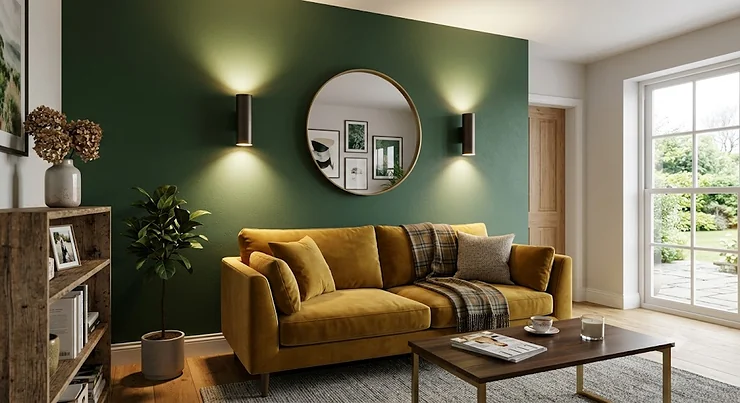
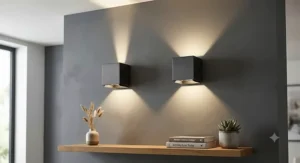
Somewhere between “just turn the big light on” and “hire an interior designer,” there’s a lighting trick that quietly transforms hallways, bedrooms and living rooms without touching the ceiling at all: up and down wall lights indoor. These clever fittings throw a soft wash of illumination both above and below the fixture, grazing the wall’s texture, softening shadows and turning a flat corridor into something that actually looks considered. If you’ve ever walked into a hotel lobby or a boutique restaurant and wondered why the lighting felt so much richer than your own hallway, this is very often the answer.
This guide is built around genuine research rather than recycled marketing copy. We’ve dug into real product specifications, aggregated customer sentiment, and UK-specific safety guidance so you can compare up-down wall sconce options with confidence, not guesswork. Whether you’re after a battery-powered fix for a rented flat, a hardwired aluminium bar for a modern hallway, or a proper architectural wall lighting piece from a British design house, we cover the full spread.
What is up and down wall lights indoor? In short, it’s a wall-mounted fixture with two light sources (or a shared LED module) angled so light spills upward toward the ceiling and downward toward the skirting board simultaneously, creating a layered glow instead of a single harsh beam. It’s one of the simplest ways to add dimension to a room without an electrician rewiring your whole house — and, as we’ll see, it doesn’t have to be expensive to look expensive.
As the Wikipedia entry on wall sconces explains, a sconce is essentially any decorative wall-mounted light fixture, a design lineage stretching back to candle and oil-lamp holders, and one that can serve as genuine room lighting even though it’s often treated as purely decorative. That dual identity — practical and decorative — is exactly why up and down wall lights indoor have become such a popular half-way house between plain downlights and full decorative sconces.
Quick Comparison Table
Here’s a scannable snapshot before we go deep on each of the seven products. Prices are shown as ranges only, since exact Amazon pricing shifts constantly.
| Product | Type | Power Source | Price Range | Best For |
|---|---|---|---|---|
| Astro Amalfi 315 | Ceramic wash light | Hardwired, E27 | £70-£100 range | Premium, paintable, architectural finish |
| Klighten Wall Light Indoor LED 91CM | Linear aluminium bar | Hardwired | £30-£45 range | Long hallways and stairwells |
| FULEN Wall Lights with Motion Sensor | Battery/rechargeable | 5000mAh battery | £25-£40 range | Renters, no wiring needed |
| HARPER LIVING Wall Wash Lights (2 Pack) | Plaster uplighter | Hardwired, E27 | £30-£50 range | Soft ambient wash, bedrooms |
| Glighone LED Wall Lamp (2 Pack) | Aluminium hardwired | Hardwired | Under £25 range | Tight budgets, hallways |
| Yosoo Health Gear Wall Light | Aluminium hardwired | Hardwired | Under £20 range | Small spaces, minimalist look |
| UPFORU Modern Wash Lights (2 Pack) | Aluminium hardwired | Hardwired | Under £25 range | Lesser-known but solid alternative |
Looking at the spread above, the gap between the cheapest and most premium option is roughly four to five times the price, yet the lumen output on paper is often similar — the real differentiator is finish quality, dimmability and whether you’re paying for a name like Astro Amalfi 315 versus a generic import. Buyers on a tight budget shouldn’t assume the £20 options are inferior in every respect; several, like the Glighone LED Wall Lamp, punch above their price point on build quality according to aggregated reviews. Where the premium pick genuinely earns its keep is in finish flexibility (paintable ceramic) and the kind of longevity you’d expect from a British-designed fixture backed by a multi-year guarantee.
💬 Just one click — help others make better buying decisions too!😊
Top 7 Up and Down Wall Lights Indoor: Expert Analysis
Coverage below spans budget, mid-range and premium options, plus a battery-powered pick for anyone who can’t (or doesn’t want to) get an electrician involved.
1. Astro Amalfi 315 — paintable ceramic architectural wash light
The Astro Amalfi 315 opens our list because it’s the fixture most likely to make a hallway look genuinely designed rather than merely lit. Made from ceramic rather than the aluminium or plastic used by most budget alternatives, it takes a standard E27 bulb and, when paired with a dimmable LED lamp, becomes fully dimmable — a feature most budget sconces simply can’t offer.
Key specs with real-world meaning: the ceramic body can be left in its natural white finish or painted to match your wall colour, which is a genuinely useful detail if you’re chasing a seamless, built-in look rather than a fixture that visually competes with the wall. Its art deco-influenced silhouette casts a wash of light both upward and downward across the wall, and because it’s hardwired, it needs a qualified electrician for installation (more on that in our safety section below).
Based on the spec comparison with cheaper aluminium alternatives, what most buyers overlook about this model is that the ceramic construction changes the quality of the light itself — the material diffuses the glow more softly than a metal shade, which reviewers consistently describe as flattering rather than clinical. This is the pick for anyone renovating a period property, a rental with strict “no visible modern fixtures” rules, or a hallway that’s crying out for a design statement rather than a purely functional fitting.
Aggregated review sentiment for the Amalfi range is strongly positive, with reviewers repeatedly praising the paintable finish and the quality of the light wash it creates, though a handful note that ceramic is inherently more fragile in transit than aluminium, so careful unboxing matters.
Pros:
- ✅ Paintable ceramic finish matches any wall colour
- ✅ Dimmable when paired with a dimmable E27 bulb
- ✅ British-designed, three-year guarantee as standard
Cons:
- ❌ Ceramic is more fragile than aluminium during installation
- ❌ Requires professional hardwiring, adding to overall cost
Priced in the £70-£100 range depending on retailer promotions, the Astro Amalfi 315 sits at the premium end of this list — but for a hallway or living room feature wall, the design upgrade over a generic aluminium bar is immediately visible, and that’s a genuine value argument, not just marketing gloss.
2. Klighten Wall Light Indoor LED 91CM — best for long hallways and stairwells
If your priority is coverage rather than ornamentation, the Klighten Wall Light Indoor LED 91CM takes the opposite approach to the Amalfi: it’s a long, slim aluminium bar rated around 30W that runs the length of nearly a metre, throwing light both upward and downward along its entire span rather than from a single point.
That 91cm length is the real-world story here — a single fixture can illuminate a stretch of stairwell or hallway that would otherwise need two or three separate point-source sconces, which matters both for material cost and for the number of wiring runs an electrician needs to make. At roughly 30W it’s brighter than most single-point up-down sconces, which makes practical sense for stairs where uneven lighting is a genuine trip hazard.
Here’s what to weigh: the aluminium body is more utilitarian-looking than the Amalfi’s ceramic curves, so this is a better match for contemporary or minimalist interiors than for a traditional period home. Reviewers consistently note the warm 3000K colour temperature as flattering for hallways and landings, with several German and Italian buyers (Amazon.co.uk ships across the EU) specifically praising its use as picture or accent lighting alongside its functional role.
Pros:
- ✅ Long 91cm span covers more wall than point fixtures
- ✅ 30W output suits stairwells needing brighter, safer light
- ✅ Warm 3000K tone flatters hallway and landing walls
Cons:
- ❌ Aluminium finish reads more utilitarian than decorative
- ❌ Less suited to period or heavily traditional interiors
Sitting in the £30-£45 range, the Klighten Wall Light Indoor LED 91CM is the pick for anyone prioritising stairwell safety and hallway coverage over architectural flourish.
3. FULEN Wall Lights with Motion Sensor — best cordless option for renters
Not everyone can call an electrician, and that’s precisely the gap the FULEN Wall Lights with Motion Sensor fills. Running on a 5000mAh rechargeable battery rather than mains wiring, it includes both motion-sensor “auto” mode and a manual “on” mode, plus remote control and adjustable brightness — a genuinely different proposition from every hardwired product on this list.
The practical upshot: no drilling into a stud wall to chase cable, no Part P notifiable work, and no landlord permission battle. What most buyers overlook about battery sconces is the trade-off — you’re managing a rechargeable unit rather than a permanent circuit, which means periodic recharging (typically every few weeks depending on motion-sensor frequency) rather than “install once and forget.”
Based on the spec comparison with hardwired competitors, the motion sensor is the standout feature for hallway or landing use, since it means a genuinely useful safety light that switches on automatically when someone walks past at night, without needing a separate smart switch or app. Reviewers frequently mention using it in stairwells and corridors specifically because of this auto mode, alongside praise for the strength of the remote’s range within a typical UK home.
Pros:
- ✅ No wiring or electrician required — ideal for renters
- ✅ Motion sensor auto mode plus manual remote control
- ✅ 5000mAh battery gives genuine cordless flexibility
Cons:
- ❌ Requires periodic recharging rather than permanent power
- ❌ Light output is generally lower than hardwired equivalents
Priced around £25-£40, the FULEN Wall Lights with Motion Sensor earns its spot as the go-to for tenants, awkward stairwells without existing wiring, or anyone who wants to test whether up-down lighting suits a room before committing to a hardwired installation.
4. HARPER LIVING Wall Wash Lights (2 Pack) — best soft ambient wash for bedrooms
The HARPER LIVING Wall Wash Lights take a similar plaster-and-ceramic approach to the premium Astro pick but at a noticeably friendlier price point, sold as a pack of two large plaster wall uplighters designed for an E27 bulb.
Key specs with real-world meaning: at 40W E27 capacity, these fixtures rely entirely on the bulb you choose, meaning you can dial in a warm 2700K glow for a bedroom or a slightly cooler tone for a hallway simply by swapping the lamp — a level of flexibility that integrated-LED fixtures like the Klighten bar don’t offer. Reviewers consistently note that the plaster finish takes paint well, echoing the Amalfi’s appeal but at roughly half the cost.
Here’s what to weigh: because you supply your own bulb, total cost isn’t quite as low as the headline price suggests once you factor in a quality dimmable LED lamp, but the flexibility to change colour temperature over time — say, warmer in winter, brighter for reading — is a genuine practical advantage over sealed LED modules that can’t be swapped when they eventually dim with age.
Pros:
- ✅ Paintable plaster finish blends into any wall colour
- ✅ E27 socket lets you choose your own bulb colour temperature
- ✅ Sold as a pack of two, useful for symmetrical hallway pairs
Cons:
- ❌ Bulb not always included, adding to setup cost
- ❌ Plaster requires careful handling before final fixing
At around £30-£50 for the pair, the HARPER LIVING Wall Wash Lights deliver much of the architectural appeal of premium ceramic fixtures without the premium price tag, making them a strong mid-range pick for bedrooms and living rooms.
5. Glighone LED Wall Lamp (2 Pack) — best tight-budget aluminium pick
For shoppers who simply want two working, attractive up-down wall lights indoor without overthinking it, the Glighone LED Wall Lamp 2-pack delivers a 6W integrated LED per fixture in a compact aluminium body, hardwired and finished in black.
The 6W rating with a warm white output means these are genuinely accent lights rather than a room’s primary illumination — reviewers are consistent that they’re best paired with existing ceiling lighting rather than relied upon alone in a large room. What most buyers overlook about small-wattage integrated LED sconces like this is that the compact size (roughly 10cm x 10cm x 5cm) makes them easy to fit into narrower wall sections where a longer bar fixture like the Klighten simply wouldn’t sit properly.
Based on real aggregated sentiment, buyers repeatedly mention using these in stairwells, corridors and as bedside accent lighting, with the black aluminium finish praised for looking more expensive than the price suggests, though some reviewers flag the compact lumen output as a genuine limitation for anyone wanting real functional brightness.
Pros:
- ✅ Compact size suits narrower wall sections
- ✅ Integrated LED means no separate bulb to buy
- ✅ Black aluminium finish looks pricier than it costs
Cons:
- ❌ 6W output is accent-level, not a room’s main light source
- ❌ Fixed integrated LED can’t be swapped for a different colour tone
At under £25 for the pair, the Glighone LED Wall Lamp is a sound entry point for anyone testing whether up-down wall lighting suits their space before spending more.
6. Yosoo Health Gear Indoor Wall Lights — best minimalist small-space pick
Despite the slightly unexpected brand name, the Yosoo Health Gear Indoor Wall Lights is a straightforward 6W warm white LED sconce in black aluminium, aimed squarely at bedrooms, hallways and corridors where a discreet, low-profile fixture matters more than a design statement.
Key specs with real-world meaning: like the Glighone pick, this is an integrated LED unit rather than a bulb-based fixture, which keeps the footprint small and the installation straightforward for a qualified electrician, but removes the option to change colour temperature later. The compact aluminium housing means it disappears into a wall rather than becoming a focal point — genuinely useful if you want the light effect without the fixture itself drawing attention.
Reviewers consistently frame this as a “does exactly what it says” product: modest brightness, tidy appearance, and straightforward hardwired installation, with few complaints beyond the expected limitations of a 6W accent fixture rather than any specific quality issue.
Pros:
- ✅ Discreet, low-profile design disappears into the wall
- ✅ Consistent warm white tone suits bedrooms and hallways
- ✅ Straightforward hardwired installation for electricians
Cons:
- ❌ No colour temperature flexibility once installed
- ❌ Modest brightness limits it to accent rather than task lighting
Typically found under £20, the Yosoo Health Gear Indoor Wall Lights is worth considering as a no-fuss alternative when you want multiple identical fixtures without spending much per unit.
7. UPFORU Modern Wash Lights (2 Pack) — best lesser-known alternative
Rounding out our list, the UPFORU Modern Wash Lights is a genuine “lesser-known but high quality” alternative — a 6W aluminium up-down wall sconce pack aimed at living rooms, bedrooms and hallways, competing directly with the Glighone and Yosoo picks above on spec sheet terms.
The practical difference worth noting: UPFORU’s compact dimensions (roughly 3.9 x 3.8 x 2 inches) put it at the smaller end of the fixtures we’ve reviewed, which suits tighter wall sections such as either side of a narrow doorway or a stair landing where a larger fixture would look cramped. Based on the spec comparison, there’s very little to separate this from the Glighone and Yosoo options on paper — the differentiator tends to come down to finish consistency and customer service responsiveness, both of which are harder to verify definitively across cheaper import brands.
What most buyers overlook when comparing near-identical budget aluminium sconces like these three is that the actual installed result — light spread, colour consistency, wall marking from heat — often varies more between individual units than between brands, so buying from a seller with clear return policies matters as much as the spec sheet itself.
Pros:
- ✅ Compact footprint suits narrow doorway or landing walls
- ✅ Consistent 3000K warm white matches other budget picks
- ✅ Competitively priced against near-identical rivals
Cons:
- ❌ Limited brand history compared to established names
- ❌ Reviews are less extensive than higher-volume competitors
At under £25, the UPFORU Modern Wash Lights is a reasonable budget alternative if the Glighone or Yosoo options happen to be out of stock, though we’d suggest checking current review counts before buying, precisely because smaller brands can be more variable.
Top 7 Products at a Glance
| # | Product | Price Range | Rating Signal | Best For |
|---|---|---|---|---|
| 1 | Astro Amalfi 315 | £70-£100 | Strong, consistent praise | Premium architectural finish |
| 2 | Klighten Wall Light Indoor LED 91CM | £30-£45 | Positive, hallway-focused | Stairwells and long hallways |
| 3 | FULEN Wall Lights with Motion Sensor | £25-£40 | Positive, renter-focused | No-wiring installs |
| 4 | HARPER LIVING Wall Wash Lights | £30-£50 | Positive, paint-friendly | Bedrooms and living rooms |
| 5 | Glighone LED Wall Lamp | Under £25 | Solid budget reviews | Tight budgets |
| 6 | Yosoo Health Gear Indoor Wall Lights | Under £20 | Consistent, modest claims | Minimalist small spaces |
| 7 | UPFORU Modern Wash Lights | Under £25 | Fewer but decent reviews | Narrow wall sections |
Reading across this table, the clearest pattern is that price correlates more with finish material (ceramic and plaster versus plain aluminium) than with basic functionality — every product here does the fundamental job of casting light up and down a wall. The Astro Amalfi 315 justifies its premium through paintability and guarantee terms, while the three budget aluminium options largely compete on price and stock availability rather than meaningfully different performance.
Benefits vs Traditional Alternatives
| Factor | Up-Down Wall Lights Indoor | Traditional Ceiling Pendant | Standard Downlight/Spotlight |
|---|---|---|---|
| Ambient wall texture effect | Strong | None | Minimal |
| Installation complexity | Moderate (hardwired models) | Moderate | Low-moderate |
| Suitability for hallways/stairs | Excellent | Poor (shadow gaps) | Good but flat |
| Design flexibility (paint/finish) | High (ceramic/plaster models) | Low | Low |
| Best For | Accent and hallway lighting | Whole-room general lighting | Task/functional lighting |
The table above makes the case clearly: up-down wall lights indoor aren’t trying to replace your main ceiling light, and they generally shouldn’t be asked to. Where they clearly outperform pendants and downlights is in hallways and stairwells, where light spilling both up and down the wall reduces the harsh shadow gaps a single ceiling pendant tends to leave. If total room brightness is the goal, pair one of the fixtures above with existing ceiling lighting rather than expecting it to do all the work alone.
✨ Don’t Miss These Exclusive Deals!
🔍 Take your hallway or bedroom lighting to the next level with these carefully selected picks. Click through to check current pricing and availability, and bring that layered, architectural glow home tonight!
Practical Usage Guide: Installing and Living With Up and Down Wall Lights Indoor
Getting the best from an up-down wall sconce starts before the fixture even goes on the wall. Mounting height matters more than most buyers expect: for hallway pairs, aim for roughly three-quarters of the way up the wall measured from the floor, which is the height convention that gives the most even up-and-down light spread without the fixture looking randomly placed. For bedside or reading-adjacent sconces, a lower position closer to shoulder height when seated in bed tends to work better in practice.
Spacing is the next common trip-up. A single fixture rarely lights an entire hallway evenly — spacing pairs of sconces roughly the same distance apart as their height from the floor is a reliable rule of thumb, and it’s worth chalking marks on the wall before drilling to check the rhythm looks right at eye level, not just on a tape measure.
For the first 30 days, the most common mistake is choosing the wrong colour temperature bulb for E27-style fixtures like the Astro Amalfi 315 or HARPER LIVING Wall Wash Lights — a cool white 5000K bulb in a hallway sconce can look clinical rather than atmospheric, so starting with a warm 2700-3000K lamp is the safer default for most homes. Maintenance is minimal: a soft dry cloth every few months keeps dust from dulling the wash effect, and integrated LED units like the Glighone or Yosoo picks need no bulb changes at all for their rated lifespan.
If you’ve gone the battery route with something like the FULEN Wall Lights with Motion Sensor, build a recharging routine into your calendar rather than waiting for it to die unexpectedly — most rechargeable units give a low-battery warning, but it’s easy to miss on a fixture you only glance at in passing.
Real-World Scenarios: Which Up-Down Wall Sconce Suits Your Home
Picture Sarah, a renter in a Manchester flat-share who wants to upgrade a gloomy hallway without upsetting her landlord or her deposit. Wiring anything new is off the table, so a battery-powered option like the FULEN Wall Lights with Motion Sensor solves the problem entirely — no drilling into circuits, no notifiable electrical work, and the motion sensor means it doubles as a genuinely useful night-safety light on the way to the bathroom.
Contrast that with James and Priya, homeowners renovating a 1930s semi in Bristol who want their hallway to genuinely look designed rather than merely functional. With an electrician already booked for a wider rewire, adding a couple of Astro Amalfi 315 fixtures either side of the front door makes sense — the paintable ceramic lets them match the hallway’s Farrow & Ball colour scheme exactly, and the cost of the fixtures is marginal next to the electrician’s existing call-out.
Then there’s Tom, a first-time buyer on a tight post-completion budget who’s furnishing an entire two-bedroom flat at once. For him, the Glighone LED Wall Lamp or Yosoo Health Gear Indoor Wall Lights make more financial sense — buying four or six budget aluminium fixtures for both bedrooms and the hallway for the price of one or two premium ceramic pieces, with the option to upgrade later once other bigger-ticket furnishing costs are behind him.
How to Choose Up and Down Wall Lights Indoor
- Decide whether you need hardwired or battery power first. This single decision eliminates roughly half the market immediately — renters and anyone without easy electrician access should start with battery or plug-in options like the FULEN Wall Lights with Motion Sensor.
- Match the finish to your room’s style. Ceramic and plaster (the Astro Amalfi 315, HARPER LIVING Wall Wash Lights) suit period or paintable interiors; aluminium (Klighten, Glighone, Yosoo, UPFORU) suits contemporary spaces.
- Check whether the fixture uses a replaceable bulb or an integrated LED. Replaceable bulbs (E27) offer future flexibility on colour temperature; integrated LEDs are simpler but fixed for life.
- Consider wattage against room function. Accent fixtures around 6W suit bedrooms and small hallways; higher-output linear fixtures like the 30W Klighten Wall Light Indoor LED 91CM suit stairwells needing genuine safety lighting.
- Plan mounting height and spacing before buying quantities. Working out how many fixtures a hallway actually needs prevents costly over- or under-ordering.
- Factor in installation cost for hardwired models. A qualified electrician’s time can meaningfully affect total project cost, especially for period homes with older wiring.
- Read aggregated review themes, not star ratings alone. Look specifically for recurring comments on brightness, colour accuracy and packaging damage rather than the headline score.
Up-Down Wall Sconce vs Traditional Ceiling Lighting
It’s tempting to think of an up-down wall sconce as simply a smaller, wall-mounted version of a ceiling light, but the comparison doesn’t really hold up once you look at how each actually behaves in a room. A ceiling pendant or flush fitting throws light downward in a relatively even cone, which is exactly what you want for general illumination but does very little to create depth or texture on the walls themselves. An up-down wall sconce, by contrast, deliberately grazes the wall surface from both directions, which is what creates that layered, boutique-hotel effect people notice without necessarily being able to name.
The trade-off is coverage versus atmosphere. A single ceiling pendant can light an entire room adequately; a single up-down wall sconce, even a long one like the Klighten Wall Light Indoor LED 91CM, is realistically an accent or secondary source. Where the wall sconce genuinely wins is in spaces where a ceiling fitting is impractical or unflattering — low ceilings where a pendant hangs awkwardly, sloped attic conversions, or stairwells where a single ceiling point simply can’t reach every tread evenly. For most homes, the sensible answer isn’t “either/or” but “both” — ceiling lighting for baseline brightness, up-down wall sconces for the atmosphere and texture that make a room feel finished rather than merely lit.
Common Mistakes When Buying Up and Down Wall Lights Indoor
The single most common mistake is treating an up-down wall sconce as a room’s primary light source and then feeling disappointed when a 6W fixture like the Glighone LED Wall Lamp doesn’t light a whole living room. These are accent fixtures by design; expecting task-lighting output from them sets unrealistic expectations from the outset.
A second frequent error is buying a single fixture for a space that genuinely needs a symmetrical pair — a hallway or stairwell with only one sconce tends to look unbalanced rather than intentional, whereas products like the HARPER LIVING Wall Wash Lights, sold as a pack of two, are specifically designed with paired installation in mind.
Thirdly, buyers regularly underestimate installation cost for hardwired models like the Astro Amalfi 315, forgetting to budget for an electrician’s time on top of the fixture price, particularly in older homes where chasing new cable runs into plastered walls takes considerably longer than a straightforward like-for-like swap.
Finally, ignoring colour temperature until after installation is a recurring regret. Buying a fixture with a fixed integrated LED in the wrong tone — say, a cool 5000K unit in a bedroom meant to feel cosy — locks you into that choice for the fixture’s entire lifespan, unlike bulb-based fixtures where a lamp swap fixes the problem in minutes.
Architectural Wall Lighting: What to Expect in Real-World Performance
Architectural wall lighting is the term worth understanding if you want your fixtures to do more than simply illuminate — it refers to lighting designed as part of a space’s overall structure and visual language, rather than as an afterthought bolted on once the decorating is finished. In practice, this is exactly the territory the Astro Amalfi 315 occupies: a piece designed to be a genuine architectural feature, not merely a light source.
What the spec sheet won’t tell you, but design-conscious buyers quickly discover, is that architectural wall lighting tends to reward restraint — fewer, better-placed fixtures generally read as more sophisticated than many scattered accent lights. A pair of well-chosen up-down sconces flanking a hallway mirror or either side of a fireplace can do more visual work than six budget units placed without a clear plan. If you’re building toward this kind of considered look, spend your budget on fewer, higher-quality fixtures rather than maximising fixture count.
Double Emission Wall Light and Indoor Wall Washer Light: Features That Actually Matter
The terms double emission wall light and indoor wall washer light both describe closely related ideas to up-down wall lights indoor, and it’s worth being clear on what each genuinely changes about performance versus what’s simply marketing language repackaging the same concept.
A double emission wall light specifically refers to the two-directional light output itself — light emitted from a single fixture in two directions rather than one. Every product on this list, from the Yosoo Health Gear Indoor Wall Lights to the Astro Amalfi 315, qualifies as a double emission design by this definition. What actually matters in practice is whether the two emissions are balanced or deliberately uneven; some fixtures throw noticeably more light upward than downward (or vice versa), which changes how the wall texture reads and is worth checking in product photos or reviews before buying.
An indoor wall washer light, meanwhile, emphasises the “wash” effect — a broad, even spread of light across the wall surface rather than a narrow beam. The HARPER LIVING Wall Wash Lights and Astro Amalfi 315 lean more heavily into genuine washing due to their ceramic and plaster construction diffusing light more broadly, while the aluminium point-source fixtures like Glighone and UPFORU produce a slightly more contained glow. Neither approach is objectively better — a tighter glow suits a smaller wall panel, while a broader wash suits a large, uninterrupted stretch of hallway.
Feature Wall Lighting for Different Rooms
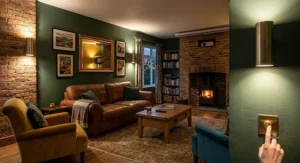
Feature wall lighting is about using a fixture to draw the eye toward a specific wall or focal point rather than lighting a room evenly, and up-down wall sconces are particularly well suited to this because of how they interact with wall texture — brick, exposed plaster, or a bold paint colour all catch the grazing light differently.
In a living room, feature wall lighting typically works best flanking a chimney breast or media wall, where a pair of fixtures like the Astro Amalfi 315 creates symmetry either side of a focal point. In a bedroom, a single dual direction sconce positioned either side of the bed frame can double as reading light (via the downward emission) and ambient glow (via the upward emission) simultaneously — the HARPER LIVING Wall Wash Lights, with its bulb-based flexibility, suits this dual-purpose role particularly well since you can choose a slightly brighter lamp for genuine reading use. In a hallway, feature wall lighting is less about a single focal point and more about rhythm — evenly spaced fixtures along the wall’s length, which is where the long-span Klighten Wall Light Indoor LED 91CM or a properly spaced run of budget aluminium sconces earns its keep.
Long-Term Cost & Maintenance
Total cost of ownership for up-down wall lights indoor breaks down into three components: the fixture itself, installation (if hardwired), and ongoing running costs. According to the Energy Saving Trust, switching to energy-saving bulbs can lower electricity bills without any drop in how well-lit a home feels, and lighting typically makes up only a small slice of a UK household’s overall energy bill in the first place. That’s genuinely reassuring context for accent fixtures like the ones on this list — even running several 6W LED sconces for a few hours a night adds up to a negligible amount on a typical bill compared with heating or major appliances.
Where cost differences really show up is upfront: a hardwired fixture like the Astro Amalfi 315 carries an installation cost on top of the product price, whereas the battery-powered FULEN Wall Lights with Motion Sensor has zero installation cost but a small ongoing “cost” in the form of your own time spent recharging. Integrated LED fixtures such as the Glighone, Yosoo and UPFORU picks are essentially maintenance-free for their rated lifespan since there’s no bulb to replace, while bulb-based fixtures like the Astro Amalfi 315 and HARPER LIVING Wall Wash Lights will eventually need a lamp swap, though a quality LED lamp in either should comfortably last several years of typical evening use.
Safety, Regulations and Compliance Guide
If you’re planning to hardwire any of the fixtures above — the Astro Amalfi 315, Klighten Wall Light Indoor LED 91CM, HARPER LIVING Wall Wash Lights, Glighone LED Wall Lamp, Yosoo Health Gear Indoor Wall Lights, or UPFORU Modern Wash Lights — it’s worth understanding how UK electrical regulations apply. Under Approved Document P of the Building Regulations, fixed electrical installation work in English dwellings must be designed and installed to protect against electric shock and fire risk, and much of this work either needs to be self-certified by a registered competent person or notified to your local authority’s building control team.
In practice, adding new wall light fixtures to an existing lighting circuit in a standard living room or hallway is generally lower-risk notifiable work than, say, a full rewire, but it’s still sensible to use an electrician registered with a recognised competent person scheme (such as NICEIC or NAPIT), who can self-certify the work and issue you the paperwork you’d need if you ever sell the property. Bathroom installations carry additional restrictions around zones and IP ratings that don’t apply to hallway or bedroom fixtures, so none of the products on this list should be installed in bathroom splash zones without checking their specific water-resistance rating first.
Battery-powered options like the FULEN Wall Lights with Motion Sensor sidestep Part P entirely since there’s no fixed wiring involved, which is precisely why they’re such a practical choice for renters or anyone wanting to avoid the certification process altogether.
❓ What is the best height for up and down wall lights indoor?
❓ Can up and down wall lights indoor be used as the main room light?
❓ Do up and down wall lights indoor need an electrician?
❓ What is the difference between an up-down wall sconce and a wall washer light?
❓ Are battery-powered up and down wall lights indoor as bright as hardwired ones?
Conclusion
Up and down wall lights indoor sit in a genuinely useful sweet spot: cheap enough to experiment with, but capable of a design impact well beyond their size when chosen and placed thoughtfully. Whether you land on the architectural elegance of the Astro Amalfi 315, the practical stairwell coverage of the Klighten Wall Light Indoor LED 91CM, the no-wiring convenience of the FULEN Wall Lights with Motion Sensor, or one of the budget aluminium picks like the Glighone LED Wall Lamp, Yosoo Health Gear Indoor Wall Lights or UPFORU Modern Wash Lights, the fundamentals covered in this guide — mounting height, spacing, colour temperature and installation type — matter more to the final result than which specific brand you choose.
Take stock of your own situation first: are you renting or owning, working with a period property or a new-build, chasing a design statement or simply better hallway safety lighting? Answering that question narrows the seven options above to the one or two that genuinely fit your home, rather than leaving you picking on price alone.
Recommended for You
- Plug-In Wall Lights UK 2026: 7 Best No-Electrician Picks
- 7 Best Wall Lights Living Room Picks for 2026 (Honest UK Guide)
- 7 Small Chandeliers for Low Ceilings That Actually Work (2026)
💬 Affiliate disclosure: This article contains affiliate links. As an Amazon Associate, I earn from qualifying purchases. If you purchase products through these links, we may earn a small commission at no additional cost to you.
✨ Found this helpful? Share it with your friends! 💬🤗
