
In This Article
There’s a particular kind of domestic frustration that comes from owning a lovely lamp with absolutely no middle ground. It’s either blazing away like an interrogation room or plunged into total darkness. Nothing in between. If that sounds familiar, a plug-in dimmer switch is probably the single cheapest upgrade you can make to a room’s atmosphere this year.
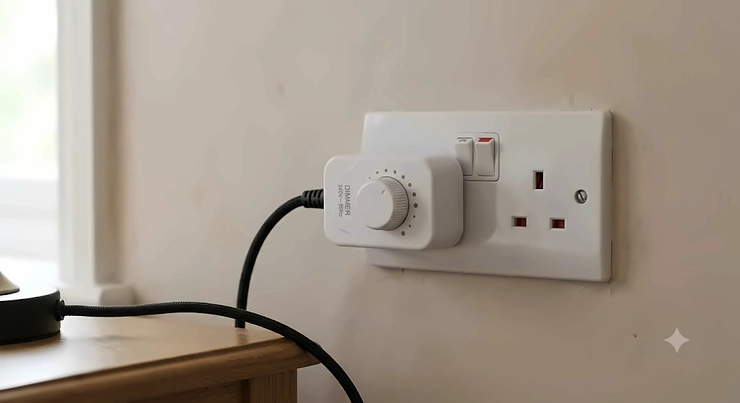
So, what is a plug-in dimmer switch? It’s a small adaptor that sits between your lamp and the wall socket, letting you adjust brightness without any wiring, rewiring, or calling an electrician. You plug it in, plug your lamp into it, and turn a dial or tap a button to set the mood — from candlelit-dinner low to read-a-thriller bright. Technically, it’s a portable variation on the same dimmer technology found in hardwired wall switches, just repackaged into a plug you can move between rooms.
Unlike a hardwired wall dimmer, a plug-in dimmer switch needs no chasing into plaster, no fiddling with live wires, and no landlord’s permission. That makes it the go-to fix for renters, flat-dwellers, and anyone who’d rather spend an evening actually enjoying their lighting than installing it. Across this guide we’ll compare seven genuinely available options — from a basic rotary dial you can buy for the price of a sandwich to a Zigbee-connected remote system — and work out which one earns a spot on your extension lead.
We’ve dug into real specifications, aggregated review sentiment, and the practicalities of UK wiring standards to help you avoid the classic mistake: buying a dimmer that flickers, buzzes, or simply refuses to work with the LED bulb you already own.
Quick Comparison Table
| Product | Type | Best For | Bulb Compatibility |
|---|---|---|---|
| Mercury Plug-In Dimmer Switch | Rotary plug-in | Budget all-rounder | LED, filament |
| Eagle 13A Plug-in Adjustable Dimmer | Rotary plug-in | Cheapest option, older bulbs | Incandescent/halogen only |
| Bilisty Dimmable Plug | Trailing-edge plug-in | LED table lamps | Dimmable LED only |
| VIPMOON Inline Dimmer Switch | Inline cord dimmer | Retrofitting an existing lamp cord | LED, incandescent, halogen |
| Tapo S200D Smart Wireless Remote Dimmer Switch | Battery remote + receiver | Multi-location control | LED, dimmable smart bulbs |
| Philips Hue Smart Wireless Dimmer Switch V2 | Zigbee remote | Existing Hue ecosystems | Hue and Zigbee bulbs |
| MOES Smart Plug Dimmer Socket | Wi-Fi smart plug | Voice control via Alexa/Google | LED, CFL, halogen, incandescent |
Looking at the spread above, the honest takeaway is that there’s no single “best” plug-in dimmer switch — there’s a best one for your specific lamp and habits. The Mercury Plug-In Dimmer Switch and Eagle 13A Plug-in Adjustable Dimmer sit at the budget end and suit anyone who just wants a manual dial, while the Tapo S200D and Philips Hue Smart Wireless Dimmer Switch V2 aim squarely at households already leaning into smart home control. Note the compatibility column carefully: this is where most buying mistakes happen, particularly with older rotary dimmers that were designed decades before LED bulbs existed.
💬 Found a comparison that actually helps? Just one click — help others make better buying decisions too!😊
Top 7 Plug-In Dimmer Switches: Expert Analysis
1. Mercury Plug-In Dimmer Switch — best all-round budget pick
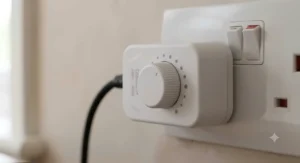
The Mercury Plug-In Dimmer Switch is the sort of product that quietly does its job without asking for attention, which is exactly what most people want from a lighting accessory. It’s a compact white unit that sits in a UK 3-pin socket, with your lamp plugging straight into the front.
On the spec sheet it’s rated for use with LED and filament bulbs, and features a rotary dial for stepless adjustment rather than fixed brightness stages. In practice, that stepless dial matters more than it sounds — a dimmer with only two or three preset levels forces you to compromise between “too bright” and “too dim,” whereas a genuine rotary control lets you land exactly where you want.
Based on the spec comparison with rivals in this price bracket, the Mercury’s main selling point is universality: it works with both older filament bulbs still knocking about in period lamps and modern dimmable LEDs, which not every budget dimmer manages cleanly. Reviewers consistently report that it’s straightforward to install and reliable for everyday lamp dimming, though a handful note it can feel a touch flimsy given its lightweight plastic housing.
Pros:
- ✅ Works with both LED and filament bulbs
- ✅ Simple stepless rotary dial for precise control
- ✅ Compact, space-saving design for any socket
Cons:
- ❌ Plastic housing feels light for the price
- ❌ No smart or app control features
Expect to pay in the under-£15 range for the Mercury Plug-In Dimmer Switch, making it one of the most accessible entry points into dimmable lighting — solid value if you just want a working dial, nothing fancier (check current price).
2. Eagle 13A Plug-in Adjustable Dimmer — cheapest option for traditional bulbs
The Eagle 13A Plug-in Adjustable Dimmer is about as no-frills as this category gets: a rotary dial in a plug housing, designed to slot into any 13A UK socket. Its standout feature is simply the price — it regularly undercuts almost everything else in this list.
Here’s the important caveat that a lot of listings gloss over: this model is explicitly built for incandescent and halogen loads, not dimmable LED bulbs. What most buyers overlook about this model is that “13A” refers to the plug and socket rating, not the wattage the dimmer itself can safely handle for dimming — the actual dimming circuit inside is a much smaller-rated triac, so it’s best suited to lower-wattage traditional bulbs rather than being pushed to its limit.
Honest analysis here: if you’ve still got a stash of old halogen bulbs, or you’re dimming something like a glue gun or a small heater rather than a light fitting, this is a genuinely useful, cheap tool. If your lamps are already fitted with LED bulbs, though, this isn’t the model for you — pair it with the Bilisty Dimmable Plug instead. Aggregated review sentiment on this model is mixed, with a chunk of buyers reporting excellent reliability at low wattages and a vocal minority disappointed that it doesn’t dim LEDs, usually because the product description wasn’t read closely enough.
Pros:
- ✅ Among the cheapest plug-in dimmers available
- ✅ Simple twist-and-go rotary operation
- ✅ Doubles up for controlling small motors or heaters
Cons:
- ❌ Not compatible with dimmable LED bulbs
- ❌ Basic build quality with no smart features
Priced in the under-£10 range, the Eagle 13A Plug-in Adjustable Dimmer is excellent value strictly for traditional bulb setups — check current price and compatibility notes before buying.
3. Bilisty Dimmable Plug — best trailing-edge dimmer for LED lamps
The Bilisty Dimmable Plug takes a different technical approach: it’s a trailing-edge dimmer, which is the type of dimming electronics that plays far more nicely with the low-wattage electronic drivers found inside dimmable LED bulbs.
On paper, this means smoother, flicker-free dimming across a 3-150W range specifically tuned for LED loads, rather than the buzzing and early cut-off that leading-edge dimmers (like older halogen-rated rotary units) can cause on LEDs. That’s a meaningful real-world difference: trailing-edge dimming reduces voltage more gradually at the end of the AC waveform, which is gentler on the compact electronic circuitry inside an LED bulb.
Based on the spec comparison, the Bilisty Dimmable Plug is squarely aimed at anyone who’s already switched their whole home to LED bulbs (which, per UK government phase-outs of incandescent and halogen stock, is most households by now) and wants a dimmer built for that reality rather than retrofitted from old halogen-era electronics. Reviewers consistently note it handles LED table lamps well, though a common complaint in user reviews is that it explicitly won’t work with LED strip lighting — it’s designed for single bulb loads, not multi-metre strips.
Pros:
- ✅ Trailing-edge design built specifically for LED bulbs
- ✅ Smooth 3-150W dimming range with minimal flicker
- ✅ Compact universal rotary dial
Cons:
- ❌ Not suitable for LED strip lighting
- ❌ Only works with bulbs already labelled dimmable
In the £10-£20 range at the time of research, the Bilisty Dimmable Plug offers strong value specifically for LED-lit table and floor lamps — check current price for exact stock and colour options.
4. VIPMOON Inline Dimmer Switch — neatest option for retrofitting an existing lamp
If you’re searching for an in-line dimmer switch rather than a socket-mounted plug, the VIPMOON Inline Dimmer Switch is built differently again: it clips directly onto your lamp’s existing cord rather than sitting in the wall socket. That’s a genuinely different use case from the plug-in models above, and it’s the option worth knowing about if your lamp’s cable already runs to a fixed point and you’d rather not add bulk at the socket end.
The unit uses a push on/off rotary control and is rated for LED, ceiling, incandescent, and halogen bulbs between roughly 3-100W, which is a wider bulb-type spread than the trailing-edge-only Bilisty above. What most buyers overlook about inline dimmers generally is that they need to physically grip the cord’s insulation to sit securely — the wire gauge matters, so it’s worth checking your lamp cord’s diameter against the unit’s accepted range before ordering.
Honest take: this is the more “fit it and forget it” option among plug-in-style dimmers, since once it’s clamped onto the cord it becomes a semi-permanent part of the lamp rather than a separate accessory you might misplace. Reviewers consistently note it’s straightforward for anyone comfortable handling a lamp cord, though as with any inline cord switch, results depend heavily on getting a snug fit on the cable.
Pros:
- ✅ Wide bulb compatibility including LED and halogen
- ✅ Becomes a permanent part of the lamp cord
- ✅ Push on/off plus rotary dimming in one unit
Cons:
- ❌ Requires matching cord diameter for a secure fit
- ❌ Less portable between different lamps than plug-in types
Typically found in the under-£15 range, the VIPMOON Inline Dimmer Switch is a smart pick if you specifically want an inline cord dimmer rather than a plug-in adaptor — check current price and confirm your cord’s diameter first.
5. Tapo S200D Smart Wireless Remote Dimmer Switch — best battery remote for multi-room control
Moving into smart territory, the Tapo S200D Smart Wireless Remote Dimmer Switch pairs a battery-powered remote control dimmer switch with a receiver, giving you dimming control from anywhere in the room — or, depending on placement, from another room entirely.
Its standout feature is flexible mounting: the remote itself is battery-included and can be wall-mounted, held, or moved between locations, with customised actions programmable through the Tapo app. What this means in practice is that a single Tapo S200D can be set up to control lighting from your sofa, your bedside table, and your front door all at once, without any of them being hardwired.
Based on the spec comparison, the Tapo system’s appeal is flexibility rather than raw dimming precision — it’s designed for people who want the convenience of remote control dimming rather than pursuing the absolute smoothest fade curve. Reviewers consistently highlight the easy setup process and the usefulness of customisable actions (like double-tap for full brightness), while a common complaint in user reviews centres on reliance on a stable home Wi-Fi connection for full app functionality.
Pros:
- ✅ Battery remote works from multiple locations
- ✅ Customisable actions via the Tapo app
- ✅ Flexible mounting — wall-fixed or handheld
Cons:
- ❌ Full functionality depends on a stable Wi-Fi connection
- ❌ Setup is more involved than a basic rotary plug
Expect a price in the £15-£25 range at the time of research, positioning the Tapo S200D as a genuinely useful step up for anyone who’s outgrown manual dials (check current price and bundle options).

6. Philips Hue Smart Wireless Dimmer Switch V2 — premium pick for existing Hue setups
The Philips Hue Smart Wireless Dimmer Switch V2 is the installation-free remote designed specifically for Philips Hue’s own smart bulb ecosystem, and it’s the most premium option on this list by a clear margin.
Its standout feature is the tight integration with Hue lights specifically — press once for on, hold to dim, and it works over Hue’s Zigbee-based Bridge system rather than relying on your home Wi-Fi network for every single command, which tends to make it noticeably snappier than Wi-Fi-only remotes. What most buyers overlook here is that this dimmer switch doesn’t control ordinary bulbs at all; it’s exclusively built to work with Hue-branded or Hue-compatible smart bulbs, so it’s not a direct substitute for the plug-in units earlier in this list.
Honest analysis: if you’re already invested in Hue bulbs and a Bridge, this is a genuinely elegant way to add physical control alongside app and voice control, and it can be stuck to a wall with adhesive pads or left as a handheld remote. If you’re not in the Hue ecosystem, though, this isn’t a starting point — you’d need to buy Hue bulbs first, which considerably raises the total cost of entry. Aggregated review sentiment is strongly positive on reliability and Zigbee responsiveness, with the main criticism being the premium price relative to what is, mechanically, a simple remote.
Pros:
- ✅ Fast, reliable Zigbee connection via Hue Bridge
- ✅ Installation-free — stick it up or hold it
- ✅ Deep integration with Hue scenes and automations
Cons:
- ❌ Only works with Hue-compatible smart bulbs
- ❌ Requires a Hue Bridge and bulbs, raising total cost
Priced in the £20-£30 range, the Philips Hue Smart Wireless Dimmer Switch V2 only makes financial sense as an add-on to an existing Hue setup — check current price alongside Hue starter kits if you’re building from scratch.
7. MOES Smart Plug Dimmer Socket — best voice-controlled dimmer plug
Rounding out the list, the MOES Smart Plug Dimmer Socket brings dimming into a plug-in Wi-Fi smart plug format, compatible with Alexa and Google Home over a 2.4GHz connection.
The standout feature is versatility of bulb type: unlike the LED-only Bilisty or halogen-only Eagle, the MOES is rated across CFL, halogen, incandescent, and standard bulbs, plus dimmable smart bulbs, making it a genuinely flexible portable light dimmer you can move between lamps without worrying about bulb type each time. What this means for everyday use is one less thing to check before you buy — provided the bulb is dimmable at all, the MOES should handle it.
Based on the spec comparison, this unit’s real advantage over the rotary options is voice and app control combined with dimming, which the purely mechanical Mercury and Eagle dimmers simply can’t offer. Reviewers consistently note that setup through the Alexa or Google Home app is quick, and that voice-adjusted brightness feels genuinely useful for hands-free evenings, though — as with any Wi-Fi smart plug — a common complaint in user reviews is occasional dropped connections requiring a re-pair.
Pros:
- ✅ Broad bulb compatibility including CFL and halogen
- ✅ Works with Alexa and Google Home
- ✅ Fully portable between rooms and lamps
Cons:
- ❌ Occasional Wi-Fi drop-outs reported by users
- ❌ Requires a 2.4GHz network, not 5GHz-only routers
At around £15-£25 at the time of research, the MOES Smart Plug Dimmer Socket represents strong value for anyone wanting a genuinely portable, voice-controlled dimmer — check current price and confirm your router broadcasts a 2.4GHz band.
How to Choose a Plug-In Dimmer Switch
Choosing the right plug-in dimmer switch comes down to answering a handful of practical questions before you buy, rather than picking whatever’s cheapest on the page.
- Check your bulb type first. Dimmable LED bulbs need a trailing-edge dimmer like the Bilisty Dimmable Plug; older incandescent or halogen bulbs work fine with basic rotary units like the Eagle 13A Plug-in Adjustable Dimmer.
- Decide plug-in vs inline. A socket-mounted plug like the Mercury Plug-In Dimmer Switch is easiest to move between rooms; an inline cord dimmer like the VIPMOON Inline Dimmer Switch suits a lamp that’s staying put.
- Weigh up manual vs remote control. If you’re happy reaching over to turn a dial, a rotary unit is cheaper and simpler; if you want dimming from across the room, look at a remote control dimmer switch such as the Tapo S200D.
- Factor in your smart home ecosystem. Already own Hue bulbs? The Philips Hue Smart Wireless Dimmer Switch V2 slots straight in. Prefer Alexa or Google Home with regular bulbs? The MOES Smart Plug Dimmer Socket is the better match.
- Check the wattage range against your lamp. Most rotary dimmers are rated for a specific wattage band — exceeding it risks overheating, while going too far under it can cause flickering at low settings.
- Look for genuine LED-rated marking, not just “dimmer switch” in the title, since older leading-edge designs can cause buzzing or early shut-off on LED loads.
- Consider portability. A portable light dimmer that unplugs cleanly, like the MOES Smart Plug Dimmer Socket or Mercury Plug-In Dimmer Switch, is more useful if you rent or move furniture around often than a hardwired-feeling inline unit.
Common Mistakes When Buying a Plug-In Dimmer Switch
The single most frequent mistake is buying a leading-edge rotary dimmer — the classic type built for old halogen bulbs — and expecting it to work smoothly with modern dimmable LEDs. It might technically turn the light down, but flicker, buzzing, or a sudden cut-off near the bottom of the dial are common symptoms of this mismatch.
A second common error is assuming “13A” or “3-pin” branding tells you anything about dimming performance; it only confirms the plug fits a UK socket, not that the internal dimming circuit suits your bulb wattage or type. Buyers also frequently overlook total load — plugging several lamps’ worth of bulbs into one dimmer plug can exceed its rated maximum, even if each individual bulb seems low-wattage.
Finally, people underestimate how much smart dimmers depend on their surrounding network. A remote control dimmer switch or Wi-Fi smart plug is only as reliable as your router’s 2.4GHz signal or your Zigbee Bridge’s range — worth testing in the room you’ll actually use it before assuming it’ll behave the same as it did in a shop demo.

Plug-In Dimmer Switch vs In-Line Dimmer Switch
These two formats solve the same basic problem — variable brightness without hardwiring — but they attach to your lighting setup in fundamentally different places, and the right choice depends on how your lamp’s cable is arranged.
A plug-in dimmer switch, like the Mercury Plug-In Dimmer Switch or MOES Smart Plug Dimmer Socket, sits at the wall socket end. Your lamp plugs into the front of the dimmer, and the dimmer plugs into the wall. The upside here is portability: unplug it and move it to a different lamp entirely in seconds, which suits renters and anyone who rearranges furniture regularly.
An in-line dimmer switch, such as the VIPMOON Inline Dimmer Switch, clamps onto the lamp’s cord partway along its length, typically near the plug end or closer to the lamp base. This is a semi-permanent fitting — once it’s clipped on, it effectively becomes part of that specific lamp’s cable, which makes it a slightly tidier long-term solution if you’re not planning to move the dimmer between different lamps.
What most buyers overlook about this comparison is that inline dimmers can be a genuine lifesaver for a lamp with a broken built-in switch, letting you skip buying a whole new lamp. Plug-in dimmers, on the other hand, work with any lamp regardless of its existing switch condition, since the control sits entirely outside the lamp itself. If you’ve got one favourite lamp with a dodgy switch, go inline; if you want flexibility across a whole room’s worth of lighting, go plug-in.
Practical Usage Guide: Setup, Bulb Matching & Avoiding Flicker
Getting a plug-in dimmer switch working smoothly on the first attempt comes down to three checks before you even plug it in. First, confirm your bulb is labelled “dimmable” — a huge proportion of LED bulbs sold today aren’t, and no dimmer, however good, will fix a non-dimmable bulb’s tendency to flicker or buzz.
Second, match dimmer type to bulb type: trailing-edge for LEDs (like the Bilisty Dimmable Plug), leading-edge rotary for older incandescent or halogen loads (like the Eagle 13A Plug-in Adjustable Dimmer). Getting this backwards is the number one cause of the flicker complaints you’ll see in reviews across this whole category.
Third, during the first 30 days, avoid running the dimmer right at its lowest setting for extended periods if you notice any humming — this can indicate the load is below the dimmer’s minimum threshold, a well-documented issue where very low-wattage LED bulbs occasionally fall below what a dimmer needs to switch cleanly. For guidance on wiring basics and general electrical safety around accessories like these, Electrical Safety First’s advice pages are a genuinely useful reference point.
A quick maintenance habit worth adopting: give the dimmer’s plug pins a visual check every few months for discolouration, which can indicate a poor connection generating heat. If a plug-in dimmer ever feels warm to the touch beyond what’s normal for its type, unplug it and don’t reuse it until checked.
Real-World Scenarios: Matching the Right Dimmer to Your Life
The renter in a studio flat. If you’re moving flats every year or two and can’t drill into walls, a portable light dimmer that travels with you matters more than anything else. The Mercury Plug-In Dimmer Switch or MOES Smart Plug Dimmer Socket both unplug cleanly and slot straight into the next place’s sockets — no tools, no landlord permission needed.
The household that’s gone fully LED. If every bulb in the house has already been swapped for dimmable LEDs — which, per the Energy Saving Trust’s advice, is where most UK homes are heading given LED’s efficiency advantages — a trailing-edge unit like the Bilisty Dimmable Plug is the sensible default rather than a leading-edge rotary that risks flicker.
The smart-home enthusiast with one stubborn lamp. Maybe your ceiling lights are already Hue-powered, but there’s one standard floor lamp that isn’t part of the ecosystem. Rather than replacing the whole fitting, a Tapo S200D Smart Wireless Remote Dimmer Switch or the voice-friendly MOES Smart Plug Dimmer Socket brings that one lamp into remote control without rewiring anything.
Long-Term Cost & Maintenance
A plug-in dimmer switch is a low-maintenance accessory by design — there are no moving parts beyond a dial or button, and most of the units in this list carry no batteries to replace beyond the remote-control types like the Tapo S200D, which typically use standard coin or AA cells lasting well over a year of normal use.
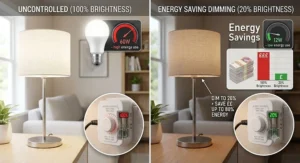
The bigger long-term cost consideration isn’t the dimmer itself but what it does to your bulb’s lifespan and your electricity bill. Dimming a bulb genuinely reduces both — running an LED at 50% brightness draws meaningfully less power and generally extends the bulb’s usable life, since LED drivers experience less thermal stress at lower output. According to the Energy Saving Trust’s lighting guidance, lighting makes up a notable share of average household electricity use, so habitually dimming rather than running lights at full brightness compounds into a real saving over a year, on top of whatever you already gained by switching to LED in the first place.
Total cost of ownership across this list is modest either way: even the premium Philips Hue Smart Wireless Dimmer Switch V2 is a one-off purchase with no subscription attached, and the mechanical rotary units like the Mercury Plug-In Dimmer Switch should comfortably outlast several bulb replacements without needing attention.
Safety & Regulations: What UK Buyers Need to Know
All the plug-in dimmer switches in this guide are designed to connect via a standard UK 3-pin, 13A-fused plug, meaning they’re covered by the same general expectations as any other mains-connected accessory: look for a CE or UKCA mark, buy from a seller you trust, and never exceed the stated wattage rating for the specific dimmer you’ve bought.
Overloading is the main risk worth taking seriously. Plugging multiple lamps’ combined wattage into a single dimmer plug rated for less than that total can cause overheating, and a dimmer that feels hot to the touch during normal use is a genuine warning sign rather than something to ignore. If you’re ever unsure about wiring, installing an inline dimmer, or interpreting technical markings on any electrical accessory, Electrical Safety First’s FAQ resource is a solid, UK-specific starting point, and they explicitly recommend using a registered electrician for anything beyond simple plug-in accessories.
None of the seven products reviewed here require any wiring work at all — that’s the whole appeal of the plug-in and inline-cord format over a hardwired wall dimmer — but it’s still worth checking your home’s existing sockets and cabling are in good general condition, particularly in older properties.
Problem → Solution: Fixing Common Plug-In Dimmer Issues
Problem: the light flickers at low brightness. This is almost always a mismatch between dimmer type and bulb type. Solution: switch to a trailing-edge unit designed for LEDs, such as the Bilisty Dimmable Plug, rather than a leading-edge rotary meant for halogen loads.
Problem: the dimmer buzzes audibly. Often caused by running a single low-wattage LED bulb below the dimmer’s minimum load threshold. Solution: some units perform better with two bulbs on the circuit rather than one very low-wattage bulb alone, or a dimmer specifically rated for very low LED loads may be needed.
Problem: the remote control dimmer switch stops responding. Usually a Wi-Fi or battery issue rather than a fault with the dimming hardware itself. Solution: check the remote’s battery level first (relevant for units like the Tapo S200D), then confirm your router or Hue Bridge is within normal range and broadcasting on the expected frequency.
Problem: the lamp won’t turn off fully, just glows faintly. This “ghosting” effect typically points to an incompatible bulb-dimmer pairing. Solution: confirm the bulb is genuinely marked dimmable, and if the problem persists, try a different dimmer type — this is a well-known compatibility quirk rather than a fault with any single product.
Problem: an inline dimmer feels loose on the cord. Solution: double check the cord diameter against the unit’s accepted range before fitting the VIPMOON Inline Dimmer Switch — a loose grip on the cable is the most common cause of an unreliable connection.
🔍 Ready to stop guessing and start dimming properly? Take your evenings from “too bright” to “just right” — click through to check today’s availability on any of the picks above.
Features That Actually Matter (And Those That Don’t)
Genuinely important: correct dimmer-to-bulb-type matching (trailing-edge for LED, leading-edge for halogen/incandescent), a clearly stated wattage range, and — for smart options — reliable connectivity rather than a long feature list you’ll never use.
Genuinely less important for most buyers: elaborate app scene-setting on a remote dimmer if you only ever use one or two brightness levels in practice, and premium finishes on a rotary dial that’s going to live behind a sofa or lamp base anyway.
The marketing language worth being sceptical of is “works with all bulbs,” which almost never holds up once you dig into the small print — every single product in this list has a defined compatibility range, and the honest ones (like the Eagle 13A Plug-in Adjustable Dimmer, which is upfront about not suiting LEDs) are more useful to you than vaguer claims.
Frequently Asked Questions
❓ Can I use a plug-in dimmer switch with any lamp?
❓ Do plug-in dimmer switches work with LED strip lights?
❓ Is a remote control dimmer switch better than a rotary one?
❓ Why does my dimmer switch buzz or hum?
❓ Can I install an inline cord dimmer myself?
Conclusion
There’s no need to overthink this decision once you’re clear on two things: what type of bulb you’re dimming, and how hands-on you want the controls to be. For a straightforward, budget-friendly fix, the Mercury Plug-In Dimmer Switch covers most bases affordably. If your whole home has already gone LED, the Bilisty Dimmable Plug‘s trailing-edge design is the technically correct choice rather than a gamble. Renters and flat-movers will get the most mileage from something genuinely portable, like the MOES Smart Plug Dimmer Socket, while anyone already inside the Hue ecosystem should look straight at the Philips Hue Smart Wireless Dimmer Switch V2.
Whichever you land on, the underlying idea is the same: a plug-in dimmer switch turns a binary on/off lamp into something you actually control, for the cost of a coffee or two and about thirty seconds of setup. Check current prices and availability before deciding, since stock and pricing shift regularly across all seven of these picks.
Recommended for You
- Smart Dimmer Switch UK: 7 Best Picks Tested for 2026
- Dimmer Switch for LED Lights: 7 Best Picks for 2026
- Colour Changing Uplighter: 7 Best Smart Floor Lamps for 2026
Disclaimer: This article contains affiliate links. As an Amazon Associate, I earn from qualifying purchases. If you purchase products through these links, we may earn a small commission at no additional cost to you.
✨ Found this helpful? Share it with your friends! 💬🤗
